Michigan Democrats call on MDOT to end Border Patrol camera agreement
Jul 27, 2026 | 4:27 pm ET
Description
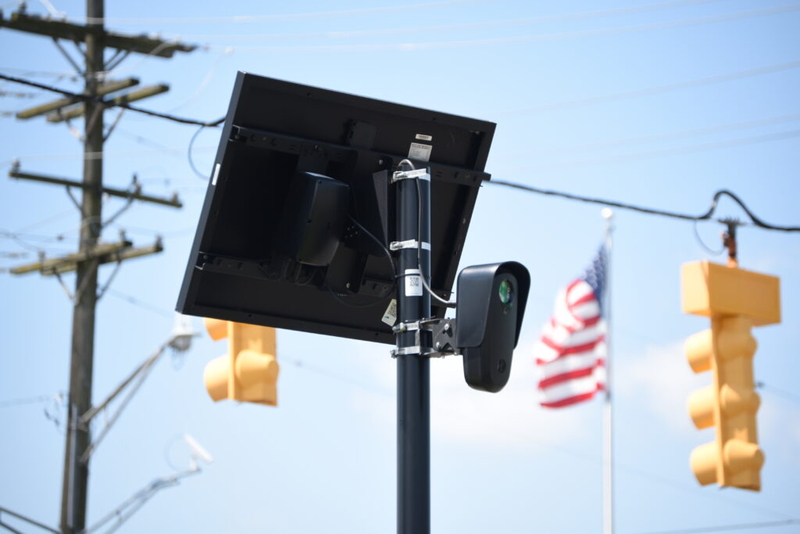
A Flock license plate reader camera in Southfield. July 3, 2026. | Photo by Katherine Dailey/Michigan Advance.
A group of 15 Democratic lawmakers in the Michigan House and Senate on Monday called on the Michigan Department of Transportation to end an agreement allowing federal agencies to install surveillance technology on state property.
In their letter, the lawmakers raised concerns about the department’s Master Maintenance Memorandum of Understanding with the U.S. Border Patrol Detroit Sector and Homeland Security Investigations, arguing that devices like Flock Safety cameras and other automated license plate readers infringe on Michigan residents’ First and Fourth Amendment rights.
According to a copy of the memorandum obtained by the Michigan Advance, MDOT first reached an agreement with the federal government regarding license plate readers during former President Joe Biden’s administration.
“At a time when communities across the nation are witnessing the expansion of federal surveillance and immigration enforcement activities, Michigan should carefully consider whether state-owned infrastructure should be used to facilitate systems capable of tracking the movements of millions of residents who are not suspected of any crime,” the lawmakers wrote.
Jocelyn Garza, MDOT’s director of communications, told Michigan Advance in an email that the department was reviewing the letter and planned to respond.
“The use of automatic license plate readers (ALPRs) for law enforcement agencies has been permitted for several years,” Garza said. “Agencies entering into an agreement to place an ALPR along an MDOT trunkline are required to follow strict regulations for both the placement of equipment and use of resulting data.”
According to the department’s instructions for law enforcement agencies installing license plate reader cameras, the agency or local unit of government installing the cameras must agree to comply with the Michigan State Police’s manual for license plate reader systems.
As part of their permit application to install license plate reader cameras, law enforcement agencies must also submit a letter agreeing to the following terms:
- The agency demonstrates that license plate reader use is for law enforcement purposes only.
- Data will not be used, sold or otherwise transferred, for any purpose other than law enforcement.
- The use of license plate readers and of the resulting information, including privacy protections, is made subject to compliance with all applicable State and Federal laws.
- The installation location meets clear zone, breakaway, and design standards in compliance with MDOT requirements.
In addition to terminating the memorandum, the lawmakers asked the department to decline any future agreements allowing the installation of license plate readers on MDOT-controlled infrastructure.
They also requested a comprehensive public review of any existing surveillance technology deployments on state transportation property; along with information on data collection, retention, sharing practices, and agency access associated with any existing surveillance systems.
Additionally, the letter asked MDOT to work with state lawmakers, civil rights groups, local governments and other impacted communities to develop standards for protecting privacy before any future surveillance technology is permitted on state-owned infrastructure.
In a statement, Christine Sauvé, the policy, engagement and communications manager for the Michigan Immigrant Rights Center, noted that this technology impacts both citizens and noncitizens.
“Michiganders going about their business may not realize federal agents are surveilling them. Reports in other states indicate that the majority of stops affect people with lawful presence or citizenship simply going about their day, when they are inappropriately stopped by law enforcement,” Sauvé said. “With cameras now placed alongside busy Michigan highways the impact could be far reaching. This kind of widespread surveillance does not make our communities safer but it does raise the serious possibility of unlawful searches and constitutional violations.”
In January, state Reps. Doug Wozniak (R-Shelby Township) and Jimmie Wilson Jr. (D-Ypsilanti) introduced a pair of bills to place guardrails on the use of automated license plate readers, which use high-speed cameras to capture license plate numbers and other vehicle information from passing cars.
House Bills 5492 and 5493, lay out instances in which law enforcement is permitted to use license plate reader technology, while placing limits on how long their data can be retained.
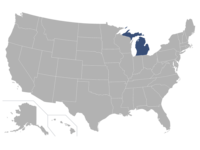
Lansing, MI