SC aluminum smelter back to full production after a decade of lower capacity
Jul 27, 2026 | 5:56 pm ET
Description
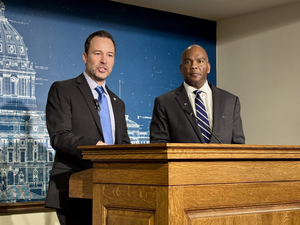
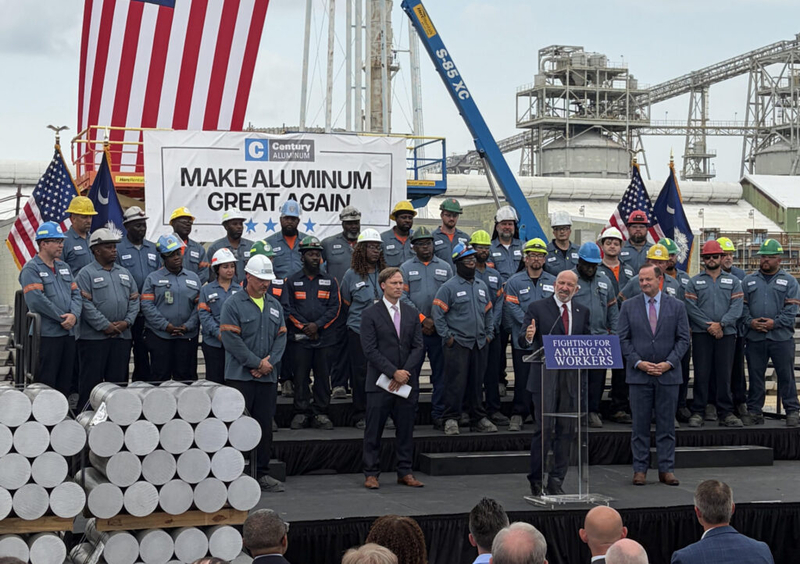
US Secretary of Commerce Howard Lutnick praises the reopening of an idle portion of the Mt. Holly aluminum smelter in Goose Creek, South Carolina, on Monday, July 27, 2026. Standing beside him on the left is CEO Jess Gary. On the right is Attorney General Alan Wilson. (Photo courtesy of Jeff Leieritz/Compass Global Communications)
A Lowcountry aluminum plant is back to running at full capacity for the first time in over a decade, leaders announced Monday.
Century Aluminum’s Mt. Holly smelter in Berkeley County spent about $50 million to restart an idle portion of the plant, adding back 150 jobs, said company CEO Jess Gary during a Monday ribbon-cutting ceremony. That means the full facility is running for the first time since 2015.
“American aluminum keeps our country running,” Gary said.
The plant, which has more than 600 workers, will create about 50,000 more metric tons each year, increasing the country’s aluminum output by 10%, Gary said. The smelter is already responsible for about 30% of the nation’s aluminum production.
“That is something we should be proud of,” said state Attorney General Alan Wilson, who attended the celebration.
In 2015, the plant slashed its production in half, laying off about 300 workers amid a dispute with state-owned utility Santee Cooper over how much it paid for electricity. Compounding the crisis, Gary said, was an influx of aluminum imported from China and Canada.
The Obama administration in January 2017 filed a complaint with the World Trade Administration saying China illegally subsidized its aluminum industry, leading to overproduction. The complaint is still ongoing.
Five years later, again pointing to power costs and foreign competition, Century Aluminum warned its remaining 295 employees the plant might close. But the smelter survived after the company made a deal to increase its power supply, bringing the plant back to three-quarters of its initial capacity.
The company inked another contract with power company Santee Cooper last year, paving the way for the expansion back to full capacity.
SC now requires American-made steel for roads, bridges and other public projects
Gary also credited the Trump administration’s taxes on aluminum imports with saving the plant.
During President Donald Trump’s first term in office, in 2018, he instituted a 10% tariff on aluminum from most countries. He increased that tariff to 50% last year, increasing the cost for other countries to supply the pliable metal used for smartphones, airplanes and cars.
“President Trump has made clear that unfair trade practices will not decide the future of American aluminum,” Secretary of Commerce Howard Lutnick said Monday.
While aluminum manufacturers have praised Trump’s tariffs as helping return production to the United States, other businesses, including the U.S. Chamber of Commerce, have criticized them for increasing prices at an unsustainable level.
Promoting the production of aluminum at home is important for American jobs and national security, Lutnick said. The metal is an essential component of fighter jets, naval vessels and body armor, he said.
“By increasing the production of aluminum here at home, we are reducing our dependence on foreign supply chains and fortifying our national security,” Lutnick said.
As China and other countries manufactured the metal at high rates, America’s smelters suffered, Lutnick said. The smelter just north of Goose Creek is one of four nationwide still in production, compared to 24 in 2000, according to The Aluminum Association. The Mt. Holly plant was the most recent to open, in 1980.
The other three smelters are in Massena, New York; Evansville, Indiana; and Sebree, Kentucky.
For workers like Mark Schlag, manager of the smelter’s carbon plant and an employee for 22 years, closing a plant means “taking the American dream that I’ve been able to live away from families like mine, away from communities like ours, all across the country,” he said.
Century Aluminum and Dubai-based Emirates Global Aluminum announced plans this year to build a $4 billion smelter in Oklahoma, the first new plant built since then. The plant is expected to employ 1,000 people and produce 750,000 tons of aluminum each year, according to a news release.
“The future of America’s aluminum industry is bright,” Gary said.
Columbia