NJ bills left in limbo; unfunded budget requests spark disappointment
Jul 02, 2026 | 3:06 pm ET
Description
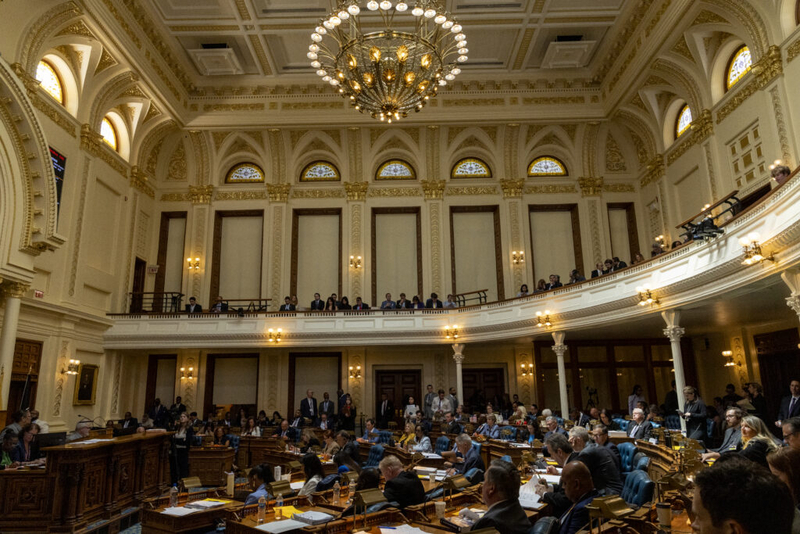
Assembly members meet in Trenton on June 30, 2026, for their last voting session before breaking until the fall. (Photo by Anne-Marie Caruso/New Jersey Monitor)
Several bills that have gotten lengthy hearings and hours of advocacy in the New Jersey Statehouse since January stalled this week on their way to passage, leaving them in limbo until at least the fall with legislators now on summer break.
Both legislative chambers scrubbed votes Tuesday on a bill that would have required firms with a history of extracting fossil fuels or that are responsible for at least 1 billion metric tons of greenhouse gas emissions between 1995 and 2024 to pay a combined $50 billion over the next 20 years.
“Making polluters pay is good policy and good politics. This should have been a no-brainer,” said Amy Goldsmith, New Jersey state director of Clean Water Action. “What happened today was Trenton politics at its worst. We have the votes, just didn’t get a vote.”

It’s not clear the bill, which business groups have opposed, had the votes to clear the Senate.
Three Democratic members of the Senate Budget Committee who voted to advance the bill Sunday night signaled they might oppose it on the floor, and two others, Sens. John Burzichelli (D-Gloucester) and Paul Sarlo (D-Bergen), opposed it.
“There’s a much better way of doing this, no,” Sarlo said during the vote late Sunday.
If all five of those members defected on the floor, the bill would have failed without Republican support. Democrats have a 25-15 majority in the Senate. It’s not clear any Republican would have backed the measure.
Business groups had opposed the bill for the costs it would levy on some of their members and for its retroactive nature, which they argued would punish law-abiding companies.
“In addition to the extra energy costs it would impose on New Jersey households, this bill sets a chilling precedent that any job creator in our state could be retroactively targeted for billions of dollars in penalties, even if it complied with the law, regulations and its permits,” said Michele Siekerka, president and CEO of the New Jersey Business & Industry Association.

Another bill that stalled would eliminate the statute of limitations for criminal prosecutions of human trafficking and expand the window for victims to bring civil cases. That measure passed the state Senate unanimously Tuesday but has not moved in the Assembly.
The bill would lift the existing 5-year deadline for prosecutors to bring human trafficking and aggravated criminal sexual contact cases, allowing charges to be filed anytime regardless of a victim’s age. A fourth-degree sexual contact case would need to be brought within five years of the victim turning 18 years old or within two years of the discovery of the offense, whichever is later.
It also would eliminate the statute of limitations for civil suits brought by trafficking victims and expand the pool of defendants to include people who either directly or indirectly benefited financially from the offense.
“Survivors of human trafficking often face immense trauma and fear that can prevent them from coming forward for years,” Senator Vin Gopal (D-Monmouth) said in a statement. “Justice for victims should not be denied simply because they did not report the crime within five years of it happening — this bill makes traffickers more likely to face accountability for their heinous crimes.”
The Department of Justice reported a 26% increase in human trafficking offenses from 2021 to 2022, with the number of people convicted of the crime also doubling that year.
The Democrat-sponsored bill awaits a hearing in the Assembly Judiciary Committee.

Budget misses
Both on the campaign trail and since she took office in January, Gov. Mikie Sherrill vowed that she would not tolerate legislators’ habit of stuffing the budget every year with millions in last-minute additions, which critics denounce as “Christmas tree items” because they’re typically directed to lawmakers’ pet projects.
Yet millions made it in to the $60.7 billion budget approved Tuesday, with legislators padding the budget itself with an extra $150 million in spending and passing a supplemental spending bill with a price tag of nearly $360 million.
Despite that, plenty of community groups and projects that have received funding in past years got less, or were shut out altogether in this budget.
State funding for Hispanic women’s resource centers will fall short of what advocates sought, likely forcing closures and service cuts at several of the six centers statewide.
The budget just approved allocates nearly $1.8 million for the centers, which serve thousands of women annually across 11 counties. The centers offer English-language classes, job training, financial counseling, mental health services, and connections to domestic violence resources, regardless of immigration status.
The funding in the final budget is an increase over the $535,000 Sherrill originally proposed — an amount advocates said would have forced three centers to close. But advocates who pushed for a full restoration of prior funding levels said the final figure still leaves the program with less than it has historically received.
At their peak, the centers received roughly $4 million, and former Gov. Phil Murphy gave them $2.25 million in his final budget. The centers, which were established by state legislation in 1991, depend on state dollars to operate.
“At a time when Latino families across our state are being targeted by the right-wing Trump anti-immigrant agenda, these cuts will only put additional strain on our community,” Javier Robles, president of the Latino Action Network, said in a statement.
Public school advocates decried the lack of significant new funding to replace and repair aging, crumbling schools statewide.
Robert Kim, executive director of Education Law Center, hinted that snub could spur a lawsuit, noting that courts have long affirmed New Jersey has a constitutional obligation to provide students with safe and adequate school facilities.
“The failure to include meaningful new facilities funding in this budget raises serious concerns about how that obligation will be fulfilled,” Kim said. “Without a credible plan to address the billions of dollars in remaining need, continued judicial involvement may once again become the only practical means of ensuring compliance with the Constitution.”
The state’s hazelnut farmers were hoping to land $6.3 million in state funding to build out that fledgling industry. Instead, they got $299,000 for an agroforestry cooperative to spend on commercial-scale infrastructure including cold storage, processing equipment, and food safety compliance.
Sen. Andrew Zwicker (D-Middlesex), who sought that funding, welcomed the smaller allocation as a good start.
“This will let them grow just a little bit bigger but won’t be enough for a full-scale national production. But we’ll get there,” he said.
That budget ask had generated gripes among Republicans, who blast such spending add-ons every year — but who were especially irked this year by the Assembly’s swift passage of a bill, sponsored by Assemblyman Sterley Stanley (D-Middlesex), to make hazelnuts the official state nut. More impactful bills were worthier of their attention, the chamber’s GOP members complained.


Trenton, NJ