American Prairie wins preliminary injunction against state in bison grazing suit
Jul 02, 2026 | 5:58 pm ET
Description
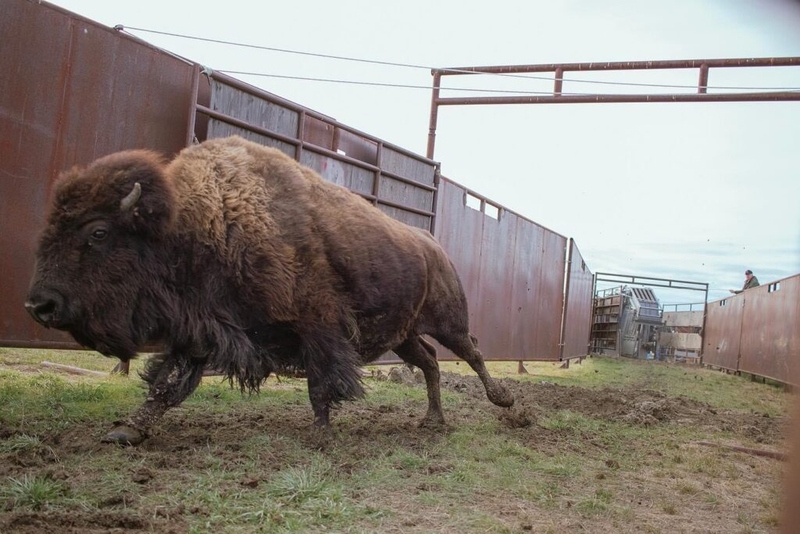
American Prairie transferred 107 bison in November 2023 to tribal nations in Montana, South Dakota and Washington. (Provided by American Prairie)
American Prairie, a nonprofit conservation organization, has been fighting the state and federal for years over its ability to graze its herd of 900 bison on public lands.
And while the U.S. government yanked the organization’s federal grazing permits earlier this year, a Helena judge gave the group a temporary win in a lawsuit over its use of state trust lands.
Lewis and Clark District Court Judge Christopher Abbott on June 26 granted a preliminary injunction to American Prairie, temporarily blocking a directive from the Montana Land Board for the Montana Department of Natural Resources and Conservation not to approve new or pending requests to allow bison to graze on state land.
American Prairie, in its lawsuit, argued that the Land Board’s action was unlawful because it is “an act of rulemaking” that did not comply with statutory public notice and public comment requirements.
“The Land Board’s broad decision-making authority regarding the management of state trust lands is not in question,” Matt Cochenour, attorney for American Prairie, said. “However, the Land Board’s decision-making process must follow the law. With this opinion, the district court removed the clearly unlawful roadblock that the Land Board implemented without public notice or a meaningful opportunity for public participation.”
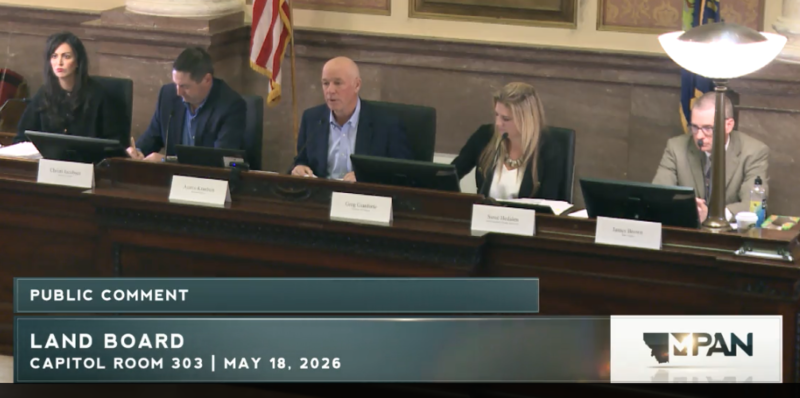
Approved unanimously, the motion at the Land Board was made by Commissioner of Securities and Insurance James Brown. It directed DNRC to create a rule-making package that addresses the absence of bison from existing grazing provisions, and it put a moratorium on approving “any new or pending” bison grazing requests.
Brown told the Daily Montanan he disagrees with the judge’s analysis.
“It’s curious to me how a judge can determine that a directive to the DNRC to do rulemaking is in itself rulemaking,” Brown said. “Either as a matter of common sense or as a legal matter.”
American Prairie is dedicated to conserving prairie land in Montana and manages more than half a million acres between private holdings and leased land.
Its herd of around 940 bison graze on both state and federal leases.
Earlier this year, the Bureau of Land Management, under the direction of Interior Secretary Doug Burgum, revoked seven of American Prairie’s bison-grazing leases, with a September deadline to remove its herds from federal land. The organization has appealed the ruling, which states that the federal Taylor Grazing Act is limited to animals used for “produciton-oriented purposes.”
The organization has been at odds with the state of Montana for years, and it was a direct appeal from Gov. Greg Gianforte, Attorney General Austin Knudsen and the state’s federal delegation that prompted the response from Burgum.
The state has also sought to limit bison grazing on its own public lands, something American Prairie has done since 2009.
American Prairie grazes bison on two leased parcels of state trust land, which adjoin some of the leased BLM allotments, and in 2019 filed applications asking for authorization to graze bison on additional parcels it already held leases to.
According to court documents, the DNRC did not immediately act on the application, instead awaiting a BLM environmental assessment due to the adjacent nature of the parcels.
In 2022, BLM’s assessment found no significant impact from bison grazing on the federal parcels, but DNRC did not begin its own analysis through the Montana Environmental Policy Act. Instead, the agency appealed the BLM decision and told American Prairie it could not graze bison on two of its state leases, according to court documents.
The organization sued over the state’s refusal to conduct an environmental review and issue the grazing lease late last year, and a March ruling ordered DNRC to begin the review process. That ruling is currently on appeal with the Montana Supreme Court.
On Feb. 2, American Prairie sent a letter to DNRC stating that bison or cattle would be grazing on one of the organization’s leased parcels, adding that while it has historically been grazed by cattle, bison are not excluded from the lease.
At a state Land Board meeting two weeks later, Brown called the letter “troubling” and “a little bit presumptive.”
“I’m certainly unfamiliar with any other state grazing lessee who has felt emboldened to tell the Land Board what they are going to do with a lease property regardless whether they have DNRC or Land Board permission and regardless of whether analysis has occurred or has not occurred,” Brown said.
The Land Board agenda had the topic “Bison Grazing Proposals (Executive Session),” and stated it was intended to “provide direction to DNRC regarding pending bison grazing proposals.”
Following the closed session, Brown said that Montana’s rules do not contemplate bison grazing on state lands — only offering definitions for cows, horses, sheep and goats under “animal unit month,” the standard unit of measurement for rangeland management.
American Prairie has argued, citing research from Montana State University, that cattle and bison should be considered roughly equivalent.
But Brown argued before the land board that other studies show bison “consume far more forage” than cattle.
“Thus if we allowed for a 1-to-1 change from cattle to bison, it could result in significant overgrazing of state trust lands thereby damaging state trust property,” Brown said. “As trustees we know our responsibility is to protect the long-term condition of trust lands so that these lands will continue to generate revenue for generations to come and is important to determine the animal unit month carrying capacity for bison grazing on state trust lands without damaging that resource.”
Brown made his motion for DNRC to develop a rule-making package that addresses the lack of bison in existing statute, and also directed DNRC “not to authorize any new or pending bison grazing requests,” including the existing American Prairie proposals.
The Land Board voted unanimously in favor of the proposal, but did not hold discussion or public comment. Others on the land board include Gianforte, Knudsen, Secretary of State Christi Jacobsen and Superintendent Susie Hedalen.
In his ruling, Abbott said that the motion did not pertain strictly to the American Prairie proposal, and instead created a broad standard that “judges all” requests for bison grazing, tantamount to a new rule.
“By any measure, the Land Board’s February 17, 2026, action will likely be found to be a rule,” Abbott wrote. “The notice of its action, which consisted solely of an agenda item labeled ‘Bison Grazing Proposals,’ does not appear to comply with the notice and public comment requirements” found in state law.
Brown said that his intention with the motion was to get Montana’s regulations up to date and ensure that bison were included in statute, eliminating the legal gray area.
“It’s not a question for me, speaking for myself, of whether I’m pro-bison or anti-bison. It’s whether or not we’re managing our lands for the 21st Century,” Brown said. “… What I’m trying to do … is to be sure we’re managing that animal, if it is on state trust lands, properly, and making sure the carrying capacity doesn’t harm the long-term health of our state land.”.
For its part, American Prairie says that its main issue is the continued delay of any decision by the state on whether it can legally turn out bison on leased land. It prefers a decision over legal limbo.
“American Prairie looks forward to a final decision from the agency — one way or another — on its grazing requests that have been pending for years,” Cochenour said in a statement. “That the state can put off making a decision for years on any application or request is unconscionable and not what we expect from our Montana government.”
Also on June 26, the DNRC announced a public scoping period for American Prairie’s 2019 request for modifying five state grazing leases across nearly 5,000 acres of land, following an earlier court directive to process the applications.
The proposal includes creating or modifying fencing around the parcels and would include seasonal or year-round bison grazing.
Helena, MT