U.S. Housing Secretary Turner visits Nebraska, calls Omaha ‘Highlander’ grounds model
May 21, 2026 | 8:15 pm ET

Description
U.S. Housing and Urban Development Secretary Scott Turner Thursday visited Omaha's Highlander campus, including "The Greenhouse," which is managed by nonprofit No More Empty Pots and where produce is grown and opportunities exist for training and entrepreneurship. The redevelopment site overall includes housing for households of various sizes and incomes and other social service and educational spaces. To the right of Turner is Sharlon Rodgers, president and CEO of Seventy Five North, which managers the campus. She is talking to Gov. Jim Pillen. (Cindy Gonzalez/Nebraska Examiner)
OMAHA — The nation’s top housing official was in Omaha Thursday, promoting Trump administration strategies to increase homeownership by cutting “red tape” for builders and rebuilding troubled neighborhoods via “opportunity zone” incentives.
U.S. Housing and Urban Development Secretary Scott Turner’s visit to Nebraska’s most populous city focused on a tour of a revitalized North Omaha neighborhood once home to an oft-violent public housing project.
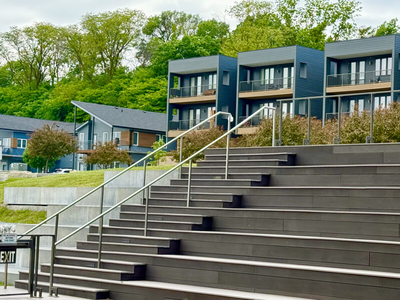
He called the newer and still-growing Highlander mixed-use redevelopment area — which officials say spans nearly 40 acres and contains investment of roughly $200 million — a model of public and private investment he’ll tout elsewhere across the country.
“From here I will be a voice piece and share with other cities and states what’s been done,” Turner said, pointing out the tract’s entrepreneurial and housing elements. “This is new life in this community … people now living here whose lives have been changed.”
The Highlander neighborhood shifts began prior to the initial creation of opportunity zones under Trump’s 2017 Tax Cuts and Jobs Act, but at least one of its housing phases benefited from the expiring law, said Sharlon Rodgers, CEO of Seventy Five North Revitalization, which manages the campus. The redevelopment was fueled by a $25 million HUD Choice Neighborhoods grant.
Now, under Trump’s new tax law passed in July, the opportunity zone program that offers tax breaks to encourage private development is permanently extended. Cities, including Omaha, recently have been submitting candidates to state leaders who will determine the new lineup of designated opportunity zone census tracts.
Under the program, investors can roll capital gains into a qualified opportunity zone fund and defer or reduce their existing capital gains taxes. If the investment is held for at least a decade, capital appreciation generated by the investment becomes tax-free.
‘Unleash’ homebuilding
Rodgers and others say the incentive could potentially boost further growth of the Highlander campus and help other distressed neighborhoods in the state. Omaha officials said, for example, the South Omaha area in which nonprofit Canopy South is rebuilding the site of yet another former public housing project had not been an opportunity zone, but is now being considered.

Turner was joined at the Highlander by an entourage that included Gov. Jim Pillen and Omaha Mayor John Ewing Jr. An aide to the housing secretary said Turner, a former professional football player, was invited to Nebraska by Pillen, who played defensive back for the Nebraska Cornhuskers in the mid-1970s.
The governor later accompanied Turner to Fremont for a scheduled “listening session” on opportunity zones and workforce housing.
Pillen put a focus on “lifting up people out of poverty and into the American dream of home ownership.”
He said state and federal officials hope to address that in part by removing what Pillen sees as regulatory barriers to affordable home construction.
“Across the state we’re going to work hard to make sure we get government out of people’s hair, make sure builders can build,” he said, adding, for example, he favors less expensive plastic pipes over copper pipes and “onerous” electrical codes. “We’re gonna clean it up.”
Turner also spoke about a new HUD report: State and Local Best Practices for Home Construction, which he expects will “unleash” single-family homebuilding and development by reducing costs of rules he said can “cripple” development.
He said other recent Trump executive orders slash “red tape” to lower costs of building homes — though labor unions and safety advocates often resist such changes.
Personal vantage point
Pillen, during his remarks about the Highlander, said that what was taking place in Omaha was “off the charts.”

Ewing spoke from a personal vantage point, having spent some of his childhood in the former housing project and later patrolling the area as an Omaha police officer. He recalled one stint when there were 30 shootings in 31 days at the former Pleasantview housing area.
The mayor said his administration hopes to work closely with various nonprofits and other organizations, as well as state and federal officials, to push opportunity zone incentives as part of a local mission to increase affordable housing and related development.
Ewing said the city’s affordable housing task force is looking at various building and zoning codes and options to help reduce expenses and increase housing stock, and also is promoting different styles of homes that can provide affordable options.
Highlander history:
The Highlander development sits on land, a few miles north of downtown Omaha, where once stood a barracks-style Pleasantview Homes low-income housing project. Demolished by 2010, Pleasantview residents were relocated and the Seventy Five North nonprofit led a massive neighborhood revitalization that was modeled after a Purpose Built project in Atlanta, where tenants of mixed incomes and a strong school partnership were said to be key to dramatic shifts.
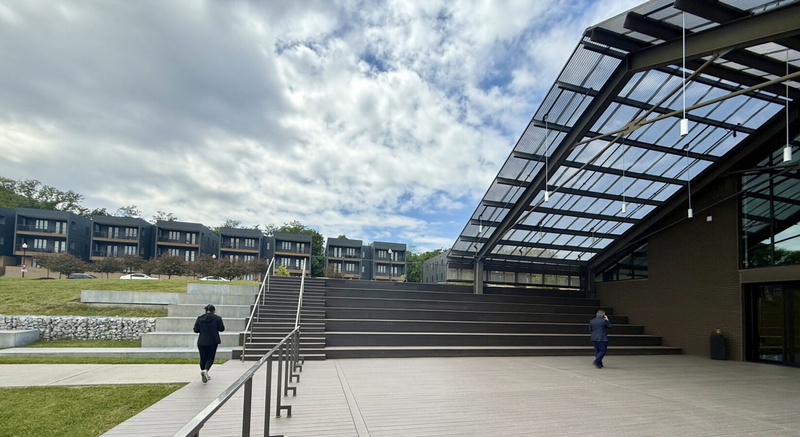
Today, after yearslong growth and private, public and philanthropic investment, the Highlander offers a mixture of about 300 housing units, including both market rate and dwellings whose lower rents are intended to be affordable to area residents. Also on the site are community gathering spots including a coffee shop, restaurant, a greenhouse, event space and education and healthcare services.
The Highlander pocket — so named for its perch on one of Omaha’s highest geographic elevations — is a neighbor to institutions such as Urban League of Nebraska and Salem Baptist Church that rose previously on land formerly occupied by another low-income public housing project. Hilltop Homes was demolished in 1995.
Lincoln, NE