High school group challenging Idaho’s trans bathroom ban drops lawsuit after student’s death
May 21, 2026 | 8:05 pm ET
Description
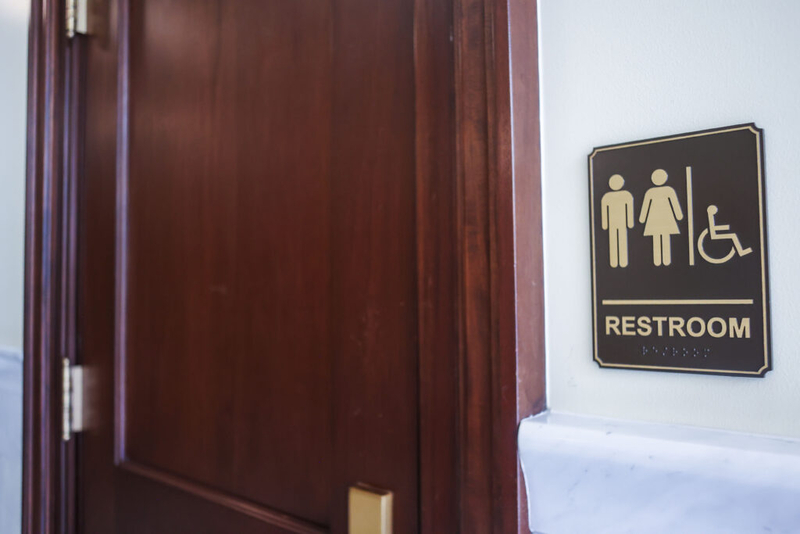
A bathroom sign as seen on March 16, 2026, at the State Capitol Building in Boise. (Photo by Pat Sutphin for the Idaho Capital Sun)
Editor’s note: This story discusses suicide. If you or someone you know is struggling with mental health issues, call the Suicide & Crisis Lifeline at 988.
A lawsuit challenging Idaho’s transgender bathroom ban in K-12 public schools could end soon, after a group at Boise High School suing over the law dropped the case.
The move came after a transgender student who was part of Boise High School’s Sexuality and Gender Alliance died by suicide, and another stopped attending the school, the group’s lawyers wrote in a legal agreement reached Wednesday requesting the case be dismissed.
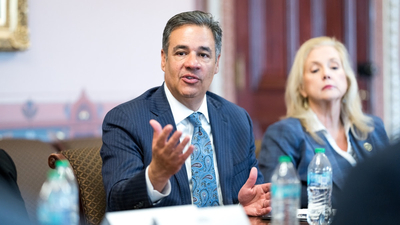
Idaho Attorney General Raúl Labrador hailed the case’s end in an announcement Thursday morning, saying the law “is fully in effect.”
“From the district court to the Ninth Circuit, we defended Idaho’s right to protect students’ privacy in bathrooms and locker rooms,” Labrador said in a statement. “Idaho families can be confident that this law is fully in effect and will remain so.”
But Labrador’s announcement did not address why the suing parties agreed to dismiss the lawsuit.
Asked about the student’s suicide, Labrador said in a statement Thursday afternoon that: “This is a personal tragedy and our hearts go out to the family. We don’t comment on the private circumstances of individuals involved in litigation.”
Experts say there is no one reason that people die by suicide. But transgender adults face higher risks of suicide attempts and self-harm than cisgender adults. Idaho has a high suicide rate and has passed several anti-transgender laws in recent years.
Mother of 16-year-old addresses death in court filing
The student who died by suicide, identified only by the pseudonym Jane Doe, died in late January at the age of 16, her mother wrote in a court record filed in February.
“While I may never have certainty about all the things that ultimately led to Jane’s death, I know that one stressor in her life was her struggle to fit in socially as a transgender girl,” according to the court record written by her mother, who was identified only as Janice Doe in the filing.
“This stress of feeling alienated in her life was exacerbated by Jane’s exclusion from the girls’ restroom at school,” her mother continued in the court record. “The option of a single-user restroom did not resolve her distress. Rather, it caused her to feel ostracized from others — ‘like I’m being treated as this other kind of thing’ — as she described in her supplemental declaration.”
A spokesperson for Lambda Legal, which is representing the school group in the lawsuit, said the organization could not comment on the death without permission from the family.
In November, the student wrote about how Idaho’s transgender bathroom ban was affecting her
Idaho’s law requires public schools to maintain two separate multi-occupancy restrooms, showers, changing facilities and overnight accommodations for students based on their sex assigned at birth.
The law forbids people of one sex from entering facilities designated for another sex, with exceptions for cleaning, medical aid, athletic staff and some other circumstances. The law exempted single-user restrooms and changing facilities.
In November, the student, Jane, wrote in a court document in the lawsuit about how Idaho’s law was affecting her. She used single-user restrooms at Boise High School, and often had to wait, she wrote.
“… I fear that use of the single-user restroom has increased either the knowledge or suspicion of me being transgender against my wishes,” Jane wrote. “I have heard students refer to the single-user restroom in the main gym building as the ‘trans bathroom.’”
The case was appealed to the U.S. 9th Circuit Court of Appeals, which in March 2025 rejected a longer block on Idaho’s law.
“Applying intermediate scrutiny, the panel held that the State identified an important governmental objective — protecting bodily privacy — and that the State chose permissible means to achieve that objective,” a panel for the federal court ruled in March 2025.
The court affirmed the decision of federal Judge David C. Nye to deny a request for a longer legal block on the law in October 2023. The lawsuit was brought soon after Idaho passed the law in 2023.
Last month, after the Idaho Legislature and Gov. Brad Little passed a criminal bathroom ban that extends to bathrooms in private businesses, six transgender Idahoans sued.
What are the suicide warning signs to watch for?
According to the American Foundation for Suicide Prevention, some of the common warning signs to look out for suicide risk are:
- If people talk about killing themself, feeling hopeless, having no reason to live, being a burden to others, feeling trapped or being in unbearable pain.
- Certain behaviors — especially those related to a painful event, loss, or change — such as using alcohol or drugs more, looking for ways to end their lives, withdrawing from activities, isolating from family and friends, aggression, fatigue, and more.
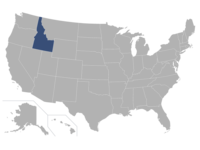
Boise, ID