Sussex County farmers oppose plan to discourage housing on agricultural lands
May 21, 2026 | 6:00 am ET
Description
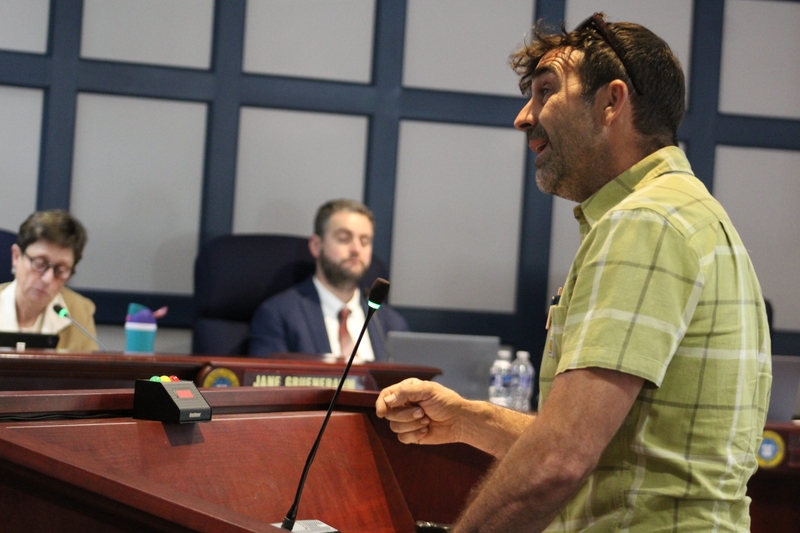
Photo courtesy of Spotlight Delaware
Why Should Delaware Care?
Sussex County farmers field enticing offers to sell their land to housing developers as demand for new homes in the area remains high. But some Sussex residents want the county to discourage those developments, saying new residential areas should be built adjacent to existing ones, not on far off farm fields.
Sussex County farmers are pushing back against proposed development reforms that they say could endanger the future of their farms.
The Sussex County Council on Tuesday held hearings on two ordinances that could discourage a long-criticized practice of building large housing developments on land that is located far from established cities and towns and is targeted for preservation.
Specifically, the proposals would ban subdivisions with more than two homes per acre on farm fields and require more open space within those developments. Advocates say the rules will encourage developers instead to build new homes where infrastructure already exists.
But a group of farmers who spoke during a public comment period at the meeting said the ordinances would also devalue their land, which they often rely on as collateral for loans needed to operate their farms.
Rather than discouraging new homes on farmland, Georgetown farmer Jay Baxter said the devaluation could actually force more farmers to sell to developers.
“You’re hamstringing that next generation by taking the equity away from my farm,” Baxter said.

The comments mark the latest in Sussex County’s yearslong debate over how to balance farmland preservation with the development of new homes amid explosive growth.
The two proposals in front of the council came from recommendations made by the Sussex County Land Use Reform Working Group.
The County Council formed the working group after three newcomers won seats on the elected body by beating out incumbents in the November 2024 elections. The victories largely were fueled by resident anger over how the five-person council had previously handled development.
The working group’s stated mission was to come up with ways to ease the impact that ongoing growth has had on affordability, road conditions, services and the environment.
Last fall, the group recommended a slate of measures that would incentivize housing developers to build dense, walkable communities in areas where there is already infrastructure to support it, and discourage development in the rest of the county.
Though he was a member of the working group, Baxter publicly criticized its recommendations before they were finalized.
But other members, including Center for Inland Bays Director Christophe Tulou, said the county must act to discourage building new homes on farmland because it causes sprawl and traffic congestion outside of growth areas.

Tulou also said during a working group meeting last year that the recommended measures need to be passed as a package, because they collectively represent concessions made by all stakeholders.
If not, he said, the public could “start picking and choosing. And they’re going to find the parts they like. They’re going to fight the ones they don’t like.”
It is not immediately clear whether the two proposals discussed during Tuesday’s meeting has enough support on the County Council.
Based on remarks made during the meeting, Councilman Matt Lloyd appeared to be against the measures. Council Vice President John Rieley expressed his strong opposition to the them.
Meanwhile, Councilwoman Jane Gruenbaum appeared to be mostly in support, and Councilman Steve McCarron seemed neutral, stating “there are no good answers.”
Council President Doug Hudson did not comment on or ask questions about the ordinances during the meeting.
At the end of Tuesday’s meeting, the County Council did not close the record on the proposals, meaning they will likely discuss them again, though it is not certain when that could be.
Separately during the meeting, the council also deferred action on another housing proposal — this one to reform Sussex County’s affordable housing program.
The ordinance would raise limits on rent, and lower the required number of affordable units for a housing development to qualify for a county program that incentivizes developers to build affordable rental units, specifically in areas near the Delaware beaches.

Dover