Army Corps grants final approval for Dakota Access Pipeline, 9 years after oil began flowing
May 21, 2026 | 11:28 am ET
Description
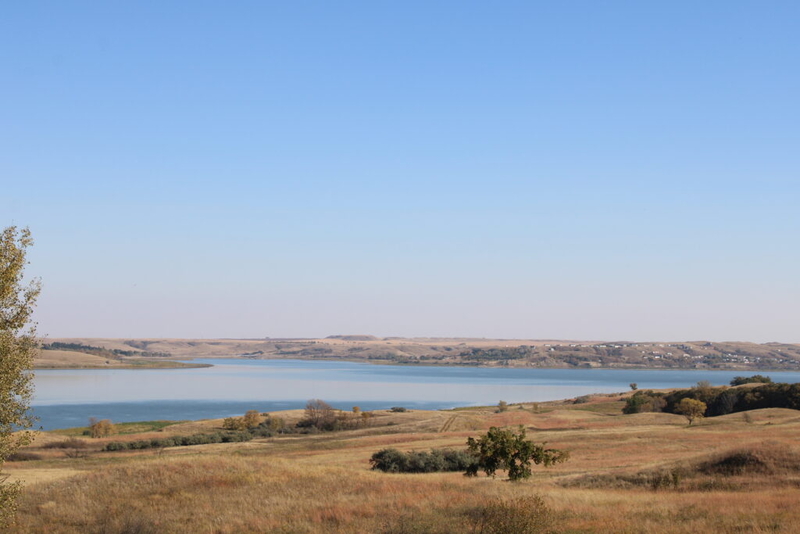
Lake Oahe just outside of Fort Yates on the Standing Rock Sioux Tribe Reservation is pictured on October 9, 2024. The Dakota Access Pipeline crosses underneath the reservoir just north of the reservation. (Photo Mary Steurer/North Dakota Monitor)
A federal agency officially granted the Dakota Access Pipeline a permit to cross under the Missouri River’s Lake Oahe reservoir, ending a six-year environmental review to determine whether the pipeline could continue operating.
The decision, issued by the U.S. Army Corps of Engineers on Thursday, authorizes the pipeline crossing with additional conditions the agency says will make the pipeline safer. It follows the Army Corps’ December release of a 464-page report analyzing the environmental impacts of the pipeline crossing, which is in south-central North Dakota less than one mile upstream from the Standing Rock Reservation. The Army Corps was required by law to wait a minimum of 30 days before it could finalize its findings with the record of decision.
The Dakota Access Pipeline has been carrying crude oil from northwest North Dakota to southern Illinois since June 2017. The pipeline’s owner, Dakota Access, was required to seek the easement from the Army Corps, which manages Lake Oahe, to build the pipeline under the reservoir roughly 10 years ago.
The Army Corps initially granted the easement in 2017.
The Standing Rock Sioux Tribe sued the agency in federal court, arguing the Army Corps approved the easement without completing the full environmental review required under federal law. The tribe claimed the easement was invalid and that the pipeline must be shut down.
A federal judge in 2020 sided with the tribe and vacated the easement. The judge ordered the Army Corps to conduct the environmental review before it could decide whether it was appropriate to re-authorize the permit.
The conditions added to the easement would mostly be the responsibility of Dakota Access to implement. The requirements are meant to prevent an oil spill and minimize the impacts of a spill, such as implementing new leak detection technology, monitoring groundwater and testing surface water. It would also require Dakota Access to provide an alternate water supply and to develop a food distribution plan for communities that rely on Lake Oahe for food in the event of an oil spill.
The Corps also said this option protects environmental resources and responds to comments raised by Tribal Nations.
US Army Corps says oil should keep flowing through Dakota Access Pipeline in long-awaited study
The Corps also said this option protects environmental resources and responds to comments raised by Tribal Nations.
The Standing Rock Sioux Tribe in a Thursday evening statement said that the conditions added to the easement by the Corps decision do not assuage any of the tribe’s concerns related to the pipeline.
“Today’s decision merely restates past conclusions and represents a pattern of minimizing and rejecting Tribal expertise in sustaining our lands, resources, and cultural properties,” the tribe said in the statement. The Standing Rock Sioux Tribe also said the Army Corps didn’t sufficiently engage with the tribe to develop an emergency plan to protect Lake Oahe, which the tribe relies on for drinking water.
“The Tribe will evaluate all legal and political options to defend our Treaty rights, protect Mni Wiconi — Water of Life, and hold the Federal government and private corporations accountable to the highest standards of environmental stewardship and Tribal consultation,” Standing Rock Chair Steve Sitting Bear said in the statement.
Interior Secretary Doug Burgum announced the development Thursday morning while presenting to the Williston Basin Petroleum Conference in Bismarck, drawing applause from the oil industry attendees.
Burgum, who became North Dakota governor in 2017 while Indigenous-led protests against the pipeline were ongoing, called the drawn-out environmental study “a cloud of uncertainty over the whole Bakken.”
“No more uncertainty,” Burgum said. “We’re all good.”
Adam Telle, assistant secretary of the Army for Civil Works, said in a statement that the Corps through the decision is “decisively putting years of delays to rest.”
“The U.S. Army Corps of Engineers are delivering the clear, consistent regulatory decisions required to provide certainty to the American economy and advance President Trump’s American energy dominance agenda, while protecting our natural resources,” he said in the statement.
When the federal judge pulled the easement in 2020, he initially also ordered the pipeline to be shut down. However, that part of his decision was reversed by an appellate court.
The Army Corps allowed the pipeline to continue operating while it was working on the environmental impact statement. The Standing Rock Sioux Tribe in late 2024 brought another federal lawsuit against the agency, arguing the pipeline could not continue carrying oil under Lake Oahe without the easement, among other claims. The judge concluded it was up to the Army Corps’ discretion whether to allow the pipeline to stay open while the environmental impact statement was pending. He noted the tribe could bring another legal challenge against the agency once the study was complete. Standing Rock appealed the dismissal.
Vicki Granado, vice president of corporate communications for Dakota Access Pipeline developer Energy Transfer, said in a statement that the company is “pleased” with the Army Corps’ decision.
“We want to thank the Corps for the tremendous amount of time and effort put in by so many to bring this matter to a thoughtful close,” Granado said in a statement.
Energy Transfer maintains the pipeline has always complied with regulations. The pipeline crosses at minimum 95 feet below the riverbed of Lake Oahe.
“The Dakota Access Pipeline is built to be one of the safest, most technologically advanced pipelines in the world,” a website affiliated with Energy Transfer states.
North Dakota officials have supported the pipeline’s continued operation. The project transports just under half of the state’s oil production.
North Dakota Monitor reporter Mary Steurer can be reached at [email protected]
North Dakota Monitor Editor Amy Dalrymple contributed to this story.
This story was updated with comments from Standing Rock Sioux Tribe.

Bismarck, ND