Missouri voters could face as many as nine ballot measures in 2026
May 21, 2026 | 11:39 am ET
Description
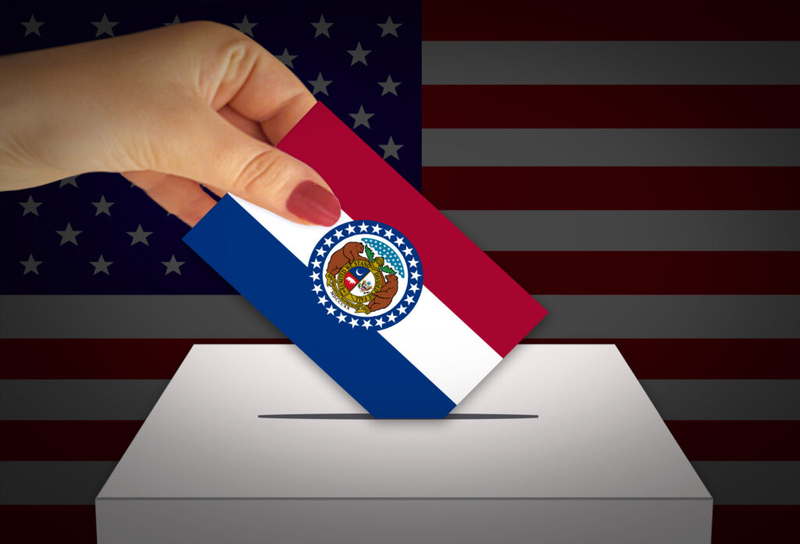
There will be at least seven, and possibly as many as nine, ballot questions before Missouri voters this year (Getty images).
There could be as many as nine ballot measures before Missouri voters in August and November, including proposals on abortion, taxes, initiative petitions, state parks and congressional redistricting.
Seven are already slated for the ballot, while an initiative petition and a possible referendum on congressional redistricting are still awaiting decisions. If all nine appear, it would be the most statewide ballot measures in Missouri since 2014.
Gov. Mike Kehoe could place as many as five of the measures on the Aug. 4 primary ballot.
The deadline for that decision is Tuesday, but Secretary of State Denny Hoskins’ office has asked Kehoe to finish by Friday because of the Monday holiday.
Constitutional amendments are numbered — and ballot propositions proposing a state law are lettered — in the order of submission to the secretary of state’s office.
Possible August ballot questions
The measures Kehoe could place on the August ballot are:
Amendment 1: A 10-year extension of the one-tenth of 1% sales tax that is split between state parks and soil and water conservation programs. The tax raised about $140 million in fiscal year 2025. After narrowly winning initial approval in 1984, the tax has been renewed three times with increasing margins, winning 80% of the vote in 2016.
Amendment 2: If approved by voters, this amendment would mandate the direct election of assessors in every county. Currently, Jackson County is the only county without an elected assessor.
Amendment 3: This proposal would repeal the abortion rights amendment approved with 53% of the vote in 2024 and enshrine the statutory ban on gender-affirming treatments for people under 18 in the Missouri Constitution. If approved, all abortions would be illegal except those needed to treat medical emergencies or to end pregnancies resulting from rape or incest during the first 12 weeks of gestation.
A February poll conducted by Saint Louis University and YouGov showed 60% of Missourians favor allowing abortions during the first eight weeks of pregnancy. But the same survey found 67% oppose gender transition medications for minors and 73% oppose gender transition surgeries.
The campaign committees lined up to fight over Amendment 3 are Her Health, Her Future PAC, with First Lady Claudia Kehoe as treasurer, to back it, and Stop the Ban, which will reform the coalition that passed the 2024 amendment legalizing abortion.
Her Health, Her Future raised $267,000 by March 31, the final day for the most recent full reports, and another $552,000 in donations larger than $5,000 since that date. Stop the Ban reported raising $1.8 million through March 31 and $658,000 in large donations since.
Amendment 4: If approved by voters, constitutional amendments proposed by initiative petition would have a new, higher majority threshold to win passage.
Instead of a majority of all votes cast statewide — as every constitutional amendment, as well as three entire constitutions, has been approved in the past — amendments proposed by initiative would have to receive a majority in every congressional district. That would mean rejection in one district, by as few as 5% of all voters, would be enough to defeat citizen-sponsored amendments.
The proposal has been a growing priority for the GOP supermajority as voters have legalized marijuana, expanded Medicaid eligibility and protected abortion rights in the past decade. Initiative campaigns have increasingly turned to constitutional amendments rather than statutory enactments to make it harder for lawmakers to revise or repeal the measures after passage.
Amendment 4 would also add prohibitions on foreign donations to ballot campaigns and signature fraud, already addressed in state law, to the Missouri Constitution.
Amendment 5: Kehoe’s top priority for the Legislature this year was this proposal giving lawmakers power to expand sales taxes to any transaction to raise money to replace the personal income tax.
If passed, lawmakers would have five years to redefine what is covered by sales taxes. Bills adding revenue to the state treasury would have to include corresponding cuts in the top state income tax rate, currently 4.7%.
Because Missouri allows a myriad of local taxes to be stacked onto the 4.225% sales tax charged by the state, the total rate is above 10% in most or all of 80 communities. The highest sales tax rate is 12.38% in St. Ann in St. Louis County, where a community improvement district tax and two transportation development district taxes are stacked onto state, county and city taxes.
The SLU/YouGov poll found voters like the idea of replacing the income tax with sales tax by a 52-29% margin, but oppose adding sales taxes to transactions like car repair labor, gasoline and professional services such as accounting.
Without an expanded base, sales taxes would have to increase as much as 8.5% to generate the revenue brought in by the income tax.
If Kehoe decides to put the income tax measure on the August ballot, it will be despite ongoing litigation challenging the constitutionality of the proposal and the ballot language written by lawmakers. If the courts don’t remove it from the ballot on the grounds that it contains too many subjects, the challenge to the ballot language could push against the June 19 deadline for mailing ballots to overseas military voters.
And if the question is not resolved by then, a court challenge could come later and force a second vote, as it did for a measure setting budget minimums for the Kansas City Police Department.
November ballot measures
Any measures Kehoe doesn’t put on the ballot in August will wait until November. So will as many as four measures — two constitutional amendments passed by lawmakers, one proposed by initiative petition and a referendum on redistricting.
The initiative petition is being checked, and the legislative paperwork won’t be finished by Tuesday’s deadline on the two passed late in this year’s session.
And the status of the referendum will only be known when Hoskins rules on whether it has enough signatures and he thinks it is a legal referendum, decisions that will be reviewed by the courts.
The measures that must be on the November ballot are:
Amendment 6: The Respect MO Voters initiative would get this designation if it makes the ballot because it was submitted before the Legislature finished work on its proposals.
The amendment, if approved by voters, would require ballot summaries to be clear and accurate, maintain the current standards for qualifying and passing an initiative proposal and require lawmakers who want to alter the provisions of a voter-proposed law to obtain votes of 80% of the General Assembly to put changes on a future ballot.
Passage of Amendment 4 in August could make it harder to pass Amendment 6 in November if the courts rule that the new majority standards apply to measures proposed before the Aug. 4 vote.
The Respect MO Voters PAC spent about $750,000 on its signature campaign.
The two passed by lawmakers will be numbered Amendments 7 and 8 based on the order the paperwork is submitted to the secretary of state’s office. If that is the same order in which final votes were taken, here’s how they would appear:
Amendment 7: This proposal, sponsored by state Sen. Adam Schnelting of St. Charles, would create a state permanent fund that would be labeled the Show-Me Prosperity Fund to receive state appropriations and gifts to the state.
The fund would be managed and left untapped until it could produce enough income to replace all the revenue generated by income, sales and other state taxes. When used, the state could spend no more than 3% of the fund’s three-year average balance.
To generate the $13 billion of general revenue Missouri is collecting this year, the fund would have to hold $260 billion and earn a 5% return.
Eleven states have permanent funds, with the three largest — Alaska, New Mexico and Texas — each holding $50 billion or more earned from royalties on mineral extraction and land sales.
Amendment 8: This proposal, sponsored in the Legislature by state Sen. Jill Carter of Neosho, was the last one to make it through the General Assembly before adjournment. It makes the office of county sheriff a constitutional office. It clarifies that sheriffs run local jails and handle court security. It also adds job protection for sheriffs by requiring a lawsuit to remove a sheriff under a quo warranto case to be filed by the attorney general and no other office.
Referendum: The most expensive ballot measure campaign of the year so far isn’t sure to make the November vote.
Under the Missouri Constitution’s rules on referendums, measures challenged by the people must be on a November ballot unless the Legislature votes to move them to a different date. And since the referendum signatures haven’t been verified by Hoskins, who said he does not intend to make his decision until he has to in early August, its place on the ballot is still uncertain.
The referendum challenges the congressional district map approved last year by lawmakers seeking to flip the 5th District, held by Democratic U.S. Rep. Emanuel Cleaver of Kansas City, and give Republicans seven of the state’s eight seats in Congress.
The SLU/YouGov poll found 41% support the map, with 44% opposed. That was within the margin of error and therefore a statistical tie. The survey showed opposition is strong among Democrats and support is weak among Republicans.
People Not Politicians, the PAC created to operate the referendum campaign, raised $6.2 million through March 31 and another $600 in large donations since that date. Put Missouri First, the committee created by Republicans to run a campaign in favor of the map, has raised $3.1 million so far.
Jefferson City, MO