A new report points a way forward for Pa. lawmakers seeking to aid struggling pharmacies
May 26, 2026 | 3:37 am ET

Description
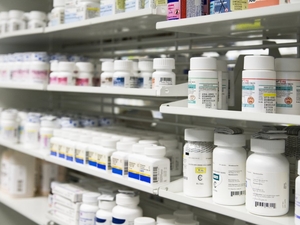
A pharmacist gives recommendations to a customer at the counter. (Photo by Catherine Delahaye/Getty Images)
A new report released by the state Insurance Department Thursday could offer lawmakers a path forward to help struggling pharmacies.
It looked at the potential impact of requiring companies called pharmacy benefit managers, or PBMs, to pay pharmacists larger fees for filling prescriptions.
Pharmacies across Pennsylvania have been closing at an alarming rate. Since 2020, more than 1,000 have shut down in the commonwealth. Many pharmacists blame PBMs, which are middlemen in the pharmaceutical supply chain.
Those companies are hired by insurance plans to manage their prescription benefits. In that role, they negotiate drug costs between insurers and drug manufacturers. They’re also responsible for reimbursing pharmacies when patients use insurance to cover the cost of prescriptions.
But pharmacists say those reimbursements have shrunk over time, to the point where they’re struggling to turn a profit. Because of PBMs’ size, pharmacists say they’re stuck accepting the terms of their contracts or potentially losing large numbers of customers.
Just three PBMs are responsible for processing roughly 80% of all prescription drug claims in America, and each one is part of larger healthcare conglomerates that also own major pharmacy chains and health insurance companies.
For years, pharmacists have advocated for legislation that would require PBMs to reimburse them based on the national average cost of procuring a drug, plus a dispensing fee that would help cover the cost of materials like bottles and labels, as well as the time spent by employees filling a script.
But state lawmakers have historically balked, concerned about how the change could affect drug costs and healthcare prices.
But the study concluded that the impact on drug costs and healthcare rates would be “minimal,” while providing a large boon to independent pharmacies and those not affiliated with large PBMs.
Prescription for trouble: Pennsylvania pharmacists say PBMs are driving pharmacy closures
The Insurance Department, which looked strictly at spending by customers with plans covered by employers, found that on average, independent pharmacists are generally given a dispensing fee of $1 or less per prescription filled.
Pharmacists say the true cost of filling a script, including materials and employees’ time, is closer to $10 or higher.
That’s why the department studied what might happen if PBMs paid a $10.49 dispensing fee to independent and non-affiliated pharmacies (meaning those they have no financial ties to) on top of reimbursing them for the cost of the drug based on national averages. They claim it would have increased drug spending by roughly $55.7 million between 2022 and 2024, or less than 1% of overall spending.
Advocates say the study should allay the concerns of lawmakers who were concerned about the potential impact of legislation requiring higher reimbursement rates.
“To me, what that means is it’s kind of an easy lift and something that should happen since pharmacies are closing at such a rapid pace,” said Rob Frankil, the executive director of the Philadelphia Association of Retail Druggists. “Since it would mean a lot to pharmacies, and wouldn’t have such a detrimental impact to insurance companies and patients, it seems like this should happen.”
Greg Lopes, a spokesperson for the Pharmaceutical Care Management Association, a trade group that represents the nation’s largest PBMs, disagrees.
“Putting a tax on every prescription dispensed in Pennsylvania will result in much higher drug costs for Pennsylvania patients,” he said.
He also said PBMs are already doing their part to stem pharmacy closures.
“We can’t do our work without pharmacies,” Lopes said in a statement. “That’s why PBMs offer innovative, transparent reimbursement programs, provide higher reimbursement to rural pharmacies, and build pharmacy networks to support independent pharmacies. Together, these approaches can reduce strain on the broader health care system while delivering high-quality care.”
A spokesperson for Gov. Josh Shapiro’s office declined to comment when asked if he would back legislation based on the study, instead saying, for the time being, the report could speak for itself.
Spokespeople for leaders of the Senate Republican caucus, Majority Leader Joe Pittman (R-Indiana) and Senate President Pro Tempore Kim Ward (R-Westmoreland) did not respond to questions from the Capital-Star.
A spokesperson for the House Democratic caucus declined to answer specific questions about whether legislative leaders would push such legislation forward, but pointed instead to a statement from rank-and-file member Rep. Jessica Benham (D-Allegheny). She was a key player in pushing 2024’s PBM reform bill.
Benham told the Capital-Star she’s considering a multi-pronged approach to help struggling pharmacies.
“I represent a very urban area that is nevertheless still impacted by these pharmacy closures,” Benham said. “My colleagues that represent areas that are more suburban and rural are absolutely seeing pharmacy deserts pop up and grow. In the conversations around healthcare deserts, in a lot of places a pharmacy is the closest health care provider to an individual.”
For many Pennsylvanians, pharmacies aren’t just a place to pick up prescriptions. They’re the closest and easiest place to get free medical advice from a trained professional.
Benham helped lead the push to pass the 2024 bill increasing state regulation of PBMs, aimed at limiting practices known as patient steering, where they push patients towards pharmacies owned by their parent company, and spread pricing. That’s when pharmacy benefit managers reimburse different pharmacies at different rates, giving preferential treatment to those related to them financially.
But those regulations only impacted PBMs working with healthcare plans paid for by employers. So lately, she’s been focused on another part of the healthcare market: Medicaid.
This session, she’s been backing a bill that would see Pennsylvania’s Department of Human Services hire a single PBM to provide prescription drug benefits for all state-backed Medicaid plans. That would allow the state to set reimbursement rates for pharmacies.
It’s based on a similar program recently implemented in Ohio. The state says in just two years, it saved taxpayers $140 million while helping pharmacies by providing better reimbursements.
But now, Benham sees another path to helping pharmacies: implementing the minimum reimbursement levels studied in the Insurance Department report, which would help them serve customers with insurance plans covered by their employers.
“That’ll be a new project,” she told the Capital-Star. “I don’t know who’s gonna lead that fight yet, but it’s really great to have a coalition of folks who are enough of policy wonks on the subject that we can divide and conquer.”
Benham is part of a bipartisan and bicameral group of lawmakers called the Pennsylvania Community Pharmacy Caucus. The respective House and Senate caucuses include lawmakers who have spent years digging into how to help pharmacies and regulate PBMs.
But both pieces of legislation she’s considering could require a major effort to pass.
“I don’t know timing-wise whether that’s something we’re going to see a lot of movement on necessarily this year,” she said. “It’s definitely going to be a priority of mine, but the priorities of rank-and-file don’t always rise to the level of consideration from leadership or by the governor’s administration. But the administration has a really solid understanding of the role of PBMs. I’ve always had a good working relationship there.”
Other states have already passed similar legislation.
Alabama recently approved a bill that ties pharmacy reimbursement rates to statewide average drug acquisition costs plus a $10.64 dispensing fee.
Montana passed a bill requiring independent pharmacies in the commercial market to be reimbursed at national drug acquisition costs plus a $15 dispensing fee.
Harrisburg, PA