Friday night budget lights: Spending details released after a week of closed-door meetings
May 22, 2026 | 9:49 pm ET
Description
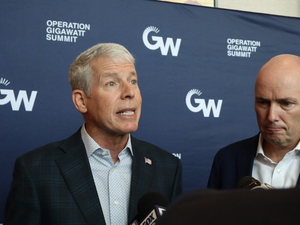
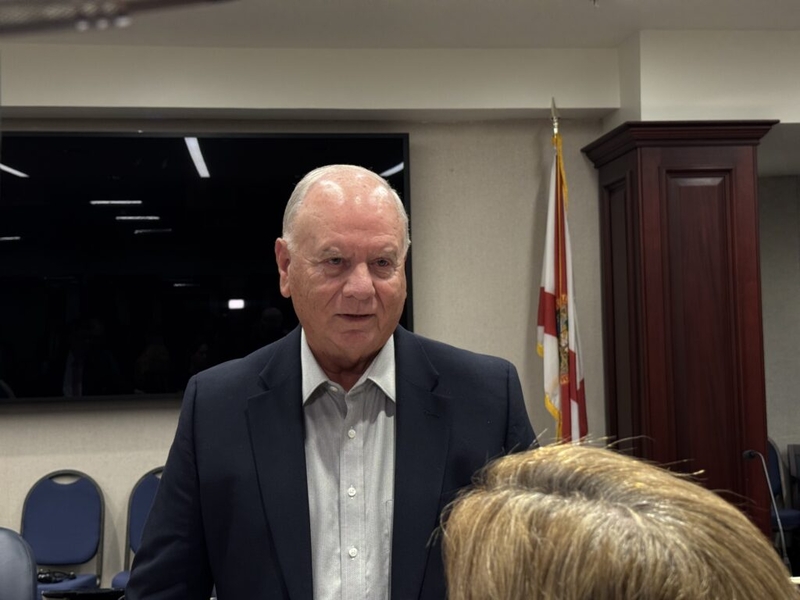
Sen. Ed Hooper speaks to reporters following a budget conference on May 22, 2026. (Photo by Jay Waagmeester/Florida Phoenix)
After a week of behind-the-scenes negotiations, budget writers for the Florida House and Senate met Friday afternoon and early evening and produced apparent agreements on a $50 million investment for a Tampa Bay Rays stadium, pay raises for targeted state employees, and money for a state emergency fund.
The chambers made no offers on one of the most complicated and costly budget areas — funding for Medicaid and other healthcare programs that provide services to the poor, elderly, disabled, and children in foster care.
The HHS budget accounts for about 47% of the overall state budget and more than $19 billion in general revenue funds, representing state tax receipts. Meanwhile, the Friday night budget offers included $50 million for “campus improvements” at Hillsborough College, which is where a proposed stadium is planned so the Rays can play in Tampa instead of St. Petersburg.
The investment was offered after local governments agreed to a memorandum of understanding that committed hundreds of millions in city and county funds to the stadium to help finance the $2.3 billion project.
Although the standard recently has been for the chambers to publicly exchange only offers that have been already privately agreed to, Senate Budget Committee Chairman Sen. Ed Hooper hinted that the money for the stadium might still be in flux.
“I just believe that until that issue is resolved and signed and sealed, I don’t know that the state should committee $50 million to help Hillsborough College,” Hooper said Friday following the first of the two budget meetings.
The governor supports the project.
The talks resulted in agreements on some of Gov. Ron DeSantis’ priorities, including funding for the Florida State Guard, the Florida Job Growth Grant Fund, and an emergency fund that over the past year has paid half a billion dollars for immigration enforcement.
The House offered to agree to the Senate’s suggestion to pump $250 million more dollars into the fund for the fiscal year beginning on July 1. That’s more than double the amount the lower chamber initially proposed — $100 million.
The agreement came after the chambers agreed to pass legislation during 2026 re-establishing the emergency fund in statute nearly exactly the way it was, with the only major change being that the Florida Division of Emergency Management couldn’t buy airplanes or boats but could lease them.
Whether the DeSantis administration considers the House’s $40 million investment for the Florida Job Growth Grant Fund, which promotes workforce training, a win is not clear. That’s closer to what the Senate proposed, but the House’s offer puts guardrails on the spending, placing half in reserve.
The $20 million in reserves won’t become available until after Jan. 5, 2027, DeSantis’ last day in office.
Education
The behind-the-scenes budget negotiations also yielded apparent agreements on some education spending.
The House backed away from paying $20 million to transfer of University of South Florida Sarasota-Manatee campus to New College of Florida. The House also proposed delaying its proposed date of the land transfer from October 2026 to January 2027.
Hooper said USF trustee Will Weatherford, a former speaker of the Florida House, “has been clear that as long as he gets to keep the funds and his teachers and his programs and his students can relocate to another campus if they choose to do that, then he doesn’t object to the transfer.”
But the House is sticking to proposed budget language that would put an additional $10 million in general revenue for operational enhancements at New College.
“I don’t think there’s heartburn over the transfer; the heartburn is over the money,” Hooper told reporters.
The House maintained its position of not funding preeminent universities, rewarding campuses that meet excellence goals. The House proposal offers $43 million in State University System Projects, more than the $15.8 million the Senate initially proposed.
While the chambers didn’t agree to include an across the board 3% pay increase for state employees, the House agreed to a 4% pay increase for state firefighters, state law enforcement officers, and state corrections officers. The chambers had previously announced agreement not to increase health insurance premiums for state employees in the coming year.
There were no revelations regarding spending in the Health and Human Services section of the budget at the two initial Friday night budget meetings.
Some of the stumbling blocks the chambers need to sort out include payments for Medicaid managed care plans and hospitals as well as the future of a revolving low interest “health innovation” loan program, a key part of former Senate President Kathleen Passidomo’s Live Healthy Initiative and a recurring $50 million funding commitment.
Phoenix reporters Liv Caputo and Jay Waagmeester contributed to this story.
Tallahassee, FL