Hospitals, clinics want Nevada to bolster protections for discount drug program
May 25, 2026 | 9:00 am ET
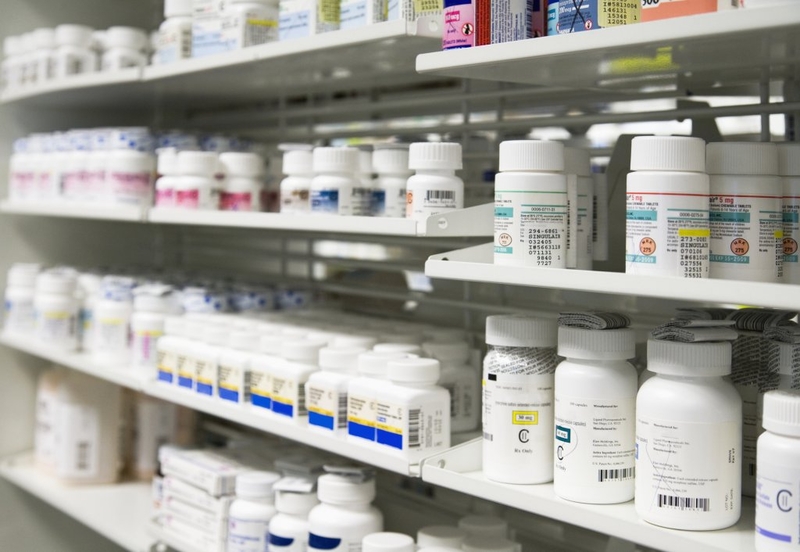
Description
(Mint Images/Getty Images)
Nevada hospitals and health clinics say drug manufacturers are restricting the number of pharmacies in the state that can participate in a federal discount drug program.
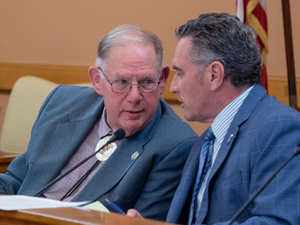
The limitations put in place by drug companies make it harder for patients to refill prescriptions at reduced rates, and they affect a revenue stream hospitals rely on to fund health services for underserved patients, lawmakers were told at last week’s legislative interim Committee on Commerce and Labor.
Officials from Renown Regional Medical Group and the Nevada Primary Care Association, an association of health centers and other community health providers, asked state lawmakers to consider legislation that places protections to ensure health providers can offer the drug pricing program at its fullest.
The 340B Drug Pricing Program, which was created by Congress in 1992, requires drug manufacturers to offer medications at a significantly discounted price to eligible providers.
The program allows eligible hospitals and clinics to contract with pharmacies to fill prescriptions, said Adam Porath, the vice president of pharmacy for Renown Health.
“That drug would be shipped directly to the contract pharmacy,” Porath said. “Any reimbursement that happened for that particular prescription would flow back to the hospital.”
Hospitals and clinics that participate in the program are able to use savings from the program to cover other health services for low-income and underserved patients.
But some drug manufacturers have restricted which pharmacies hospitals can work with, Porath said. They’ve prevented hospitals and clinics with in-house pharmacies from entering contract arrangements.
Twenty-two states have enacted laws to prevent manufacturers from restricting 340B-priced drugs to contract pharmacies in 2025, according to Porath. Representatives for the hospitals and health clinics want Nevada to consider similar legislation.
One possibility would be to amend Nevada’s Unfair Trade Practices to “guarantee a right to receive 340B drugs at any pharmacy contracted by a covered entity from which the patient receives services,” said Steven Messinger, policy director with the Nevada Primary Care Association.
The funds generated by the cost savings allows hospitals to stand up other health programs that benefit underserved and low-income populations.
Renown Health used cost savings to provide pharmacotherapy services to both adult and pediatric patients, hire pharmacy liaisons that help with financial assistance for patients, and run a 24/7 pharmacy in Reno, Porath said.
Nevada’s Federal Qualified Health Centers – community-based clinics in medically underserved areas – generate roughly 12% of their revenue from 340B Drug Pricing Program, Messinger told lawmakers.
The 340B Drug Pricing Program opens up access to people who might not be close to hospitals and clinics to pick up cheaper prescriptions and rely on pharmacies, said Messinger.
“I think it was suggested that you could just drive to the pharmacy where you could get your discount,” Messinger said. “Most of our patients don’t have lives that are that easy. They are not able to just drive across the valley to a specific place. When they go to access it’s very critical it be in the neighborhood they are in.”
Nevada lawmakers have already passed legislation that prevents price discrimination on 340B drugs and ensures pharmacy benefit managers (PBMs) sell drugs “at the wholesale acquisition cost” rather than adjusted, higher costs, Messinger said.
“That’s how we are able to care for uninsured problems,” he said. “We were getting a lot of money captured before we passed that law.”
‘Very lucrative revenue stream’
Though hospitals and clinics have touted the benefits of the 340B Drug Pricing Program, the amount of revenue hospitals have generated has been scrutinized by states and at the federal level in recent years. The drug program’s spending went from $6.6 billion in 2010 to $44 billion in 2021, according to an analysis from the Congressional Budget Office analysis
The Senate Health, Education, Labor, and Pensions (HELP) Committee has been investigating abuses of the 340B program.
It is because of lucrative revenue streams that lawmakers should be wary about considering a legislative fix, said Dharia McGrew, the director of state policy with Pharmaceutical Researchers and Manufacturers of America (PhRMA).
“That mechanism has been co-opted by mega retailers and vertically integrated PBM-owned pharmacies that have learned that this program could be a very, very lucrative revenue stream, billions of dollars,” she said, adding that the program is driving up medical costs. “It incentivizes the prescribing of higher cost drugs that have a higher margin of revenue, and it is pushing patients into more expensive care settings.”
Lawmakers, she argued, should leave it up to Congress to address gaps in services.
Messinger pushed back against claims that patients aren’t directly benefitting from the funding accumulated from the drug pricing program.
“A lot of the 340B discussion is assuming a world where everyone is privately insured and we are just trying to decide if the dollar should be going to the insurance company, the PBM, the drug manufacturer, or the provider,” Messinger said. “It doesn’t work that way for us. About 30% of our patients are uninsured and we have to find a way to pay for those patients.”
Pharmaceutical manufacturers, he noted, have also benefited from keeping drug costs high, adding that the “three largest pharmaceutical manufacturers have profits that are measured in the tens of billions” of dollars.
Nevada, he said, has a better safety net because of the revenue generated from the program and the money is better spent “than somehow putting the benefit back to pharmaceutical manufactures who seem to be doing fine.”
“Why would you want to take that dollar out of clinics serving Nevadans and give them to someone else?” Messinger asked.
Las Vegas, NV