A conversation with the retiring director of Prevent Child Abuse Kentucky
May 25, 2026 | 6:00 am ET
Description
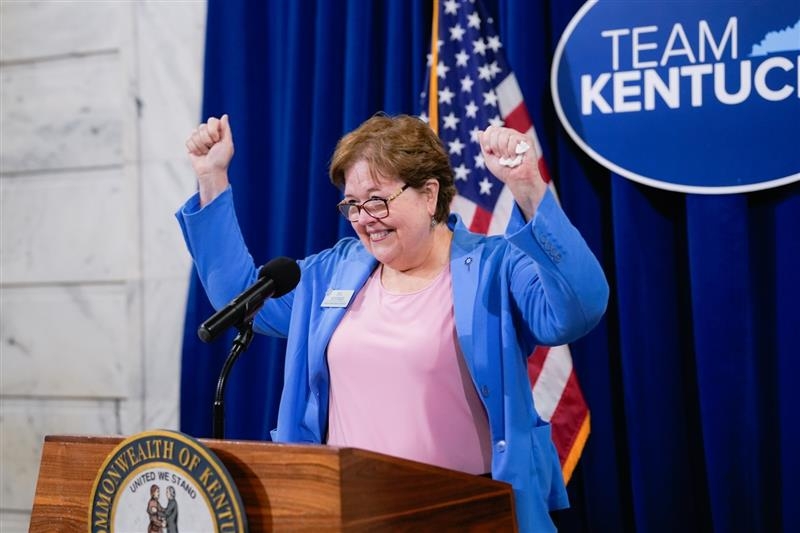
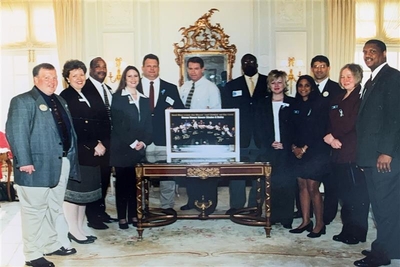
Jill Seyfred at the Child Abuse Prevention Month kick-off in the Capitol Rotunda in 2025. (Photo provided)
Child maltreatment was common when Jill Seyfred first became executive director of Prevent Child Abuse Kentucky in 1988, but many thought of it as a far away problem, not one that could affect anyone they knew.
Seyfred, who is retiring this year after more than 40 years leading Prevent Child Abuse Kentucky, said the herculean effort of ending child abuse in the commonwealth is possible, but it will take more financial investment in prevention and more widespread collaboration.
Her last day is June 30, after which she will work part time through December to assist the interim director and new director in the transition.
Seyfred sat down with the Kentucky Lantern to discuss child abuse over the last four decades and what must happen in the future to protect children. The conversation has been edited for length and clarity.
Kentucky Lantern: Take us back to 1988, when you became director of Prevent Child Abuse Kentucky, and characterize that time. What was the child abuse landscape like in Kentucky back then when it came to child abuse and neglect?
Jill Seyfred: There wasn’t a lot of talk about it. I think people certainly knew that child abuse and neglect happened. There was a sense of: ‘It did not happen here, and it certainly did not happen to anyone that I knew or did not happen on my block. It didn’t happen in my subdivision, or it did not happen to anyone that I worshiped with or went to school with.’
So, kind of like: it happened, but somewhere else.’
KL: How did you and other advocates and organizations break through that misconception?
JS: Part of it has to do with some national messaging that happened. When we first heard about child abuse, it was this arm’s length kind of approach. And then as the years went by and as messaging changed, then it was, ‘oh well, it can, it can happen in my community, just to not to people I know.’
And then … the space kept narrowing. Over time, that messaging then resonated: ‘oh, gosh, child abuse is happening and it’s happening in my community to people I know.’
I think now where we are is okay. I hope that everybody knows that it exists. I think our challenge now is people don’t know what to do about it.
One thing that we as an agency try to do is to really get away from talking about (how) Kentucky is number one in child abuse and neglect — or number three or number five, or whatever the ranking may be in that particular year. We have found that that really almost stifles people, that the figures are so big, and the sense of being overwhelmed takes over. Instead of spurring people into action, which we want those figures to do, people actually do the opposite.
When we constantly bombard people with those high numbers, they feel like, ‘oh, gosh, there’s over 50,000 reports, and I’m just one person, I’m not going to make a difference. So why even try?’
And that’s actually the opposite of what we want to happen. Because we want and we need everybody in the state to be involved in our prevention efforts. We want everybody to be able to see that they have a role in helping raise our children, nurturing families, making sure that families and children have what they need.
KL: How can you properly raise awareness without setting in motion this bystander effect that you’re describing?
JS: One thing that we try to do is: We might use some of those numbers, but then, almost in the same breath, we will say, ‘but this is what you can do. Here’s how you can help. Here’s how you can be involved.’
We know that there’s so many factors that go into a child not having what he or she needs. If kids don’t have a stable living structure, and we expect them to go to school and focus on learning and growing, that’s going to be really hard for that child.
I think that that is probably the biggest shift that I’ve seen from 1988 to now — that it is more of a holistic, cohesive approach to the entire family. What does the family need to help the family and the kids be where they need to be?
We as a state will all benefit, because those kids then are going to be contributing taxpayers, and we’ll get more tax revenue, and you know, they’ll grow up to be the next reporter or the next governor or the next social worker, and we’ll all be better off.
KL: You’re getting at this line and balance we must look at between true neglect and a lack of resources. That line has become more of a focus in the last few decades.
JS: Absolutely. Housing, mental health. Domestic violence, substance use disorder, especially for our state, is also a huge issue. So, it’s really approaching the family and looking at what the family needs as a whole.
Social isolation certainly tends to lead to parents or caregivers feeling isolated. They have a job, and they come home from work and they’ve had a hard day, and the kids have had a hard day, and the financial stresses are mounting, and the parents or caregivers don’t have anybody that they can call or depend on, that’s a very lonely place to be.
KL: And food insecurity, especially right now, is a concern.
JS: Absolutely. Here we are in the summer months. I know that schools do a tremendous job, and a lot of community organizations do a tremendous job, of making sure that kids have the food that they need during the summer. A lot of them have summer backpack programs. And again, in 1988, that was not anything that we talked about or anything that was on the horizon.
Policies that matter
KL: You’ve seen many laws change in Kentucky in your career. What has been the most impactful?
JS: What we used to call Shaken Baby Syndrome is now called abusive head trauma. We know that a number of fatalities and near fatalities, not only in Kentucky, but nationwide, are caused by abusive head traumas.
I think that that was a really significant thing that the state did, and of course, it’s hard, because you’re asking professionals to get more training when they are already, regardless of their particular field of expertise, being required to get training within their field of expertise. And then that law basically made them get even more but we thought that it was very important, and certainly one of our legislative wins.
The Child Fatality and Near Fatality Review Panel was established in 2012. And then in 2013 it was codified by the General Assembly. It’s basically a multi disciplinary opportunity for people to sit down and look at where we failed a child. But the point being, how can we do better?
KL: Where are the biggest gaps? As we look to lawmakers in Frankfort and other decision makers, what must they do to better protect children?
JS: The word ‘upstream’ has been bantered about in a lot of different situations. For us in the world of child welfare, we obviously think that going upstream means catching kids before they get into the foster care system and before families kind of spiral downwards and need significant amounts of help. But that always makes me think about prevention as a whole.
There’s always more needs than there is funding to meet the needs. But I would argue that with every social situation that we are talking about — overcrowding of prisons and jails, the juvenile justice system, gun violence, ingestions, everything that you see in the headlines — if we truly go upstream and provide families with what they need when they need it, I think we’d be saving the state a lot of money. We’d be saving families a lot of heartache, and we would be leading the state in how to make child abuse prevention something that we all participate in.
It’s hard to not talk about treatment when you have kids and families who have to have health right now, but we also have to continue to talk about prevention and those things that we talked about earlier: food and clothing and medical attention and a roof over their head and access to education and all of the things that help make a family whole.
KL: What were the wins and misses from the most recent legislative sessions?
JS: In 2024 we worked with (Rep. Stephanie Dietz, R-Edgewood) to pass House Bill 207 which had to do with sex dolls. (HB 207 criminalized sex dolls that resemble children). That was huge. And then this session, working with (Rep. Marianne Proctor, R-Union) on House Bill 4, the grooming bill. (HB 4 made it a crime to groom minors for sex).
I know that the Attorney General and attorneys general before him have had an emphasis on internet safety and making sure that we keep kids safe online.
We are on the cusp of having that be the next opioid epidemic with having so many kids, being either trafficked or otherwise falling into bad situations online. If we haven’t done what we already have done, it would be much worse.
But we still have so much left to do, because kids every day are being abused through these online systems. And I know that electronic crime investigators cannot keep up with the tips that come in to them, so it is a growing concern.
KL: Do any bills stand out that, if they made it into law, would have really helped children? In other words, what is in need of a serious revisit next year?
JS: The animal control officer bill. We were very disappointed that that did not pass. We know that animal control officers are in a position oftentimes to interact with children and families prior to social workers or any other entities. (House Bill 246 proposed training animal control officers in how to spot signs of child abuse).
Looking to the future
KL: You’ve spent a lot of time trying to combat a very complicated and horrendous problem in our commonwealth. In 2026, we know children are still dying and nearly dying from abuse and neglect. What gives you hope, if anything?
JS: I do have hope. Actually, I have a lot of hope. I think that there is more interest in being part of the solution.
I think that there’s a lot of people that don’t quite know what to do, but they are interested in doing something. So then the challenge for agencies like PCAKY and others is how to harness that interest, and move that interest into action. But that gives me hope.
KL: Do you think it’s possible to eradicate child abuse in our lifetime? What would that take?
JS: It is definitely possible. I’m not sure if it’s possible in my lifetime.
It’s not going to happen overnight, but there’s a whole lot of agencies, there’s a whole lot of people who are working together for the common good, the common mission of making sure that Kentucky’s families and children have what they need to break the generational cycle of abuse, and I do think it can happen.
KL: In our conversation a couple of different times, you’ve mentioned that people are more aware of it, but they don’t know what to do. What should they do?
JS: First and foremost, we want kids to be safe. To be able to call the report number would be first and foremost. (Kentucky’s Statewide Child Abuse Hotline is 1-877-597-233).
But over and above that, it’s being involved in your community, it’s taking an interest in kids on your block.
We have a program called Lean On Me Kentucky, where we want people literally to lean on your neighbors if you need something, or if you see that your neighbor needs something.
A lot of times what we see is kids and families enter ‘the system’ because of a neglect report, and if we would have just taken the time to give that family what they needed on the front end, we could have kept the family and the children out of the system.
Certainly above that, there’s all sorts of agencies in every community in this state that need volunteers, that need donations, whether it’s financial or in kind.: diapers, toys, all sorts of things. There’s all sorts of agencies that need good board members. I think that there’s a place for everyone, no matter what your skill is, and no matter where you live.
KL: I want to end on a little bit of a lighter note. Tell me something fun you’re looking forward to in retirement.
JS: I love to read but I haven’t read a lot or at all in the last, I don’t know, a few years, but that has not stopped me from having a huge book list that I want to read. And that hasn’t stopped me from going and buying books. I am looking forward to sitting in the sunshine and just reading to my heart’s content.
Frankfort