Maine’s Democratic majority pushes through budget with millionaire tax, relief checks
Apr 08, 2026 | 11:53 pm ET
Description
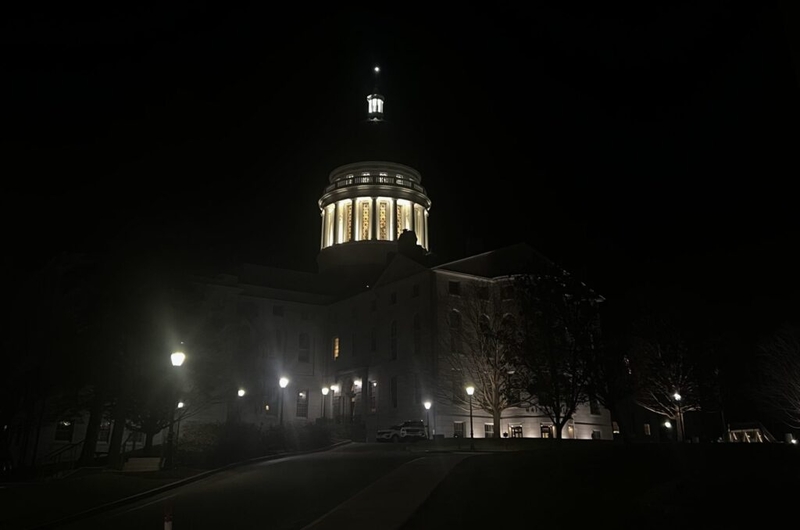
The Maine State House in Augusta lit up at night during the 2024 legislative session. (Photo by Emma Davis/ Maine Morning Star)
The Democratic majority of the Maine Legislature cast its initial approval for a supplemental budget Wednesday night that increases taxes on millionaires and sends $300 relief checks to some Mainers, pulling from the state’s rainy day fund to make that initiative and other priorities possible.
While Democrats largely celebrated the package for trying to shield Mainers from the impacts of federal cuts and raise revenue in an attempt to continue the investments made under Gov. Janet Mills, Republicans cast it as irresponsible spending.
“We found a way to provide revenue by asking the highest earners in our state to pay just a small percentage more,” said Rep. Drew Gattine (D-Westbrook), co-chair of the budget committee. “That’s money that we will need to protect all that we’ve accomplished over the last eight years.”
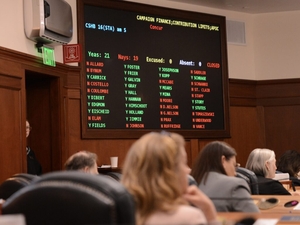
No members of the minority party voted for the plan, which lawmakers debated late into the night a week out from when the legislative session is scheduled to end. One Democrat, Rep. Tiffany Roberts of South Berwick, joined Republicans. The minority party unsuccessfully attempted to secure last minute funding for the state’s agriculture industry, though those amendments and a range of others failed.
“This governor is cleaning the bank account and running the credit card on her way out the door,” House Minority Leader Billy Bob Faulkingham (R-Winter Harbor) said during a press conference Wednesday morning, “and it’s going to be a mess for the next Legislature and the next governor.”
The supplemental budget plan would be a $227 million net increase to the current $11.65 billion biennium budget passed last year.
However, the package also pulls $292 million from the state’s Budget Stabilization Fund, which Mills grew to its current roughly $1 billion statutory maximum and previously refrained from touching. It’s meant to cover revenue shortfalls. The relief checks make up the bulk of that cost, though less than Mills had initially asked for.
While providing less for the checks, Democratic lawmakers on the budget committee ended up funding even more measures than the governor recommended from those reserves, including the state’s public defender system, eviction prevention program, emergency shelters, school budgets and improving access to affordable prescription drugs, among other initiatives.
The budget also aims to increase future revenue by way of adding a 2% tax on income above $1 million, which is projected to generate $150 million over two years. Mills announced she’ll support the initiative after she’d long opposed calls to increase income taxes.
“Janet Mills lied to the Maine people when she said she wouldn’t raise taxes,” said Assistant Senate Minority leader Matt Harrington (R-York), referring to Mills’ initial campaign pledge to not raise taxes.
Maine businesses have also joined Republicans in opposition to that tax.
“When the outlook of our population growth is stagnant and we should be attracting people to Maine, it puts a disincentive to people to call Maine home,” said Patrick Woodcock, president and CEO of the Maine State Chamber of Commerce, during a press conference on Tuesday.
Democrats on the House floor defended the move.
“Today, I have heard people express concern about attacks on millionaires,” Rep. Michael Brennan of Portland said. “I’ve heard almost no concern for the 30 to 40,000 people that may lose their health insurance in the state of Maine. Fortunately, this budget is crafted in a way and a responsible way to respond to those unfunded mandates that came from the federal government to the state of Maine.”
The supplemental budget also includes funding Mills proposed to help offset changes made by President Donald Trump’s spending law signed last summer, which significantly shifted tens of millions of dollars in costs for health care and assistance programs to the state.
“I wish those mandates hadn’t been imposed on us,” Gattine said, “but I know we need to fund them if we want to make sure people don’t lose their health care or their access to food.”
Throughout the evening, the chambers rejected more than 20 proposed amendments, largely from Republicans.
Rejected proposals included measures to prohibit restrictions on federal immigration enforcement, add more local law enforcement, and adopt more of the tax changes in Trump’s spending law. Democratic lawmakers opted to conform with even fewer of the federal tax changes than the governor had recommended.
Two amendments unsuccessfully attempted to put $45 million toward supporting the state’s agricultural, food and forest products economy — mirroring a bond proposal with the same price tag that failed to secure enough support earlier in the day.
Originally part of a larger bond package, the agriculture and forestry funding was taken up on its own earlier this week, and despite gaining the initial approval of both chambers, the House failed to secure the two-third support needed for enactment earlier Wednesday.
“I stood up earlier today and expressed my support for farmers and my objection was of the funding source,” Rep. Tiffany Strout (R-Harrington) said. With the amendment, “it’s not a bond issue with any interest that we’re going to have to pay back.”
Rep. Mark Blier of Buxton proposed the allocation be covered by the rainy day fund. Sen. Scott Cyrway of Kennebec proposed using unappropriated surplus and reducing funding for programs such as schools and shelters as well as taking funds away from the Department of Health and Human Services.
Of Cyrway’s plan , independent Sen. Rick Bennett said, “he’s doing a bold thing, which is actually making priorities in a budget document, which is what it should be all about.” However, Bennett said, “the funding sources, to me, are too problematic.”
Rep. Stacy Brenner (D-Cumberland) echoed that, saying she is desperate for money for farmers. But, she said, “I am not going to pit one disadvantaged population against another.”
Some Democrats also attempted to make changes to the budget plan on the floor. Rep. Jan Dodge of Belfast proposed requiring revenue surpluses to go toward paying for improved benefits for retired state workers. That plan also failed.
Eesha Pendharkar contributed reporting to this story.
Augusta, ME