Lawmaker wants tighter regulations on NJ hospital closures
May 21, 2026 | 6:51 am ET
Description
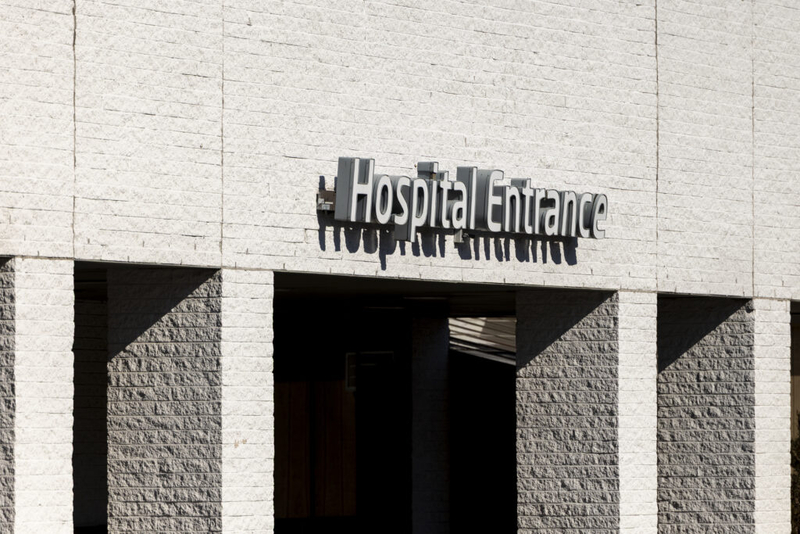
A new bill proposed in the wake of a Jersey City hospital shutdown would give public officials new tools to protect patients when hospitals seek to close. (Photo by Anne-Marie Caruso/New Jersey Monitor.)
A Hudson County lawmaker wants to give New Jersey and its towns more control over the hospital closure process after a Jersey City hospital shuttered its doors in ways government leaders say violated state law and endangered residents.
Sen. Raj Mukherji introduced legislation that he said would expand New Jersey’s regulatory toolkit to protect patient care and healthcare services at hospitals that are struggling to remain open.
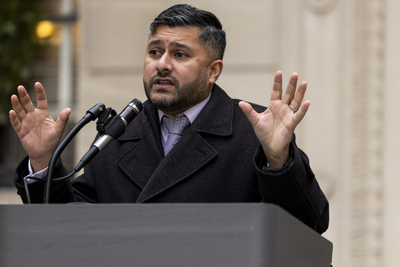
“If you have an operator of an acute-care hospital flouting laws that are on the books, to protect patients and communities we need to strengthen government’s ability to step in,” Mukherji, a Democrat, told the New Jersey Monitor.
Lawmakers from both parties have raised concerns about New Jersey’s hospital closure process after Heights University Hospital in Jersey City ended in-patient care last fall and closed its emergency room in March.
The state Department of Health fined the hospital, operated by Hudson Regional Health, $128,000 for not meeting various legal and regulatory requirements of its certificate of need process, which is required when facilities seek to expand or reduce services.
Mukherji, whose district includes the hospital, first opened in 1872 and long known as Christ Hospital, said its owners ignored the law “because the fines were cheaper.”
Hudson Regional spokesman Vijay Chaudhuri said despite millions of dollars of investment, Heights University faced “insurmountable challenges” financially.
The state provided millions of dollars in additional funding for the hospital following the 2024 bankruptcy of its former owner, but Hudson Regional said continued losses at Heights University would have threatened its hospitals in Bayonne, Hoboken, and Secaucus.
“The State would be far better served focusing its efforts on allocating and providing long-term healthcare funding to hospitals that serve underserved populations – funding that HRH had requested for months but that never materialized,” Chaudhuri told the New Jersey Monitor.
Mukherji has criticized the way Hudson Regional has handled the closure, but he agreed the hospital system faced an uphill battle with an outdated facility and a high rate of uninsured and under-insured patients, common problems among urban facilities.
“There has to be a system-wide effort to prop up our safety-net hospitals and to expand coverage and ensure coverage,” he said.
Jersey City, with roughly 300,000 residents, should not be forced to rely on a single hospital —Jersey City Medical Center, owned by RWJ Barnabas — and a single emergency room, Mukherji said.
“We should be a three-hospital city,” he said. “Now we’re a one-hospital city. A one-emergency room city.”
Mukherji said he is working closely with Gov. Mikie Sherrill’s office on the legislation, and the language may evolve.
“Governor Sherrill knows how damaging it is when a health care facility abruptly closes its doors, jeopardizing care and putting the health and safety of communities at risk. She’s made it clear New Jersey will not tolerate it. We are working closely with our partners in the Legislature for stronger safeguards that hold bad actors accountable, protect patients and workers, and help prevent future disruptions to critical health care services across our state,” Sherrill spokesperson Maggie Garbarino told the New Jersey Monitor.
The bill calls for the Health Department to alert the state attorney general and leaders in the municipality where a hospital is located if that hospital is violating the state’s closure process or if it is failing financially and has yet to seek a change in its certificate of need. The department, attorney general, or municipality could then ask a Superior Court judge to appoint a receiver, a neutral party to take over hospital operations for an unspecified amount of time or pursue closure through the hospital closure process.
The measure has yet to be posted for a hearing and does not have a sponsor in the Assembly.
The Health Department’s closure process for Heights University – which has yet to conclude, even though the hospital hasn’t treated patients in months – was paused in mid-April when Hudson Regional said it had changed its mind about closing the hospital and wanted to explore renovating or relocating the facility. State health officials insisted the closure process must proceed, noting that the hospital was indeed closed, and the two sides are now in Superior Court.

Trenton, NJ