Gov. Josh Stein signs executive order to tackle housing affordability
May 19, 2026 | 4:32 pm ET
Description
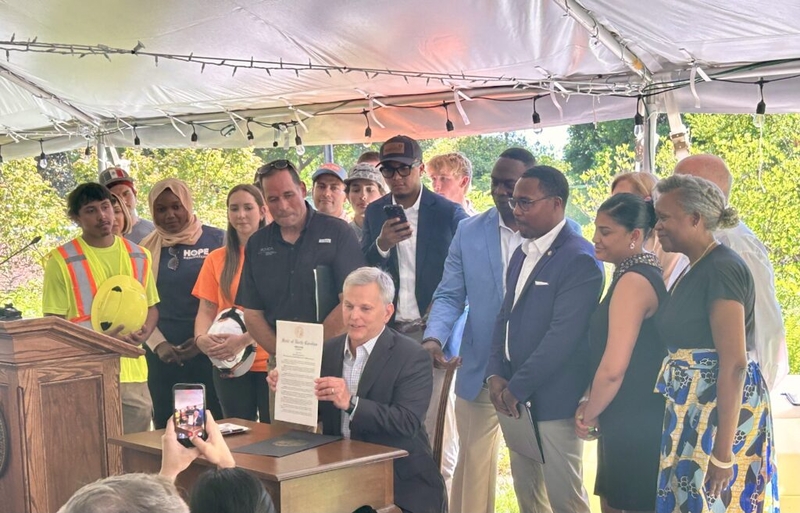
Gov. Josh Stein hold up executive order directing cabinet agencies to work together to increase housing supply. (Photo: Greg Childress/NC Newsline)
Gov. Josh Stein on Tuesday signed an executive order directing cabinet agencies to work together to increase housing supply and affordability.
The governor noted that despite best efforts, the state is projected to be more than 750,000 units short of housing needs by 2029.
“You all have heard the expression that if you build it, they will come,” Stein quipped. “Turns out … if you don’t build it, they will still come.”
A study commissioned by N.C. Chamber Foundation, N.C. Home Builders Association and NC REALTORS® — “2024 Housing Supply Gap Analysis, State of North Carolina” — found an expected gap of 764,000 total housing units (322,000 rental units and 442,000 units for purchase) across North Carolina by 2029.
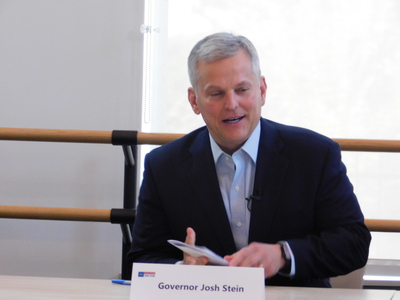
“People want to live and work here, but we simply do not have enough homes to meet that growing demand,” Stein said. “Housing is the single biggest expense that most families face, so if somebody’s rent or mortgage takes up too much of their monthly paycheck, that means that they have that much less to spend on other essentials.”
Stein said the state needs more housing that is affordable for middle-income workers such as teachers, nurses, police officers and firefighters. He said his recommended budget invests in North Carolina’s housing programs to expand affordable housing, preserve existing rental units and support emergency home repairs, particularly for low- and moderate-income families, seniors, veterans and people with disabilities
In 23 of North Carolina’s 100 counties, teachers do not earn enough to pay the average rent, Stein said. Carpenters in Charlotte can only afford about 20% of entry-level homes, he said, and in Raleigh, they can only afford 8% of available entry-level homes.
“They can build the homes, they just can’t afford to live in the homes they’re building,” Stein said.
Stein signed the executive order during a press conference attended by dozens of affordable housing advocates, Democratic and Republican lawmakers, city and county officials and others.
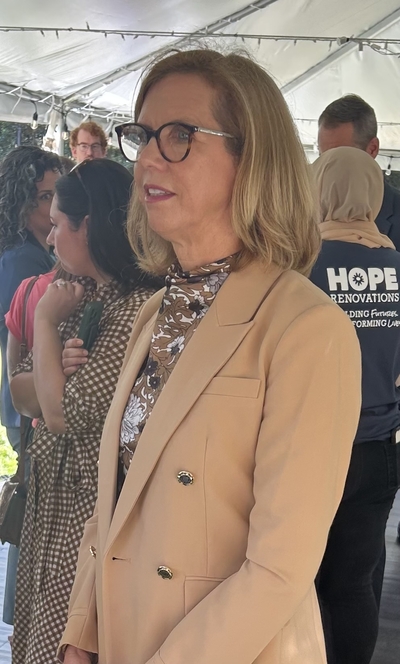
The governor used the occasion to announce that he has hired Janneke Ratcliffe to serve as senior adviser for housing. Ratcliffe will collaborate with leaders of the private, nonprofit, philanthropic, academic and faith communities to advance the administration’s housing goals and policies and to accelerate the development of affordable housing.
Ratcliffe previously served as vice president of the Housing and Communities Division of the Urban Institute in Washington, D.C. She said the housing needs in North Carolina are vast and diverse.
Jones County, for example, only needs a couple of hundred homes to meet projected demand by 2029, while Chatham County is 33% short of forecasted demand and has the largest gap to close, she said.
Meanwhile, Wake County needs more than 100,000 housing units to meet demand by 2029, Ratcliffe said.
“We can’t just build more high-end homes and luxury apartment buildings,” Ratcliffe said. “We need multigenerational options, like backyard cottages, low-cost infill; and we need starter homes so that our young households can put down roots right here in our communities.”
Stein invited Maysville Town Manager Schemata Brown to the executive order signing. The town in small, rural Jones County is planning a $10 million, 40-unit workforce and senior housing apartment complex that will be affordable for a rookie police officer and first-year teacher.
The county is one of 22 chosen to participate in “Our State, Our Homes” — an initiative that’s part of the Carolina Across 100 program coordinated by the UNC School of Government that partners with communities in each of North Carolina’s 100 counties to address longstanding challenges such as affordable housing shortages.
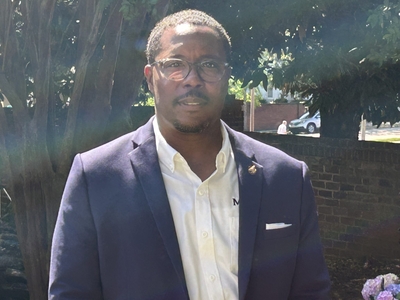
“For communities like Jones County and the town of Maysville, housing is not an abstract policy discussion,” Brown said. “It’s about whether families can stay, grow and thrive in places they call home.”
Brown said Maysville is revitalizing its downtown by purchasing buildings to create apartments for low-to moderate-income residents. The county has a thriving school district with no low-performing schools, Brown boasted, and a new workforce development center to train young people in skilled trades.
“When you combine strong schools, workforce development and housing, you begin to see a full ecosystem of opportunity taking shape,” Brown said.
In an interview with reporters, Stein said there’s bipartisan support for several bills designed to increase housing supply. He cited bills that would remove certain parking restrictions to allow more units to be built and end lot-size requirements in new subdivisions.
As housing needs grow, rural communities look to the state for funding, expertise
“There are many good ideas, and what I hope the legislature does is, they come together, talk with all interested parties and come up with as many proposals as we can, that will increase supply,” Stein said.
A group of Democrats have filed House Bill 1056 to allow residential development in all commercial zones and prohibit minimum parking requirements. Bill sponsors and other housing advocates contend “regulatory barriers, infrastructure constraints and lengthy or unpredictable approval processes” increase the cost and time to build housing, limit supply and contribute to higher prices.
In an interview with NC Newsline, Yolanda Winstead, president of the nonprofit Downtown Home Improvement Corporation Inc. (DHIC), a Raleigh-based affordable housing developer, said the biggest problem facing nonprofit housing developers is that they don’t have the “capacity to meet the scale of the problem.”
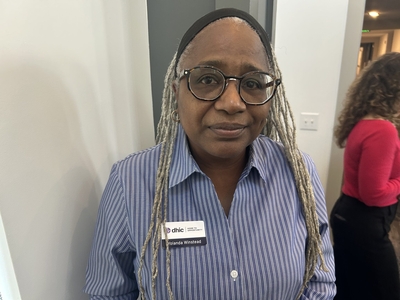
“As successful as organizations like ours have been in adding to the [housing] stock, we’re losing affordable housing stock just as quickly as we can, probably faster than we can build,” Winstead said.
Affordable housing losses come as it ages out of federal restrictions requiring long-term affordability. When the restrictions expire, property owners can increase rents to market rate or sell the property to private investors.
Stein told reporters that he “strongly” supports efforts to increase the state’s minimum wage to address affordability concerns. The current minimum wage is $7.25 an hour, the same as the federal minimum wage.
“North Carolina has not raised its minimum wage since 2009,” Stein said. “It’s incredibly much too low. We need to dramatically increase the minimum wage.”
Under a bill filed by Democrats titled the Fair Minimum Wage Act (House Bill 1059), the minimum wage would increase to $15 an hour and be adjusted automatically for inflation each year to reflect increases in the consumer index. The adjustments would become effective Jan.1 each year.
The bill sets an $11 minimum wage for small businesses, those earning profits of less than $400,000 a year. That’s an acknowledgement that small businesses cannot easily absorb increased labor costs in the way that large corporations can.
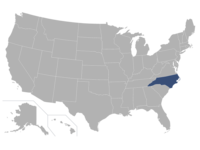
Raleigh, NC