Flesh-eating screwworms head for American livestock
May 28, 2026 | 5:00 am ET
Description
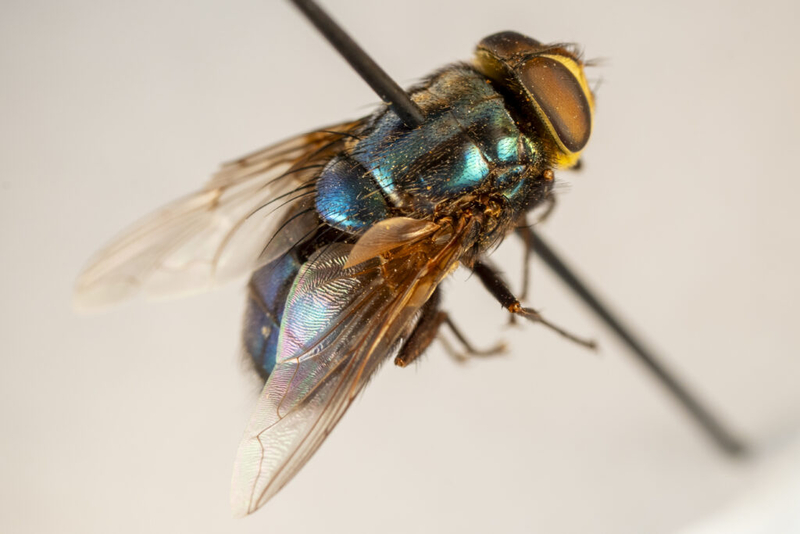
A pinned specimen of a full-grown New World screwworm fly is shown in this image. Federal and state officials are preparing for a potential invasion from the flesh-eating parasite that could disrupt livestock markets. (Photo courtesy of Michael Miller/Texas A&M AgriLife)
Southern states are bracing for a potential invasion of the New World screwworm that could disrupt livestock markets and raise already high meat prices.
So far, the parasite has yet to land in the United States, but it has been spreading across Mexico and Central America. Previously eradicated from the United States in the 1960s, the fly can infest livestock, pets, wildlife and in rare cases, humans. The parasites are named for their larvae, which burrow into living flesh like a screw, causing severe tissue damage and sometimes death.
With multiple cases reported within 100 miles of the U.S.-Mexico border, the federal government has already banned the import of live cattle from Mexico, compounding the shortage of domestic beef. State and federal officials also have created new monitoring, testing and quarantine protocols even as the feds put in place measures to sterilize millions of flies — including a $750 million new facility that will produce sterile flies.
“It’s going to be very challenging, I think, at this point to keep it out of the United States,” said Dr. Samantha Holeck, state veterinarian with the New Mexico Livestock Board, which regulates the livestock industry.
Beef prices are already at record highs, with federal data showing the average price of ground beef at $6.90 per pound this month. That’s a 77% increase since January 2020, when ground beef stood at $3.89 per pound, Yahoo Finance reported.
As drought worsens, Western states brace for wildfires, water shortages
Years of drought, increased operating costs and other supply disruptions have pushed ranchers to liquidate their herds to the smallest level in 75 years, according to the American Farm Bureau Federation. Despite the drop in supply, demand remains strong, which has pushed many ranchers to feed cattle to record-high weights.
Beef prices are unlikely to fall, because it takes time to grow herds and increase production, said David Anderson, professor and extension specialist in livestock and food product marketing at Texas A&M University. He said beef producers appear well prepared to fight a domestic screwworm invasion, which many view as an inevitability.
“I think we will re-eradicate it. I think it just depends on how much time it takes us to do that,” he said.
But the market has already been disrupted by the ban on live Mexican cattle imports, which traditionally occupy American pastures and feedlots before going to slaughter.
“We certainly are feeling the consequences of our policy response to fears of screwworms,” he said.
‘A long-term response’
Last week, the New Mexico Department of Agriculture launched a new website in collaboration with several agencies to provide a single source of information about the New World screwworm, including how to identify infestations, protect people and animals, and report suspected cases.
As screwworm approaches New Mexico, agencies focus on outreach with few details on broader response
The U.S. Department of Agriculture has approved emergency use of several medications for prevention and treatment of the parasite. Those include ivermectin, the drug that many people hoarded for off-label use during the coronavirus pandemic, even though the U.S. Food and Drug Administration did not approve its use for the virus. But Holeck said ranchers must be careful about starting preventive medications too early and overusing them.
“While it’s important that we have these medications, we need to be very judicious about how we use them, because we don’t want to create resistance to these medications and then have them become ineffective,” Holeck said.
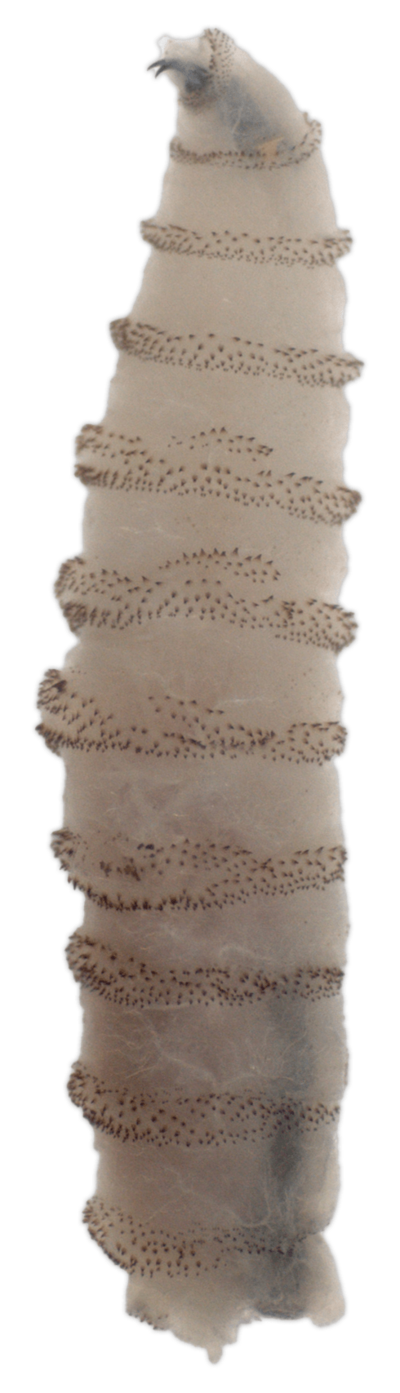
The fly larvae (maggots) can burrow into the flesh of living animals through wounds as small as a tick bite or in body openings such as the eyes or nose. About the size of a common housefly, the adult screwworm fly has orange eyes, a metallic blue or green body, and three dark stripes along the back.
Holeck said ranchers will need to keep close watch over newborn calves with exposed umbilical cords. They may also have to rethink branding and tagging operations in the case of an infestation, because those wounds can provide an entry for the pests.
New Mexico has distributed test kits to every county extension office for producers and the general public who suspect cases. Holeck said the state has already performed about 30 tests — all were negative.
She noted that the last infestation took more than a decade for American and Mexican officials to eradicate.
“It’s not going to be a quick fix,” she said. “It’s going to be a long-term response, and it’s going to require everybody to work together to help get control of it.”
‘We’re going to get infested’
To combat the screwworm, the federal government plans to breed sterile male flies and then release them into areas with established populations. The sterilized males will mate with females, which will then lay unfertilized eggs. With females mating only once in their lifespan, officials say this method progressively reduces and eliminates the fly population.
USDA just broke ground on a $750 million sterile fly facility in Edinburg, Texas, that aims to produce up to 300 million sterile flies per week when it opens next year. The agency has also invested in sterile fly facilities in Mexico and Panama.
It's not going to be a quick fix. It's going to be a long-term response.
But Texas Agriculture Commissioner Sid Miller said those plants won’t produce enough sterile flies to eradicate the parasites.
“We’re going to get infested,” he said. “There’s no doubt about it. And USDA knows that. They’ve already distributed test kits to ranchers and farmers and veterinarians and wildlife personnel up and down the Rio Grande.”
“It wouldn’t surprise me if we had a case today,” he said earlier this month.
Miller said ranchers should have no trouble accessing effective drugs like ivermectin, which he said he still personally takes each week.
He expects the screwworm to cause temporary fluctuations in livestock markets as ranchers treat and quarantine affected herds. Texas is by far the nation’s leading beef producer, with more than 12.5 million cattle. For now, he expects an outbreak to affect animals in a few counties along the Southern border.
“Now, if the whole state of Texas gets infected, that’s a lot,” he said.
Nitrate contaminates the drinking water of millions of Americans, study finds
In the case of an outbreak, USDA has created monitoring, reporting and quarantine protocols for animals. But because the disease does not create food safety concerns, the agency will not stop any movement of animal products, including meat.
But the infestation could ripple to other animal products, livestock and even pets, officials warn.
While ranchers can hold back cattle during an outbreak, dairies may face immediate losses during infections, according to the University of California Agriculture and Natural Resources.
“Dairy cows produce milk every day that must be processed immediately — if a farm is quarantined or a plant shuts down, milk spoils quickly and has to be dumped,” said Daniela Bruno, a dairy adviser with University of California Cooperative Extension.
She said producers should review their insurance coverage and bolster biosecurity against threats such as screwworm and avian flu, which has reemerged in California dairies.
The federal government and states have been preparing for months.
On a February trip to the Rio Grande Valley with Texas Republican Gov. Greg Abbott, USDA Secretary Brooke Rollins said, “We are as prepared as we could possibly be.” In March, the secretary told Oklahoma Farm Report that the agency had predicted an invasion into Texas as early as last summer, but she acknowledged the ongoing risk.
“There’s no question, when you look at the heat maps, that it is in large proportion moving up,” she said of the screwworm.
Stateline reporter Kevin Hardy can be reached at [email protected].