Judge weighs future of Confederate-linked school names in Shenandoah County
Jun 08, 2026 | 5:28 am ET
Description
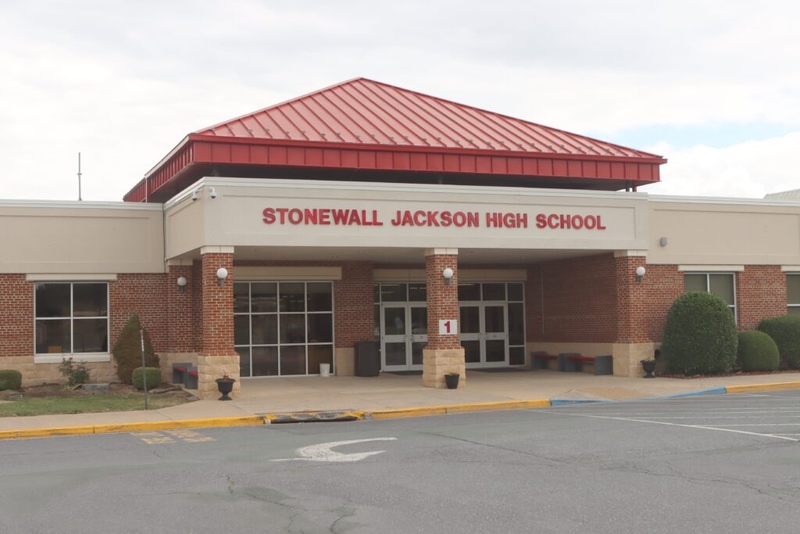
A view from outside Stonewall Jackson High School in Shenandoah County. (Photo by Nathaniel Cline/Virginia Mercury)
Shenandoah County is awaiting a closely watched court decision over whether the names of Confederate figures should remain on several school buildings, a dispute that has reignited debate over history, race and educational equity in Virginia schools.
Some residents view honoring Confederate generals, including Turner Ashby, Robert E. Lee, and Thomas “Stonewall” Jackson, as an important part of local heritage and history. Others see them as symbols of slavery and racism that deepen racial tensions.
At the center of the case is whether the Shenandoah County School Board’s decision to restore the Confederate names violates federal law and undermines efforts to provide equal educational opportunities in Virginia.
“I think the central theme that really kind of reverberates through this case is the overall educational equity,” said Marja Plater, senior counsel at the Washington Lawyers Committee for Civil Rights and Urban Affairs, representing the NAACP Virginia State Conference and five students.
“Having students who are subjected to the harmful impacts of having to attend school aimed at Confederate generals, and the entire culture that it establishes, is not what we want students to be subjected to now, and it really hinders achieving educational equity.”
Plater said she believes the U.S. is still working toward fully fully achieving the goals of the Supreme Court case Brown v. Board of Education, which sought to ensure equal education for students regardless of race.
Because of that focus on equal educational opportunity, Plater said the names schools carry a— including those honoring Confederate generals — matter because they can affect fairness and equal treatment in education.
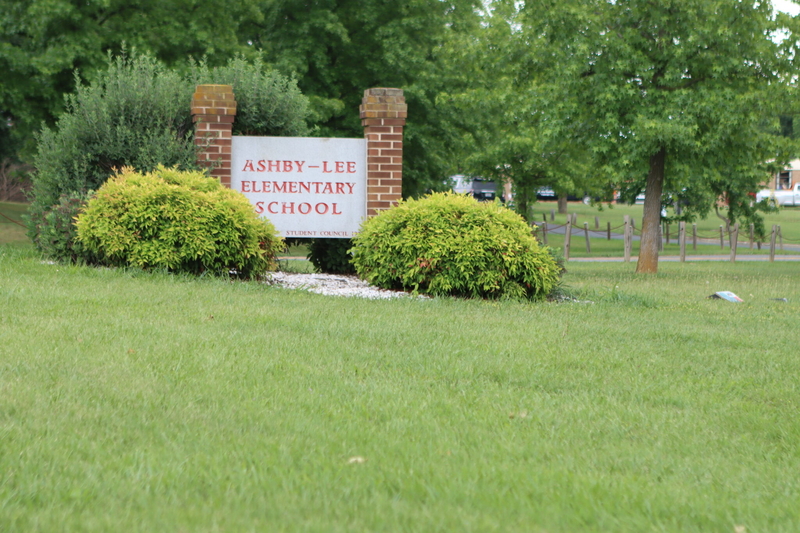
After the Shenandoah County School Board voted in May 2024 to restore the name, the NAACP state conference and several students filed a lawsuit the following month challenging the decision, including the restoration of the name Stonewall Jackson High School.
The lawsuit alleges the board violated students’ First Amendment rights by forcing them to endorse a viewpoint they disagree with through the promotion of Confederate figures.
Last September, U.S. District Court Judge Michael F. Urbanski sided with the students, writing that the board violated students’ First Amendment rights and that Jackson’s name “is expressive as a symbol of racial exclusion in public schools.”
Both sides presented final arguments on March 31, and the court is now considering its ruling.
Asked whether the case should be viewed through the lens of educational equity, Jim Guynn, an attorney representing the school board, said no evidence of inequity was presented during the trial and that the plaintiffs are thriving academically and socially while serving as leaders among their peers.
Looking ahead, Guynn said an adverse ruling could set a precedent for challenges to school names beyond those tied to the Confederacy.
In the board’s view, such challenges could eventually expand to a broad range of historical figures and institutions.
“At some point, we have to stop focusing on the negative and start assessing historical figures in their time and not by our current standards,” Guynn said. “I might add that I hope not to be judged by the standards in place 50 or 100 years from now. We can’t predict what those standards will be.”
Potential consequences
It remains unclear what the remedies the court would impose after finding that the Shenandoah County School Board violated students’ rights, but the consequences could be significant, potentially including federal investigations, loss of federal funding and federal oversight.
The board is also awaiting a decision on whether it illegally discriminated against students based on race through Title VI of the Civil Rights Act of 1964, which bars discrimination in federally funded programs, and the Equal Educational Opportunity Act, which requires equal access to education regardless of race, color, sex or national origin.
Guynn said the board is concerned that an adverse ruling could mean “a school board acting with the overwhelming support of the public could never name a school after a person if some students claim that the name is discriminatory.”
“Names are not discriminatory, especially when the facts in the case show that there has been no discrimination against any students,” he added.
As the court weighs its decision, Urbanski has not yet ruled on the NAACP’s and students’ request to remove Confederate names, mascots, and other vestiges before the 2026-2027 school year. They also asked the court to bar the school board from using Confederate leaders’ names or references in future naming decisions.
If the court orders the names changed, the ruling would further spotlight the community’s long-running divide over Confederate recognition, symbolizing a deeper conflict between heritage and educational equity.
Public support for restoring the names helped reshape the school board. Only three current members served on the board before the reinstatement vote, and all three voted to restore the names.
“The name of the school is important to county residents because Stonewall Jackson was an important figure in the history of the county and because it is the name of the high school that many residents attended and graduated from, and it has a sentimental place in their hearts,” Guynn said.
Trust at the center of the case
Trust emerged as a central theme for both the students challenging the names and the 2024 school board that restored them.
The 2020 school board, which initially removed the Confederate names, argued its decision was intended to condemn racism and begin a renaming process. The 2024 school board argued restoring the names was necessary to “restore the public’s trust” after the earlier board’s actions.
“This was not an innocent mistake by some inexperienced school board. No, this was carefully choreographed machinations of a school board colluding to ignore the people they represented,” Board member Gloria Carlineo said during a 2024 meeting. “This is what political indoctrination in our schools looks like.”
Other board members described the 2020 name changes as a “slap in the face” to residents near the southern campus, where the three schools are located, saying they felt their heritage was being erased.
On the plaintiffs’ side, one student testified that she no longer knows which adults at the school she can trust because many staff members wear clothing bearing the Stonewall Jackson name.
Other students testified that the Confederate names made their academic experience more difficult and left them feeling “closed off” from classmates after the names were restored, fearing some peers might support segregation or not want them at the school.
Final Ruling
It is unclear when Urbanski will issue a final ruling. Court records show the parties met with the judge shortly after the March 31 hearing concluded.
Urbanski previously announced he would take senior status beginning July 4, 2024, allowing him to remain a federal judge while potentially carrying a reduced caseload. His successor, Jasmine H. Yoon, was nominated and confirmed before the transition.
The outcome of this case will not only affect Shenandoah County and the names of its schools, but also broader debates about history, equity, and trust in public education.
Richmond, VA