Delayed HUD report found homelessness in Nevada declined … more than a year ago
Jun 08, 2026 | 7:30 am ET
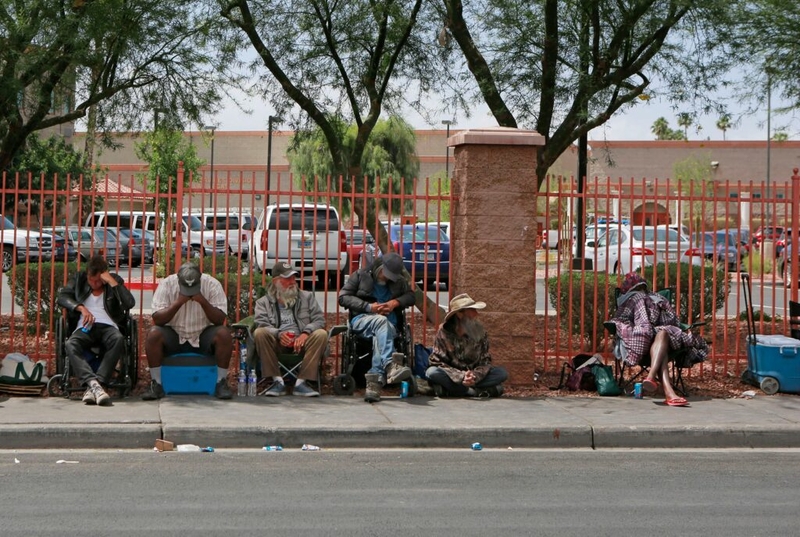
Description
(Photo: Ronda Churchill)
A long-awaited federal report showed a slight drop in homelessness in Nevada during President Biden’s last year in office.
The U.S. Department of Housing and Urban Development released its annual report May 29 after an unexplained five-month delay and found that 30 in every 10,000 people were experiencing homelessness in Nevada.
Nevada identified 9,905 people experiencing homelessness that were either unsheltered, living in emergency shelters or transitional housing programs, a roughly 2% drop from 10,106 the previous year. The “point-in-time” data compiled by HUD are based on a snapshot of one night in January 2025 and are reflective of Biden-era policies, according to homeless advocates.
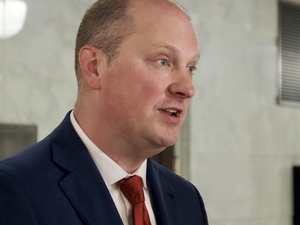
While the results show a positive trend toward getting people housed, “the overall number is staggering,” said Travis Sandefur, the director of Washoe County’s Housing and Homeless Services Division.
“So many people in this country and in this community are one paycheck away from disaster, one medical emergency away from disaster,” he said. “I could give you anecdote after anecdote of individuals who suffer a medical event, suddenly can’t pay rent, can’t get back to work right away, and end up unhoused and homeless.”
The slight drop might offer some hope, but Sandefur said it is “critical that we don’t reverse course and we don’t swing that pendulum away.”
Roughly half of those identified in the Nevada data were unsheltered at the time, rather than staying in an emergency shelter or transitional housing, according to the report.
Homelessness among certain populations, including the 1,453 families with children identified, dropped nearly 2% from 1,700 the previous year.
The 8,452 individuals experiencing homelessness counts for the largest share of the population.
More than 3,000 were identified as experiencing homelessness chronically, meaning they have been unhoused for at least a year and also struggle with serious mental illness, substance abuse or a physical disability.
The newly released report found that nationwide there were roughly 746,000 identified as experiencing homelessness, a 3% decrease in homelessness from the previous year. It’s the first nationwide reported drop since 2016, according to the National Alliance to End Homelessness.
But 28 states saw increases in homelessness, according to the report.
The number of people experiencing homelessness in Nevada has increased significantly through the years. The 2024 report showed a 13-year-high in the number of unhoused people in Southern Nevada..
Any reduction in the number of people “forced to live on the street or at risk of losing their home is welcomed,” Renee Willis, president of National Low Income Housing Coalition, said in a statement.
“We cannot ignore that effective federal solutions to end homelessness exist and are now under threat,” she said. “Homelessness is a housing issue, and this administration continues to reduce investments in targeted federal affordable housing resources that could prevent homelessness from worsening.”
Since returning to office, the Trump administration has attacked “housing-first” policies, an approach favored by providers that moves people into housing without sobriety requirements.
The administration has sought to reprioritize HUD funding toward transitional housing and addiction services while seeking to implement work requirements and time limits for those accessing housing support services.
Many unhoused people have complex needs, Sandefur said, adding that “anything that undercuts that certainly gives me a great deal of angst.”
“Regardless of what happens nationally, we are trying to stay laser focused on what our population needs, how do we get there, and how do we fill those gaps?” he said.
Washoe County, he added, still needs more than 1,100 supportive housing units that can provide wraparound supportive services for people seeking to exit homelessness.
It is unclear when HUD will release a report from the 2026 point-in-time count that took place in January, but some county-specific results from this year’s count are expected to be released later this summer.
Preliminary findings from Washoe County 2026 count show a 1.5% increase from 2024. During the annual count this January, officials identified 1,446 living in shelters and 341 who were unsheltered at the time.
Sandefur noted the county is looking for other trends including among those aging into homelessness and what that means for care.
“We’re going person-by-person back through our shelter census, and looking at these people,” Sandefur said. “I’m very concerned about the complex needs, the physical and mental health needs of those who are still homeless. Some of our toughest work lies ahead around our aging population.”
Las Vegas, NV