NJ ranks high in education, healthcare in annual report on child well-being
Jun 08, 2026 | 6:49 am ET
Description
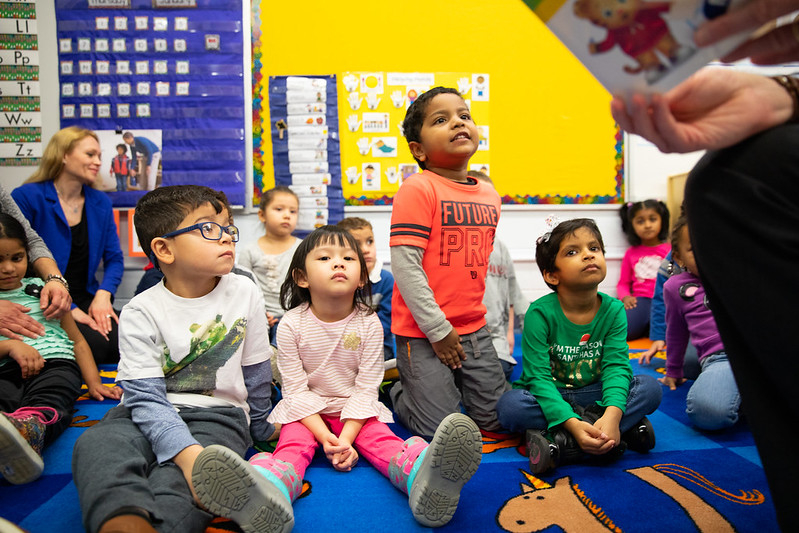
A new report says New Jersey ranks near the top nationwide for education and health, but most kids struggle with reading and math. (Photo courtesy of the New Jersey Governor's Office)
New Jersey ranks first in the nation for education, but more than 60% of fourth-grade students struggle to read, and even more eighth graders aren’t proficient in math, according to a new national ranking.
The new Kids Count report released Monday by the Annie E. Casey Foundation, a national children’s advocacy group that produces an annual profile of American children, also ranks New Jersey as seventh nationwide in terms of pediatric health. But the number of uninsured children had risen to 5% as of 2024, the group found.
That’s a concern for Mary Coogan, president and CEO of Advocates for Children of New Jersey, which tracks child welfare in the Garden State. While the increase is slight, up from 4% in 2019, “it does warrant watching,” she told the New Jersey Monitor.
Coogan said her team has heard of immigrant families who decline to sign their children up for government subsidized health insurance, even when they are eligible, out of fear it could lead to trouble under the Trump administration’s crackdown on illegal immigration. New Jersey is one of 15 states that offers health insurance to all financially eligible children, regardless of their immigration status.
The Trump administration’s changes to the Medicaid program, like the January 1 requirement that certain adults prove they are working, in school, or volunteering to keep their benefits, could exacerbate coverage loss for kids, Coogan warned. Even if an adult loses their NJ Family Care plan — that’s the name of New Jersey’s Medicaid program — their children may still be eligible, she said, something she fears not enough people understand.
“For some people, Family Care is a ‘family’ program. They may not keep their kids in, or they may not realize it takes separate paperwork,” Coogan said.
Overall, New Jersey ranks sixth in the 2026 Kids Count findings, which compares federal data from all 50 states plus Washington D.C., Puerto Rico, and the U.S. Virgin Islands. The findings are organized into four categories: education, health, family, and community (New Jersey ranks 20th) and economic well-being (22nd.)
Since 2019, New Jersey has seen all four health-related metrics improve at least slightly, with the percentage of obese kids and teens dropping from 32% in 2018-19 to 27% in 2023-24.
The four education measurements have gone in the wrong direction, however, per Kids Count data. The percentage of young children not in school rose from 35% in 2015-19 to 38% in 2020-2024, according to the report, which uses federal data points that combine five years’ worth of results for some metrics. While 9% of high schoolers graduated late in 2019, 12% were delayed in getting a diploma in 2024.
In 2019, 58% of fourth grade students were not proficient in reading skills, according to their performance on the National Assessment of Educational Progress, a standardized test that is required in certain grades. That had risen to 62% by 2024, the Kids Count report notes.
Some 56% of eighth graders were not proficient in math on those tests in 2019, according to the report, while 63% failed to meet this standard in 2024.
These are the data points that trouble Coogan the most. Advocates for Children have also found significant racial discrepancies in school outcomes in their own data analysis, she said.
“People go around touting that we are No. 1 in the nation, but OK. That’s when we really need to start comparing ourselves against ourselves,” she said.
The state Department of Education did not respond to a request for comment.
Lisa Lawson, the Casey Foundation’s president and CEO, said in an introduction to the report that, as with the past two years, the data shows states face the greatest number of setbacks in educational achievement. Math and reading continue to lose ground nationwide, she said.
“These declines underscore that our nation has yet to fully recover from the pandemic,” Lawson wrote.
In New Jersey, the lags in math and reading predated COVID-19, according to Alena Siddiqui, a data analyst with Advocates for Children.
“We’re just trending the wrong way,” she told the New Jersey Monitor.
Coogan said there are many reasons children struggle in school, including chronic absenteeism, a problem she said impacts more than 60% of New Jersey’s schools.
Kids are also shaped by the battles their parents face, like economic instability. The parents of nearly 1 in 4 kids lacked stable employment in 2024, Kids Count found, and one-third of these families have a hard time paying for housing.
“Not that it’s a kids’ responsibility, but it’s a cause of stress. Kids worry,” Coogan said.
Trenton, NJ