Durham, NC mother sues property owner over son’s death in laundry room
Jun 08, 2026 | 6:01 am ET
Description
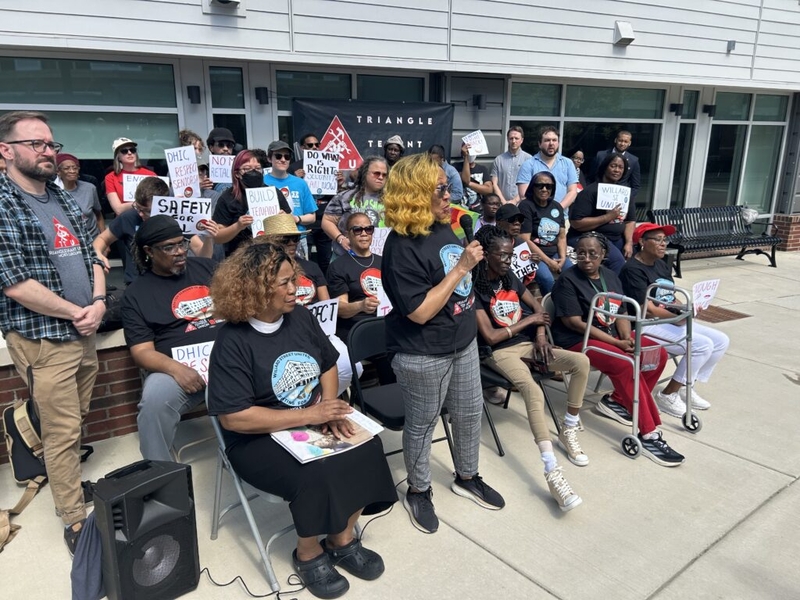
Residents of Willard Street Apartments and nearby Ashton Place in downtown Durham formed tenant unions in March 2026 to fight against what they contend are poor management and shoddy building maintenance. (Photo: Greg Childress/NC Newsline)
The mother of a Durham man who died of heart failure after he became trapped in the laundry room of her downtown apartment building has sued the property owner and management firm.

Debra Davies seeks compensatory damages for the estate of Jason Pulliam, who was 39 at the time of his death. Davies also asked the court to award her damages for the “infliction of emotional distress” caused by her son’s death. According to the lawsuit, Davies suffered “severe emotional distress, mental anguish, grief, anxiety, loss of sleep, emotional suffering, and other psychological injuries” due to defendants’ alleged “negligence.”
The lawsuit, filed in Durham County Superior Court, claims an electronic door malfunctioned and would not open from inside the laundry room, preventing Pulliam from quickly receiving the care that might have saved his life.
“Had Jason or the other occupants of the laundry room been able to freely exit the room, or otherwise summon assistance, emergency personnel could have been alerted sooner and provided lifesaving care earlier,” the lawsuit asserts.
The lawsuit contends the defendants “knew or reasonably should have known that residents and visitors utilizing the common areas of Ashton Place could suffer medical emergencies, fires, accidents, or other events requiring immediate egress from the laundry room or immediate access to emergency assistance.”
A grieving mother blames son’s death on shoddy building maintenance
Davies is represented by Howard Stallings Law Firm in Raleigh. Lee Rodio, the lead attorney in the case, declined to answer questions when reached Thursday.
“We’ll let the allegations in the complaint speak for themselves,” Rodio said.
Davies’ lawsuit names Downtown Home Improvement Corporation Inc. (DHIC), the Raleigh-based nonprofit developer of the 51-unit affordable housing complex for seniors, and Winston-Salem based Community Management Corporation (CMC), the firm DHIC hired to manage the property. Ashton Place Housing LLC and Ashton Place Managing Members, LLC are also named as defendants.
Jack Bayliss, an attorney with Carruthers & Roth, the legal firm that represents DHIC, said he had not seen the complaint. Bayliss declined to comment on the lawsuit.
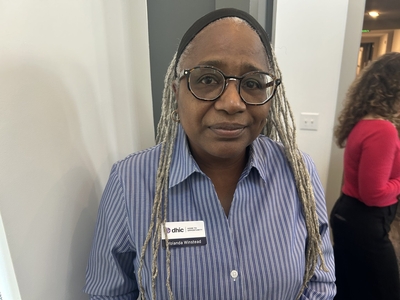
Yolanda Winstead, DHIC’s executive director, was unavailable for comment. Calls to CMC were not returned on Friday.
Winstead did discuss Pulliam’s death briefly with NC Newsline in November: “Based on our investigation, Ashton Place was not responsible for this unfortunate death that happened to occur on the premises,” Winstead said.
Bayliss also told NC Newsline at the time that Ashton Place was not responsible for Pulliam’s death.
“It’s sad whenever a young person passes away like this, but Ashton Place doesn’t have any responsibility for his death, and that’s our position on the matter,” Bayliss said. “You know, our sympathies go out to Ms. Davies, losing her son, but that’s about all we have to say on the matter at this point.”
Pulliam died in the Ashton Place laundry room in November 2024. A tenant told investigators at the time that Pulliam appeared “distressed and in need of assistance” when Pulliam entered the laundry room.
“As his [Pulliam’s] condition deteriorated, it became apparent that emergency intervention was urgently needed,” the lawsuit said. “However, the laundry room door had become inoperable from the inside, preventing their escape.”
According to Davies, her son had congestive heart failure dating to the COVID-19 pandemic.
The tenant who said she was trapped in the laundry room with Pulliam told investigators that she banged on the door and called for help, but that her efforts to get someone’s attention were unsuccessful. Neither she nor Pulliam had brought cell phones to the laundry room.
“Unable to escape, unable to call for help, and unable to attract the attention of others in the building, she watched helplessly as Jason’s condition continued to worsen,” the lawsuit said. “According to the woman, all she could do was pray for this man she had never met who appeared to be dying before her eyes.”
Eventually, two more residents entered the laundry room, but were not aware the door was malfunctioning, so they too became locked in the laundry room, the lawsuit said. One of them called 911, according to the lawsuit, but by the time police and first responders arrived, it was too late. They were unable to revive Pulliam.
Pulliam had spoken with his mother at 8:47 p.m. She was traveling from Greensboro and they made arrangements for him to pick her up from the train station. He was pronounced dead at 10:43 p.m.
The residents of Ashton Place and nearby Willard Street Apartments, both developed by DHIC and managed by Community Management Corporation, formed tenant unions in March to fight against what they contend are poor management and shoddy building maintenance.
The newly formed Willard Street United and Ashton Seniors in Action tenant unions demanded that their shared landlord formally recognize the unions and commit to quarterly meetings with tenants.
The N.C. Tenants Union, which helped residents organize, said DHIC continues to recognize Willard Street United because it is a project-based voucher property and believes it is legally obligated to do so under federal housing law. Such vouchers are attached to a specific apartment or building.
DHIC, however, rescinded its recognition of Ashton Seniors in Action because it does not believe it is obligated by federal law to recognize the union. Ashton Place residents receive tenant-based vouchers, which means the holders can choose their own private-market housing.
“Applicable law does not require ownership to recognize any tenant union at the property,” DHIC officials wrote in a letter to Ashton Place tenants. “That being said, ownership supports residents’ rights to join the Union or any voluntary association they wish.”
Hailey Huget, an organizer with N.C. Tenants Union, said the group unequivocally supports Ashton Place residents in their demand for “recognition and a seat at the table through collectively bargaining their leases.”
“These seniors deserve a real voice in their living conditions and not more lip service,” Huget said.

Raleigh, NC