New book restrictions cost Alabama libraries hundreds of hours, thousands of dollars
Mar 16, 2026 | 8:01 am ET
Description
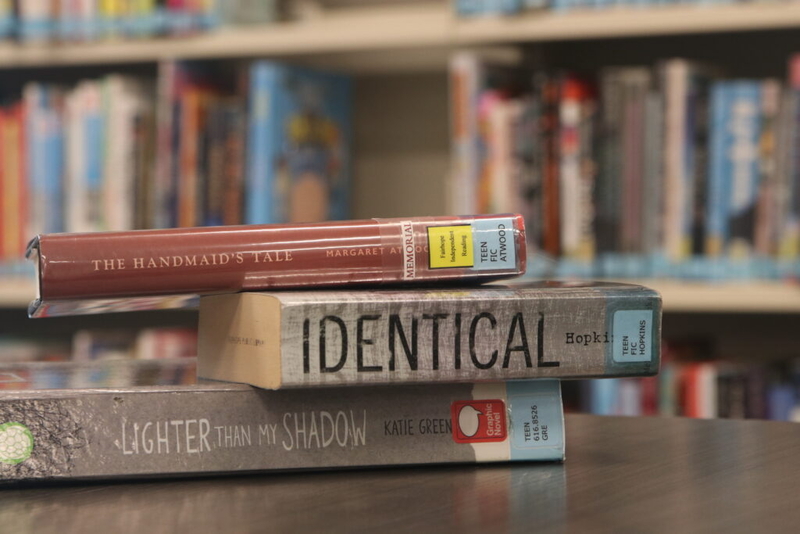
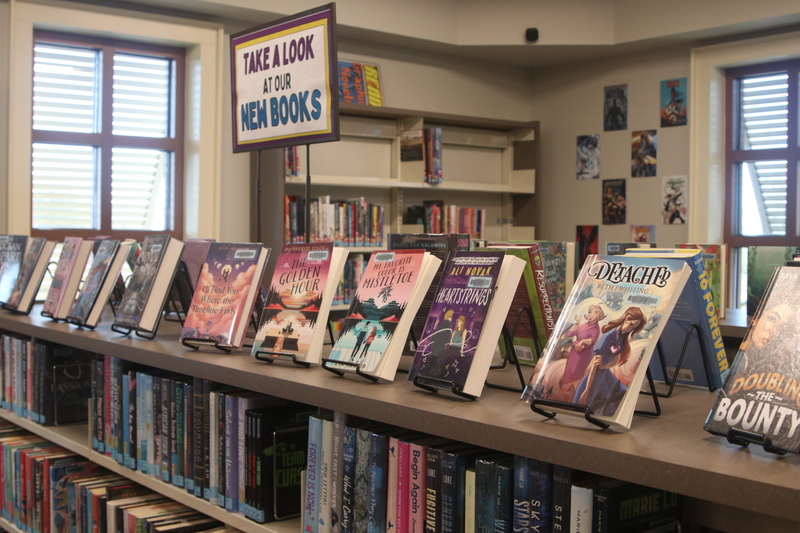
A collection of books seen in Fairhope Public Library in Fairhope, Alabama on March 2, 2026. The Alabama Public Library Service (APLS) board withdrew state funding for the library, claiming these books violated recent code changes on sexually explicit material and so-called "gender ideology." Fairhope has refused to reshelve them. The administrative code changes approved by APLS have caused confusion in many state libraries and cost them time and money to figure out compliance.(Ralph Chapoco/Alabama Reflector)
Changes to state library regulations over the past two years have created confusion among Alabama libraries, forcing them to reallocate resources to comply with code changes and causing dismay among those who believed they had to choose between receiving state aid or adhering to their ethical principles.
The new restrictions, targeting what the Alabama Public Library Service (APLS) board considers sexually explicit material or undefined “gender ideology,” were tied to library funding but came without formal guidance, causing many librarians to try to figure out how to obey the rules.
“Everyone was just confused, especially some of the smaller libraries that have one or two staff members,” said Mary Campbell, president-elect of the Alabama Library Association. “And they are trying to update their policies, meet with their boards, and actually run a library. They were so overworked and overwhelmed, we were emailing the listserv and asking, ‘Does anybody know what this means?’”
Getting the wrong answer could be costly. The APLS Board has withheld aid from Fairhope Public Library after APLS Board Chair John Wahl, now a Republican candidate for lieutenant governor, accused its board of violating the code by not removing books from a teen section — including “The Handmaid’s Tale” by Margaret Atwood.
Fairhope Public Library officials have refused to reshelve the books.
“It is not just the seven books,” said Robert Gourlay, director of the Fairhope Public Library. “It is seven books now, but next time, it will be something else.”
In response to questions, APLS referred to the policies and procedures for changing the administrative code. Wahl said in an interview Friday that the board wanted “to make sure that every family in the state of Alabama feels welcome when they enter one of our libraries.”
“It can be a little bit hard in the short term as we get the protocol put in place, but the important thing is that we are providing good services to the patrons in our local community,” he said.
Language changes
The changes came amid a right-wing assault on library content, particularly books containing LGBTQ+ characters and themes. A parent in Prattville in the spring of 2023 when a parent challenged a book that included pronouns other than male and female.
The movement rapidly spread to the state government. Gov. Kay Ivey appointed APLS board members sympathetic to those seeking the removal.
APLS implemented its first set of changes in January 2024. Those required libraries to adopt policies to ensure that minors did not have access to library materials the board considers “obscene, sexually explicit, or otherwise inappropriate.”
Many struggled to understand the meaning behind the definitions.
“Sexually explicit: none of us knew what that meant,” Campbell said. “How do we define that, because they had not defined it. So,most libraries looked at that and said, ‘OK, they didn’t define it, so we must be good.’”
In March 2025, APLS Board Member Amy Minton proposed new requirements for the removal of books containing “gender ideology.” Minton cited a law signed by Ivey that February and an executive order from President Donald Trump stating there are two genders. The APLS rule did not define what “gender ideology” is.
Free speech and First Amendment advocates have long criticized changes, saying that they amount to viewpoint discrimination and that they violate the constitution.
Critics have also complained about changes to the original code proposals done after public hearings. The original changes proposed in January 2024 directed libraries to adopt policies that required “relocation of sexually explicit or other material deemed inappropriate for children or youth.”
It also required libraries to obtain advance approval from the governing body of the library for displays or recommendations of materials “promoted to children or youth.” The draft stated that libraries deciding where to place specific library materials did not amount to a denial of service and required libraries to get approval from the governing board for spending money with the Alabama Library Association.
Following a public comment period, APLS adopted an amended draft which required libraries to adopt policies aimed at protecting minors from “sexually explicit or other material deemed inappropriate for children or youth.” It also required them to ensure areas designated for minors are free from such materials.
The updated administrative code also included a section that required libraries to create a different type of library cards for minors whose parents gave them permission to borrow library materials located in the adult section.
“Why change things behind the scenes?” said Craig Scott, director of the Gadsden Public Library and past president of the Alabama Library Association. “Why present things when what they presented, the draft of what they presented, was not the final?”
The draft version of the 2025 changes required libraries to remove any material that “promotes, encourages, or positively depicts transgender procedures, gender ideology, or the concept of more than two biological genders.”
The version that the APLS Board eventually approved removed that language and replaced it with “any materials regarding transgender procedures, gender ideology, or the concept of more than two biological genders shall be considered inappropriate for children and youth.” It also required that library cards issued to minors prevent them from checking out materials from the adult section.
“The changes that were made were based on comments provided to the Board in the public comment period,” Wahl said. “That is the traditional and normal procedure.”
Those who opposed the changes said it was an end around to prevent them from responding to the additional changes.
“Where is the public comment, the public hearing on that?” Scott said. “Don’t do it one way, and then change what was presented. There should be a process for that. And the process is, as far as I know, to let the public make their comments and let’s have a public hearing on it.”
An expensive process
The Alabama Library Association, along with several library directors, had expressed concerns with the administrative code changes, particularly with how vague the language was concerning sexually explicit and inappropriate materials.
Wahl then sent an email to library directors throughout the state that further defined the meaning of sexually explicit materials, but most libraries disregarded it.
“None of us knew if that was binding, it was just an email from John Wahl,” Campbell said. “Did that just say, ‘Hey, this is what I think it is?’ Or does it say, ‘This is what all of you have to do?’ No one knew. It was so confusing.”
According to a survey conducted last year by the Alabama Library Association, 14 state libraries said that collectively, they spent $117,000 and more than 4,600 hours complying with the administrative code changes imposed by APLS.
Nearly all of those surveyed, roughly 97%, indicated that APLS approved their submitted policies to the administrative code changes. But one library said the financial cost at $37,000, a second estimated the financial cost at $33,000 and a third for $6,500.
The time library spent on compliance varied. Some said people spent as few as two hours while some spent more than 1,000. One group spent between 30-50 hours while a second cohort stated they spent between 200-1,500 hours complying with the administrative code.
Libraries also had a difficult time complying with the directive regarding library cards.
“A lot of libraries said, ‘We offer dual cards and a parent has to sign for it,’” Campbell said. “But we don’t have a great way to limit the access those kids have, for whatever reason, for the catalog or whatever. We have just never been asked to limit children’s cards to specific collections.”
Campbell said that libraries focused on the rule that parents must give their children permission to have access to specific types of books.
“We do that, so we thought, ‘Check, we are good,’” Campbell said. “We came to find out that was not what APLS meant.”
‘The interpretation of it’
Local library directors said that APLS provided little support to help them comply with the administrative code, save an email sent after the Board adopted the new administrative code in 2024 setting a deadline for libraries to submit compliance policies or risk forfeiting their state aid.
“I think the concern for us is the interpretation of it,” said Connie Chow, executive director of the Huntsville-Madison County Public Library. “It can be subjective. You want to be in compliance. You have your funding riding on this, so you want to do the right thing, especially if you are having to update your own policies.”
Prior to the administrative code changes, Chow and her staff relied largely on the recommendations of the publisher to decide where to shelve specific materials in the collection. Now staff are reviewing books more closely. For books that are part of the series, they will consider the age of the characters that are depicted in the book.
“It may start out that there is not a lot of romance in it, but as the character ages, and as the relationship develops, some of those things may age up,” Chow said. “It may be in the book that the character may be married and have a more mature relationship.”
In those cases, the books earlier in the series can be placed in a section for minors but the later editions may need to be placed in the adult section.
“It is still very hard to interpret it even with some fine tuning that has been released from the executive board,” Chow said. “When we order materials now, we are very careful about reading descriptions through the publisher from our vendor. If there is any kind of descriptor about romance or dating, we will look through the material. That is a lot more work for us, and it slows the time for getting our materials out to the public.”
Chow also said that any materials that contained nudity would likely be placed in the adult section, but staff will read printed materials and judge the content.
When we order materials now, we are very careful about reading descriptions through the publisher from our vendor. If there is any kind of descriptor about romance or dating, we will look through the material. That is a lot more work for us, and it slows the time for getting our materials out to the public.
“Several of us will look it over and say, ‘Hey, is there enough there that is too much?’ That may be considered an adult situation. We also look at the age of the characters too. On occasion we will get a young adult book where the characters are already in college or over the age of 18. We take that into account as well because we are taking into account which audience would be reading the book anyway.”
Chow said that the libraries within her system had to devote significant hours to reshelving books to align with the 2024 administrative code changes.
“Up until March 2025 when our system went live, we spent over 2,200 staff hours in total,” Chow said. “We had multiple staff from different departments. We estimated the total expense to be about $59,000.”
Chow said they have yet to start on 2025 code changes. For those, Scott said Gadsden Public Library has created an entire new section called “Alternative Voices,” stocked with books from the children’s and teen sections of the library that staff believe that APLS would see as containing “gender ideology.”
“They did this work when they could have been working on programming or assisting other people,” Scott said.
Fairhope, meanwhile, is weathering the loss of state funding. Amid the initial threats from the board last year, library personnel reviewed books challenged for allegedly violating the 2024 code changes.
Board members of the Fairhope Public Library agreed to reshelve some of the books that were challenged but left several in place. The APLS Board then voted at the meeting in January to continue to withhold funding — totaling $22,000 — from the library.
The APLS Board formally decided to withhold funding from Fairhope after Wahl provided members with a report on how he interpreted the content of the books that involve Fairhope reading them.
The Fairhope Public Library decided to hold firm with its decision, and have been relying on private donations that Fairhope officials say have more than offset the state aid that they lost.
Randal Wright, the chair of the Fairhope Library Board, said it was a matter of principle.
“It all comes down to one thing; that a small group of people want to demand what is on the shelf of the youth sections of our libraries,” she said. “With that demand, to remove books that may be of value to a child, a small group of people should not be able to make a decision that will impact my child.”
Montgomery