Florida Democrats press DeSantis administration for details about AI contract for SNAP
Aug 04, 2026 | 7:00 pm ET
Description
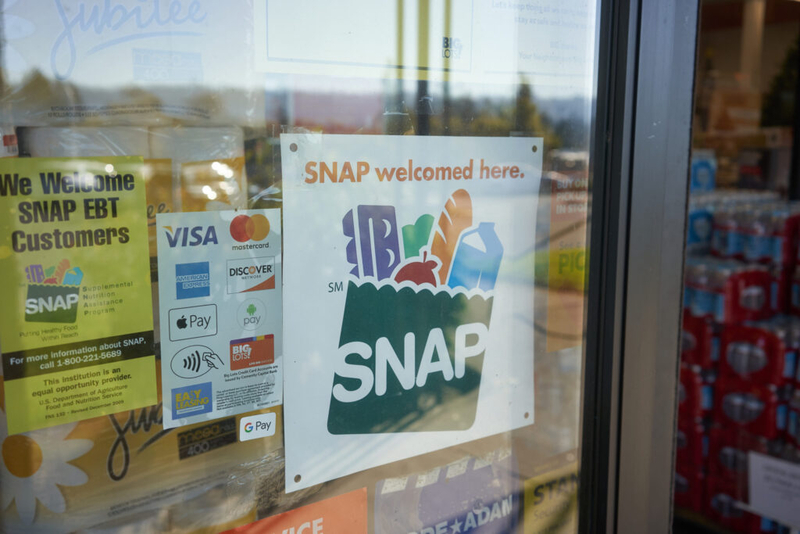
Florida congressional Democrats want the DeSantis administration to answer questions about the use AI to help lower the state's high SNAP error rates. (Stock photo by Getty Images)
Florida Democrats want to know how the state plans to use artificial intelligence to lower its error rate in the Supplemental Nutrition Assistance Program (SNAP).
To help the state lower its error rate and avoid having to contribute as much as $1 billion toward food costs next year under the One Big Beautiful Bill Act, the Florida Legislature appropriated $4 million to the Department of Children and Families in the state fiscal year 2026-27 for AI.
The budget requires DCF to procure a contract with an AI vendor by Sept. 1 and directs the agency to hire a vendor “capable of providing large-scale analyses of eligibility determinations using machine learning, identifying and correcting erroneous determinations, identifying root causes of erroneous determinations, and recommending operational improvements to avoid future errors.”
U.S. Rep Maxwell Frost and the other members of the Florida Democratic congressional delegation sent a letter to Florida DCF Deputy Secretary Kathryn Williams and Gov. Ron DeSantis Tuesday pressing for details about the use of AI.
“Floridians have received little information about how that vendor will be selected or what safeguards will be in place,” they wrote. “We are seeking answers about the vendor’s qualifications, the accuracy of its AI tools, protections against bias, human oversight of AI decision-making, transparency, appeals for affected SNAP recipients, and whether the state has contingency plans if it fails to meet its procurement deadline,” the letter reads.
SNAP error rate lowered, but still too high to skirt potential future costs
Payment error rates measure the accuracy of each state’s eligibility and benefit determinations and include overpayments as well as underpayments. Data from the U.S. Department of Agriculture show Florida’s SNAP error rate for fiscal year 2025 was 12.97, which puts the state on track to having to contribute nearly $1 billion to the program next year. Most of the errors, were due to overpayments, the data show.
That’s because the error rate is above the allowable threshold under the One Big Beautiful Bill Act, which slashes spending on the food security program by $156 billion over a decade.
To accomplish those costs savings, Congress required states with SNAP payment error rates of more than 6% percent to contribute toward the costs of the food beginning next year.
Under the law, states with error rates of 10% or more would have to contribute 15% toward food costs, which accounts for the $1 billion figure.
The Democrats are pressing for specific answers to the following questions by Aug. 10:
- What criteria are the state using to determine a qualified vendor?
- What demonstrated and relevant experience does the state require of the vendor?
- What measures of proven accuracy in a vendor’s AI tools does the state require?
- What safeguards against biases — including cultural, racial, and sexual— does the state require?
- How will the vendor ensure human oversight of any AI decision-making?
- Will data and decision-making processes be available for review by state and federal lawmakers and members of the public, including members of the press?
- How will the vendor and the state ensure decisions can be reviewed and appealed by affected SNAP recipients?
- How will the state ensure the bidding process is competitive, open, and free of conflicts of interest?
- Does the state expect to meet the Sept. 1 deadline and, if it doesn’t, is there a contingency plans?
SNAP provides nutritional support for low-income seniors, people with disabilities living on fixed incomes, and other individuals and families with low incomes. Although funded by the federal government, SNAP in Florida is administered by DCF’s Office of Economic Self-Sufficiency, which is responsible for determining eligibility.
The Democrats’ push for answers comes as the number of residents who receive federal food assistance drops. State economists recently agreed there’s been a 23% reduction in the number of SNAP recipients during the past year, down from 2,970,283 in June 2025 to 2,285,099 in June, the latest available estimates.
Tallahassee, FL