Iowa Central Community College first in U.S. to receive federal Workforce Pell approval
Aug 04, 2026 | 6:44 pm ET
Description
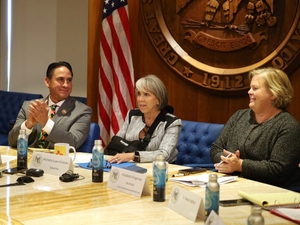
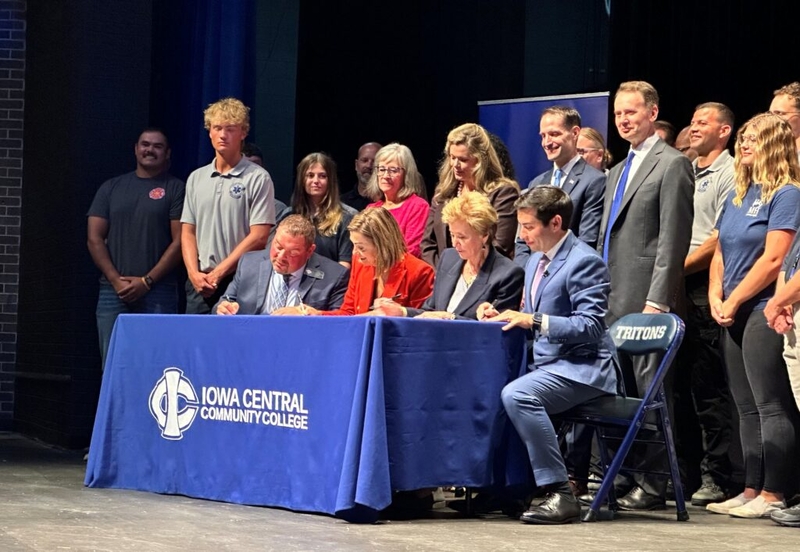
Iowa Central Community College President Jesse Ulrich (left), Iowa Gov. Kim Reynolds, U.S. Secretary of Education Linda McMahon and Acting Secretary of Labor Keith Sonderling sign documents approving Iowa Central Community College's EMT program's eligibility for Workforce Pell. (Photo by Brooklyn Draisey/Iowa Capital Dispatch)
FORT DODGE – An Iowa community college has become the first in the nation to earn federal approval for the Workforce Pell Grant program, allowing students in its emergency medical technician program to receive federal dollars for their education.
Iowa Gov. Kim Reynolds, joined by U.S. Secretary of Education Linda McMahon and Acting Secretary of Labor Keith Sonderling, visited Iowa Central Community College Tuesday to sign documentation providing federal approval for students in the college’s EMT program to apply for Workforce Pell Grant funds through the Free Application for Federal Student Aid, or FAFSA.
“Our purpose at Iowa Central is simple: to help students earn a degree of credential as quickly as possible with as little debt as possible, so they can build a better life. That is exactly why today’s announcement matters,” Iowa Central Community College President Jesse Ulrich said. “Workforce Pell removes barriers for students who are ready to enter careers that are essential to our communities, while helping employers meet one of their greatest needs-a highly skilled workforce.”
Workforce Pell Grants differ from traditional Pell Grants in that they are designed for short-term programs, between eight and 15 weeks, and students who already hold a bachelor’s degree can still qualify, the Iowa Department of Education states online. Grant funding is also prorated based on the length of the program.
Officials said Workforce Pell will be a game changer in getting students trained and into the workforce quickly in order to meet employer demand for skilled workers in Iowa’s high-needs areas, which Reynolds said includes healthcare, information technology, skilled trades and manufacturing.
In the just over one year since Workforce Pell was established through the “One Big Beautiful Bill Act,” Iowa was the first state to launch an application for programs to quality, and McMahon said this is the latest example of Iowa leading the way.
McMahon said she’s developed a “wonderful friendship” with Reynolds and that Iowa has “stepped up to the plate” to take advantage of opportunities, citing a visit to Denison in January to announce Iowa’s status as the first state to receive a Returning Education to the States waiver.
“In a time when too many are saddled with high debt and degrees with limited return, students and workers are seeking faster, more flexible ways of gaining the skills employers need,” McMahon said. “Pathways that honor talent, reward effort, and open opportunity without years of schooling and financial strain, and when programs like these are creating powerful pipelines into essential careers, the Trump administration stands ready to ensure every door is open for students to enter.”
Iowa has already put in work to prepare students earlier for career exploration and credential earning, Reynolds said, like with the Future Ready Iowa initiative and other efforts contributing to reaching the point where nearly half of Iowa seniors participated in work-based learning in 2025.
The Iowa Department of Education announced July 31 in a newsletter that Iowa Central, alongside Des Moines Area Community College, Eastern Iowa Community Colleges and Iowa Western Community College have received state certification for their Workforce Pell programs. The colleges saw approval for nine programs in total, spanning HVAC and CNC, manufacturing maintenance, commercial driver’s license and EMT training.
With this step complete, the newsletter stated the colleges now await approval from the U.S. Department of Education. Nine additional programs applied for state approval but weren’t selected due to missing “the 12-month lookback window in one or more of the required outcomes.”
In order for an educational or training program to qualify for Workforce Pell, the Iowa Department of Education states online that in addition to the time frame, they must align with either high-skill, high-demand jobs or industries with demand and lead to a recognized, stackable and portable credential.
People with the training and certification to take on emergency medical services roles are in high-demand in the state, Reynolds said, especially in rural areas. She said during the press conference that in the next five years, as many as 500 emergency medical technician jobs will open in Iowa.
Cost and time are two barriers to EMT careers, Reynolds said, and Workforce Pell will help mitigate both for students and help create a “stronger, more resilient economy.” When it comes to emergency medical services, Ulrich said funding from Workforce Pell Grants goes beyond financial aid to invest in the people who will potentially save Iowans’ lives.
“Workforce help should be a model for modern workforce training because it delivers what workers and employers need most — speed, relevance, and results,” Reynolds said.
Des Moines, IA