Utah may ban selling flavored vapes amid concerns of use among minors
Feb 15, 2024 | 8:08 am ET
Description
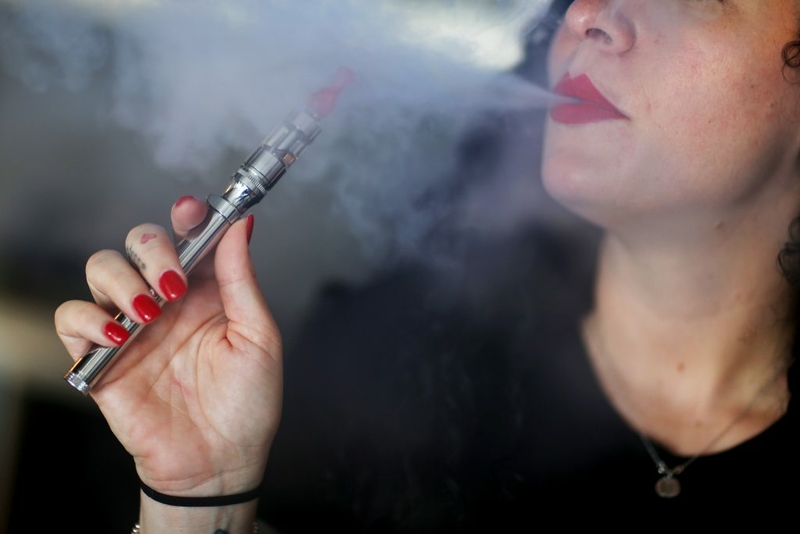
Julia Boyle uses an electronic cigarette as she waits for customers at the Vapor Shark store in Miami on Feb. 20, 2014. (Getty images)
Since their inception, flavored vapes have risen in popularity and faced scrutiny for being marketed for teens. And after this legislative session, their sale may be banned in Utah.
SB61, titled Electronic Cigarette Amendments, sponsored by Senate Minority Assistant Whip Jen Plumb, D-Salt Lake City, forbids the sale of flavored electronic cigarette products and “electronic cigarette products that have not received market authorization from the federal Food and Drug Administration.”
The Senate voted 20-3 to pass the bill and it now goes to the House for consideration.
Plumb, a physician who works in overdose death prevention, said she has seen people who have been able to overcome their heroin addiction but can’t quit nicotine. The issue is especially concerning for her, she said, because of the increased use among minors, which could create longtime nicotine addictions.
“We need to stop this pipeline of feeding our youth into a lifetime dependence on nicotine,” she told the Senate, “which is arguably one of the most dependence and addiction causing substances out there.”
The ban would exclude tobacco, mint and menthol flavored cigarettes.
About 20% of 12th graders, 15% of 10th graders and 10% of 8th graders have vaped, according to the 2023 School Health and Risk Prevention (SHARP) survey. A handout from Plumb states that e-cigarettes may lure kids into lifetime addiction, which could start with sweet flavors like cotton candy or mango.
States like California, Massachusetts, New Jersey and New York have also approved flavor sales bans.
Sen. Todd Weiler, R-Woods Cross, introduced an updated version of the bill that ultimately failed. Plumb’s bill, he said, is “anti-business,” potentially affecting 300 shops. It also limits the freedom of adults who may enjoy vaping, he said.
“I don’t like vaping. I don’t like kids vaping. I don’t like kids using tobacco products. I don’t like kids having sex. I don’t like them using drugs. I don’t like them drinking alcohol and I don’t like them gambling,” he said. “But we have not banned any of those other things, even though they’re bad for kids.”
His bill would have incorporated input from the Utah Vapor Business Association, requiring tobacco specialty businesses to video monitor the sales of flavored vapes, increase permit fees and implement an identification verification system, which would track buyers.
Plumb said she didn’t think it was right to allow the increased restrictions while banning the flavors at the same time. Her intent, she added, is not to take small shops out of business, so she hopes they find a way to adapt and thrive.
“If your business model is either no longer allowed by policy or by law, or culture and climate changes. If you have a restaurant, change your menu, you change your advertising. If you change your location, change the color on the front of your business.”
Vape advocates oppose
The Utah Vapor Business Association has been lobbying on the Hill for a few years whenever lawmakers proposed bills that would restrict the sale of flavored vapes.
“We’re all for sensible regulation. We’re all for keeping these products out of the hands of minors,” said Juan Bravo, chair of the association, explaining that the stores have implemented actions such as stringent ID scanner requirements, and harsher penalties to those who sell those products to children.
Flavor bans like these don’t work and lead to a spike in traditional cigarette use among youth and adults, he said. Though there have been studies that show that trend in California cities, they have been contested by anti-tobacco organizations.
Such a ban could eradicate small businesses and open a black market with products procured in neighboring states, Bravo said.
Bravo reiterated, as a father, he doesn’t want to see kids vaping. This is a product for adults that can only be purchased in specialty stores with active ID scanning upon entry.
The association advocated to implement tags that would be linked to a database with information of who bought the vape and where.
“If a youth were to be found with an e-cigarette product, in the high school bathroom per se, and the officer in the school gets their hands on that product, they will theoretically be able to scan it and see where it was purchased, when it was purchased and by whom it was purchased,” he said. “And at that point, have law enforcement pursue and impose civil or money penalties on the adult that furnished the product to the minor.”
The conglomerate also proposed to increase retailers’ renewal fees from $20 to $10,000 per year to fund the rules enforcement, plus more safety measures. But, Plumb rejected all of their proposals, he said.
If it comes down to a legal challenge, they would be prepared to make their case.
“If that’s what it comes down to, sure. But it would be our preference not to,” he said. “The UVBA has engaged in multiple rounds of litigation versus the state of Utah, the Department of Health, as well as multiple municipalities, and we have won every single one of them.”
Health concerns
Though vapes were introduced as a “healthier form of smoking” for those meaning to quit the habit, they have brought a spike in smoking among teenagers, who predominantly use flavored tobacco products, said Dr. Ellie Brownstein, president of the Utah Chapter of the American Academy of Pediatrics, quoting the National Youth Tobacco Survey.
“This is a product we know is harmful. We know it causes long term medical issues. We know it causes a potential of lifetime illnesses, cancers,” she said. “And anything that is encouraging folks to use it, such as making it taste better, is not necessarily helpful for any of us.”
As vape use climbs among school aged kids, Brownstein has had to talk with families about their sixth graders vaping in their school bathrooms, an issue she said she didn’t have to deal with before.
“Exacerbations of colds, illnesses and asthma are probably the biggest things we see in our pediatric office,” she said, but health implications related to long term vaping are the ones that concern her the most. “The ‘I’ve been vaping since I was 12 and now I’m 60 and my lungs don’t work right anymore’ … And then we can’t go back and fix it.“
Salt Lake City, UT