Louisiana launches immunity law to lure aerospace companies
May 29, 2026 | 2:55 pm ET
Description
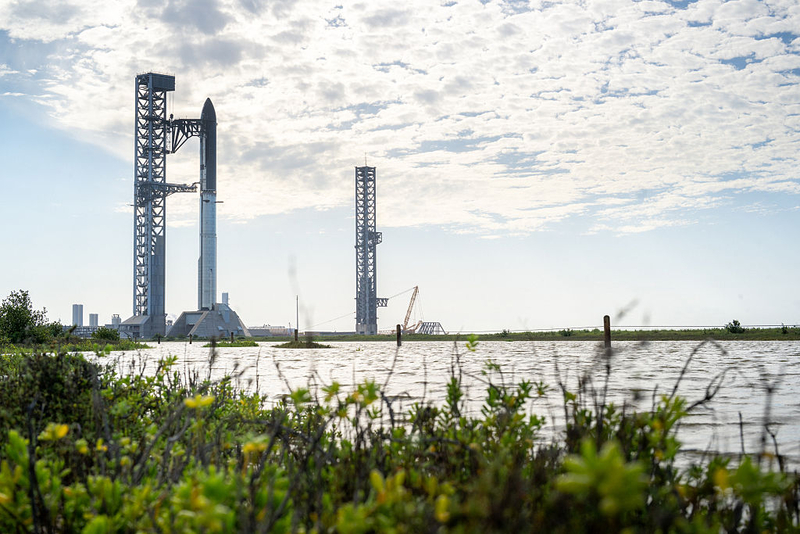
The SpaceX Starship V3 is seen docked at a launch pad at Starbase on May 22, 2026, in Boca Chica Beach, Texas. (Photo by Brandon Bell/Getty Images)
Louisiana continues to roll out the red carpet with hopes of attracting investment from the private aerospace industry, where prominent mega-billionaires are betting big on extraterrestrial exploration.
After enacting sweeping tax breaks for the industry, state lawmakers advanced another incentive Thursday that would give the businesses legal immunity from a variety of damage claims.
House Bill 1098, sponsored by Rep. Jack McFarland, R-Jonesboro, cleared the Senate in a 33-3 vote following debate and late-stage compromises as the legislative session winds down. It heads back to the House for a final vote to concur with the Senate’s changes. Lawmakers have until 6 p.m. Monday to finish their work.
McFarland’s proposal prevents residents from filing lawsuits against aerospace companies that create excessive visual, noise and environmental disturbances that inadvertently damage property or diminish the quality of life in neighboring communities. It gives the companies — along with their owners, employees and contractors — immunity from civil actions arising from trespassing, smoke, odors, sonic booms and other property nuisances.
The legislation would also shield companies from liability for any injuries to flight crew members or passengers who choose to fly with them.
The immunity would not cover intentional acts or violations of Federal Aviation Administration licenses. It would apply only to companies that own and occupy at least 20,000 contiguous acres in Louisiana.
Senators who debated the bill Thursday said this would cover the main space rocket companies planning to build in Louisiana. The leading two players in the field have been Elon Musk’s SpaceX and Blue Origin from Amazon mogul Jeff Bezos, both of whom are among the richest individuals in the world.
Several lawmakers have suggested the state has been courting SpaceX with its new policies, but there has been no official confirmation from officials with the Landry administration regarding deals or projects in the working. The state now typically keeps its economic development deals shrouded in the secrecy of non-disclosure agreements.
McFarland’s bill would cover the kinds of claims a group of Texas residents recently filed against SpaceX. They want the company to pay for damages they claim were caused when the noise and shock waves from one of its rockets cracked the structures and walls of their homes miles away. Under McFarland’s proposal, if something similar were to happen in Louisiana, the company would not have to pay for the damages.
A previous version of the bill would have extended the immunity even further, protecting a wider variety of companies from property damage and personal injury claims. But a bipartisan group of senators, who are also lawyers, curtailed some of the special protections after debating whether residents who happen to live near a launch site should bear the cost of damages and injuries from exploding rockets and falling debris.
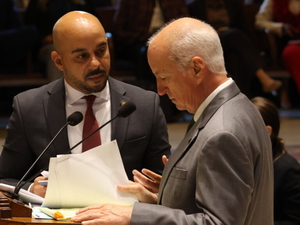
“If a rocket falls on your house and kills your family, you should be able to recover for that,” Sen. Jay Luneau, D-Alexandria, said during debate on the Senate floor.
In favor of protecting the companies, Sen. Alan Seabaugh, R-Many, argued that the previous iteration of the bill still allowed for those kinds of personal injury claims, but the other lawyers disagreed. Seabaugh said strong legal protections for the rocket businesses are necessary to compete against states that have similar laws.
The bill is modeled after a law Texas enacted years ago. But other states with active aerospace industries, such as Florida and Virginia, have limited immunity statutes mostly just for injuries of flight crew members who sign waivers before boarding a spacecraft.
Sen. Patrick Connick, R-Marrero, argued that promoting economic growth and luring out-of-state companies to Louisiana should not come at the expense of the people and businesses who already call Louisiana home.
Connick spearheaded the effort to restore much of the bill’s original text. Even so, the measure would still make Louisiana an outlier in the level of special protections given to an industry where launch accidents and large explosions are relatively common, he said.
“No other state gives immunity away like we just did,” Connick said in an interview after Thursday’s vote.
Fewer than 700 people have been to space, and spaceflight worldwide has directly killed 19 crew members, though there have been hundreds of non-fatal crashes and explosions with 12 occurring last year, according to industry reports. A Blue Origin rocket exploded Thursday during an ignition test in Cape Canaveral, Florida. No deaths or injuries have been reported.
Lawmakers approved a separate measure to protect aerospace companies from temporary restraining orders for similar claims of public disturbances and noise pollution by creating what’s called a “special motion to strike,” which would require a plaintiff to show the court early on that they’re likely to win their lawsuit.
Additionally, Louisiana has enacted tax breaks exempting a broad swath of the aerospace industry from property taxes and sales taxes — both vital revenue streams for local governments, schools and law enforcement.
Another newly enacted measure McFarland also authored exempts aerospace company records — ranging from facility blueprints to flight logs — from Louisiana’s Public Records Law.
Baton Rouge, LA