Regulators approve transmission line project, but rip into company for lack of public engagement
Jul 10, 2025 | 5:45 pm ET
Description
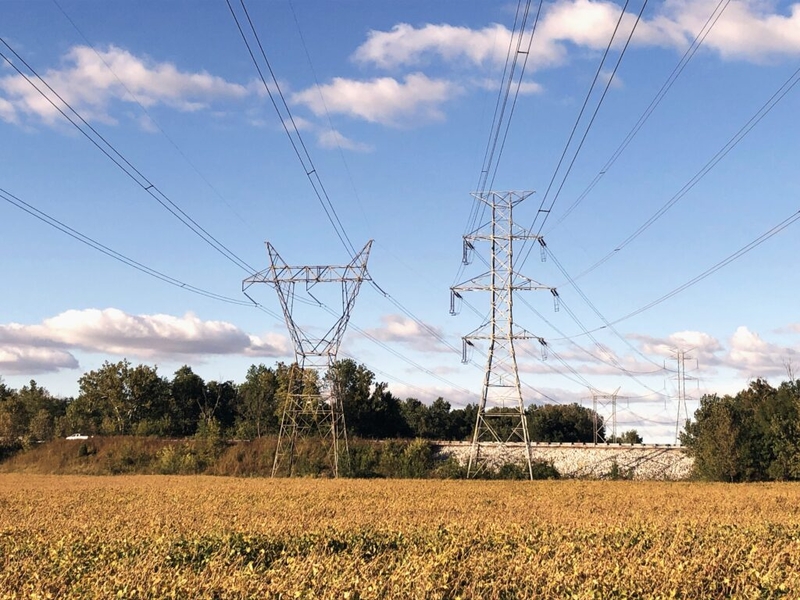
Transmission lines | Robert Zullo/States Newsroom
Changes are on the horizon for the state’s application process for large scale electric transmission line developments following the approval of two projects that will place many miles of electric service wires across Michigan.
Members of the Michigan Public Service Commission on Thursday approved applications to construct two approximately 50 mile spans of high-voltage electric transmission lines from the Indiana border starting in Branch County to a substation in Calhoun County, and another stretching from Eaton County to Gratiot County.
The projects, proposed by ITC Holding Corp., doing business as Michigan Electric Transmission Company, have been controversial because residents expressed dismay over the lack of public input on the projects and the fact that their concerns regarding routes went largely unheard.
Some of the properties in the approved routes run through legacy farm land, and residents are concerned about their property values dipping due to the lines and pending construction activity.
An attorney working with residents also told Michigan Advance that the company, in an attempt to acquire land prior to pending eminent domain proceedings, has been offering landowners raw deals with few property rights or just compensation.
That said, the projects would usher in the first major Michigan electric transmission line projects in more than a decade, and the commission on Thursday said the need was evident.
Commissioners also gave the company directives on how to move forward with both projects, but with parameters for including public-proposed route modifications as it prepared for construction.
In approving the lines, all three members of the Michigan Public Service Commission expressed disappointment in the way the company behind the project handled public engagement.
“In the case before us, I believe it would be generous to call METC’s public engagement lackluster,” Commissioner Kathrine Peretick said. “We heard from impacted parties that METC refused to answer simple questions, ignored glaringly obvious routing problems, like an airport in the path of the transmission line, and took the easy, lazy path for the siting of the route in every place possible. All of this is more egregious in the context that METC is a well-resourced company that has the ability and the means to do better.”
In a statement provided to the Advance, a company spokesperson said it appreciated the commission’s approval.
“We also take seriously the Commission’s concerns regarding public engagement,” a spokesperson said. “We recognize that meaningful community involvement is essential to the success of these projects, and we are committed to refining our outreach process moving forward.”
Projects approved with some changes
In the company’s initial request, it proposed a 39-mile line between substations in Gratiot and Eaton counties, and a 55-mile line between Calhoun and Branch counties. Both transmission projects are described as double circuit 345 kilovolt lines.
Proposed and alternate routes were submitted for both projects.
On Thursday, the commission approved the alternative route for the Gratiot to Eaton project, while also approving the proposed route for the Calhoun and Branch project.
The commission found that the alternative route for the Gratiot to Eaton project was reasonable and preferable because it had fewer heavy angles and road crossings, impacted fewer wetlands and hydric soils, and used a long-standing utility right of way.
For the Calhoun to Branch lines, the proposed route was chosen for similar reasons.
The alternative route would have avoided impacting the R & R Ranch Airport in Marshall, which was a concern cited across multiple meetings by owner Robert Williams. However, the proposed route would have resulted in more damage to archeological sites, increased the number residences within 500 feet of the line’s right of way and expanded the number of parcels crossed by the line.
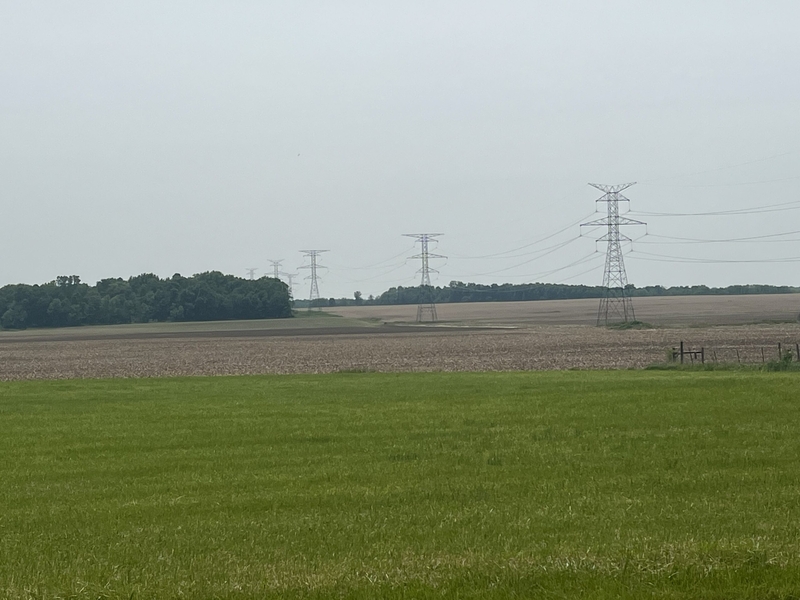
Overall, both lines were found to be necessary additions to Michigan’s electric infrastructure because they would ensure increased energy reliability, capacity and opportunities for renewable energy integration. Neither project will present threats to public health and safety, and although there will be some environmental disturbances, approval of both projects was permissible under the Michigan Environmental Protection Act because there were no feasible or prudent alternatives.
Going forward, the company must consider landowners’ specific requests for minor modifications to the major transmission line routes, and the commission directed the company to file a memorandum in the case detailing how impacted landowners may submit minor route modification requests.
The company must also file a monthly report documenting any minor modification requests, how it accommodated the request, or why it was unable to do so.
Commissioners mandated that the company must provide landowners along the approved routes, as well as adjacent landowners, with contact information so that they can communicate concerns to the company.
The commission also required the company to file separate monthly reports detailing the communications received from landowners as well as investigate every noise complaint received by landowners to ensure there is not a system issue that needs to be addressed.
Commissioners call METC onto the carpet over public engagement
Many of the conditions were a direct result of the company’s “lackluster” work, as noted by Peretick, in notifying residents of the plans and the few opportunities for public input that would have allowed resident concerns to be heard and reflected in project changes.
Peretick said she was bound to issue an affirmative vote on the projects because the construction applications met the requirements of statute.
But in her mind, Act 30 of 1995, which outlines guidelines for electric transmission line siting, sets the bar too low for companies and doesn’t give landowners an adequate opportunity to shape the outcome.
Notably, Peretick said Act 30 only requires official notice to landowners directly on routes proposed by a company, and leaves out adjacent properties or those in the general study area where intervenors may propose alternative routes. Although the act theoretically allows the commission to approve one of those intervenor-proposed routes, that would mean approving a route on land with owners who were never notified.
“I cannot in good conscience approve a transmission line to be built on someone’s property that was never even given a chance to argue their side of the case,” Peretick said.
The low bar of landowner public engagement was another issue with Act 30 that Peretick said needed to be addressed.
Commission Chair Dan Scripps said he didn’t want it to get lost in the shuffle that the transmission lines were a significant addition to Michigan’s energy infrastructure.
Still, the commission was well aware of the potential impacts to land owners, much like Williams and his airport.
“Even as I’m pleased to see these critical projects move forward, I would implore the company to do a much better job of public engagement in future applications,” Scripps said.
Changes coming to Act 30 guidelines
To bring greater clarity to the process and ensure that landowners were not treated in the same way again, the commission also approved an order that directed staff to develop voluntary filing guidelines for applicants under Act 30.
The commission voted unanimously to jumpstart that process as a way to address concerns about Act 30’s lack of clarity on what constitutes an alternative route, to what degree private benefits need to be estimated in advance of a project, and whether the law provides for sufficient and clear interaction between an applicant and a landowner.
Commissioner Alessandra Carreon, whose term expires this month, said that although several people submitted individual comments on the project, they were not considered part of the official record and couldn’t be used as a basis for the commission’s decision. Carreon said that was one part of the larger issue with the process.
“However, the upcoming rule making will serve as a critical channel for the public to help shape future Act 30 applications and outcomes,” Carreon said.
Lansing, MI