Louisiana lawmakers approve incentives for controversial wood pellet industry
May 29, 2026 | 7:00 am ET
Description
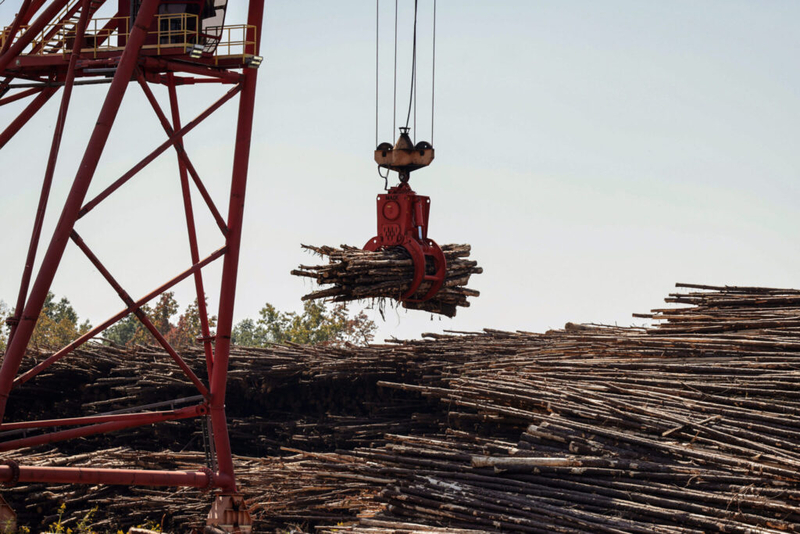
Logs are hoisted from large piles and fed into a chipper at Drax’s wood pellet mill in Urania, Louisiana. (Photo by Eric J. Shelton/Mississippi Today)
A bill aimed at making Louisiana more enticing to the wood pellet industry has sailed through the state legislature.
House Bill 670 won unanimous approval in the Louisiana House and Senate. It would ease regulations for pellet manufacturers while directing state support toward workforce development, financial incentives and infrastructure improvements designed to meet the industry’s needs.
The industry has come under fire for repeatedly breaking air pollution rules in Louisiana and Mississippi and contributing to greenhouse gas emissions in the United Kingdom, where most of the pellets are burned to produce energy marketed as “sustainable biomass.”
The bill’s supporters admitted they knew little about the industry but backed the measure in hopes of reviving the state’s struggling logging sector.
“This is an opportunity we have in Louisiana that we should capitalize on,” said Rep. Chuck Owen, a Republican from Vernon Parish and the bill’s sponsor.
Owen said he was unfamiliar with pellet manufacturing before industry representatives approached him about drafting the legislation. He repeatedly failed to answer basic questions from his colleagues about where and how the pellets are produced.
Despite this confusion and little discussion about the industry’s lengthy record of violating pollution regulations, the bill moved quickly through the Legislature and is now expected to be signed into law by Gov. Jeff Landry, who has backed similar measures aimed at boosting industrial growth in Louisiana.
British energy company Drax operates Louisiana’s two large wood pellet mills, located near Urania in central Louisiana and Bastrop in the northern part of the state. Together, the facilities produce roughly $1 billion worth of pellets annually for export to the U.K. Drax burns the pellets at a converted coal-fired power plant that supplies about 6% of the country’s electricity.
In Gloster, Mississippi, where Drax has operated the longest, several residents are suing the company over what they say is a decade of exposure to toxic chemicals.
“This bill uses taxpayer money to support a foreign industry and makes it easier for them to pollute Louisianians’ air and water,” said Naya Black, an organizer with the Dogwood Alliance, a group opposed to the wood pellet industry. “Biomass companies present themselves as clean energy companies, but in reality they cut down forests, process them into pellets and ship them overseas to be burned for European energy.”
The bill gives Louisiana Economic Development, a state agency, broad direction to draft new incentives for the industry. Drax has already avoided paying about $75 million in property taxes via the state’s Industrial Tax Exemption Program, known as ITEP, Verite News found in a review of estimates from Louisiana Economic Development.
Drax declined to address pollution concerns but thanked legislators for supporting the bill.
“We appreciate the engagement of lawmakers and our community partners in Louisiana,” a company spokesperson said in a statement. “We remain focused on operating responsibly and transparently, working constructively with regulators, and continuing to support jobs and economic activity in the communities where we operate across Louisiana.”
This article first appeared on Verite News New Orleans and is republished here under a Creative Commons Attribution-NoDerivatives 4.0 International License.

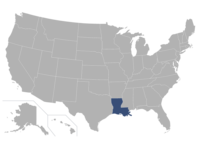
Baton Rouge, LA