The government is paying Idahoans who got sick after nuclear bomb tests. Here’s how some get proof.
May 29, 2026 | 6:20 am ET
Description
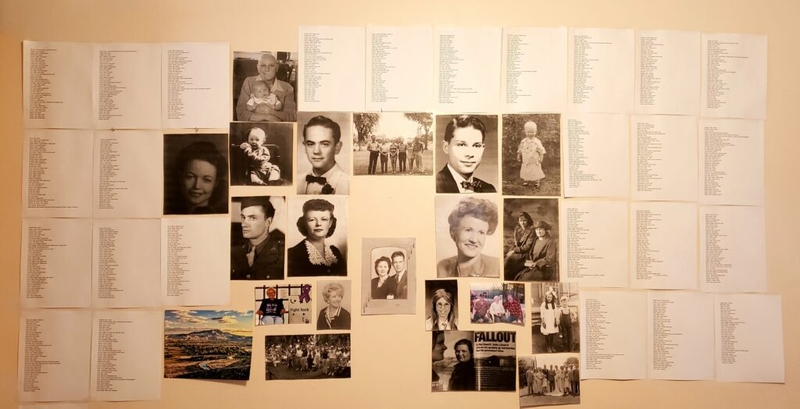
In her home, Tona Henderson has a wall dedicated to images and the names of people who were diagnosed with cancer and living in Idaho at the time of nuclear testing from 1951 to 1962. (Photo courtesy of Tona Henderson)
Cheryl Poxleitner, 71, grew up on farms in North Central Idaho’s Lewis County.
When she was 8, her family moved to Craigmont — a small town near Grangeville, where her dad raised dairy cows.
“That’s probably where I was exposed to radiation,” she recalled in a recent interview. “Becuase many people are saying that the cows eat the grass, which has been contaminated. And … when they produce the milk, the milk is contaminated.”
Within months of each other almost a decade ago, she and her sister were diagnosed with thyroid cancer.
“The surgeon was really stumped,” Poxleitner said. “He said, ‘This is the craziest thing I’ve ever seen: two sisters with thyroid cancer, and so much alike.’”
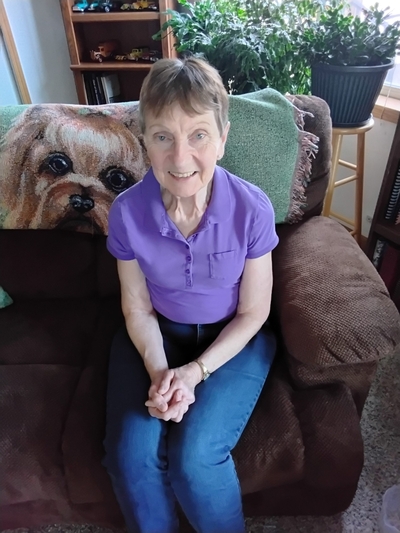
Now she and many other Idahoans are newly eligible for $100,000 in compensation from the federal government for illnesses linked to nuclear weapon tests in the mid-1900s in Nevada. That came after Congress expanded a compensation program, called the Radiation Exposure Compensation Act, also known as RECA, to include Idaho.
Until last year, Idahoans affected by radiation from those nuclear bomb tests — who are commonly called downwinders — were not eligible for compensation for decades through RECA, a program created in the 1990s. That was despite Gem, Custer, Blaine and Lemhi counties being among the top five counties in the U.S. that were most affected by fallout from Nevada nuclear tests in the mid-20th century, according to research by the National Cancer Institute.
The One Big Beautiful Bill Act, signed into law by President Donald Trump in July 2025, expanded the RECA program to downwinders in all of Idaho, Utah and New Mexico.
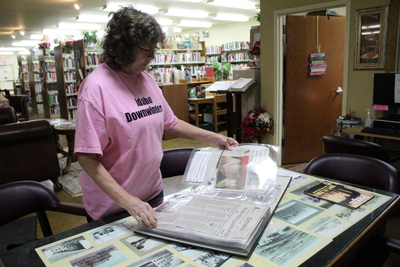
Now, as Idahoans try to prove they are eligible for the program, many are turning toward libraries to find records of them or their families living in Idaho. And to some archivists, the high demand for their records is proving the value of holding onto decades of old phone books and city directories.
“We hear people’s stories in the process. People are telling us about the hardships they face because of this radiation exposure, or their family’s exposure,” said Dulce Kersting-Lark, who leads University of Idaho’s Library’s Special Collections and Archives. “So, it really reflects that archival work is care work. … You are taking care of records so that hopefully in the future, they are a benefit to somebody.”
How Idaho nuclear downwinders became eligible for radiation compensation
Tona Henderson, an advocate who has pushed for years for Idaho to be included in the compensation, says Idaho downwinders are largely finding out about the program by word of mouth. She said there’s been a lack of news coverage about RECA’s expansion to include Idaho.
“You’d think that Idaho being included in this program would be huge news. But it’s been like pulling teeth to get anybody to pay attention,” she said in an interview.
Henderson leads the Idaho Downwinders Group, and says she has helped more than a hundred people get approved for RECA compensation. She travels across the state hosting workshops, and works with librarians that are being inundated with requests for historical documentation for Idahoans to prove their eligibility for the program.
She worked with Idaho’s U.S. Sen. Mike Crapo, a Republican who crafted key parts of the massive bill and has long pushed to expand RECA, to expand RECA to Idaho.
In a statement, Crapo praised her work and invited Idahoans in need of help to contact his office.
“Idahoans were unfairly left out of the RECA program for far too long. I was proud we finally secured coverage for victims in the program’s reauthorization signed into law last year,” Crapo said. “Tona has been a steadfast proponent of the program, and I know she is working around the clock to help qualifying Idahoans apply. Constituents in need of assistance with federal agencies are welcome to contact my office for further assistance.”
What is the Radiation Exposure Compensation Act?
Under the expanded program, Idahoans are now eligible for $100,000 in one-time payment through the Radiation Exposure Compensation Act. That applies if you have had one of 19 types of cancers, and lived in Idaho for at least one year between Jan. 21, 1951, and Nov. 6, 1962, or for just over the entire month of July in 1962.
People who got sick and lived in Utah or New Mexico, or select counties in Arizona and Nevada, are also eligible. If the eligible person died, family members can apply for compensation. File claims through the Justice Department’s claims portal online at reca.justice.gov.
Under the Big Beautiful Bill, RECA is set to expire on Dec. 31, 2028. Before the law extended RECA in July 2025, the program expired for about a year starting in June 2024, the Idaho Capital Sun previously reported.
Under expanded radiation compensation program, Idaho libraries swarmed with requests for help
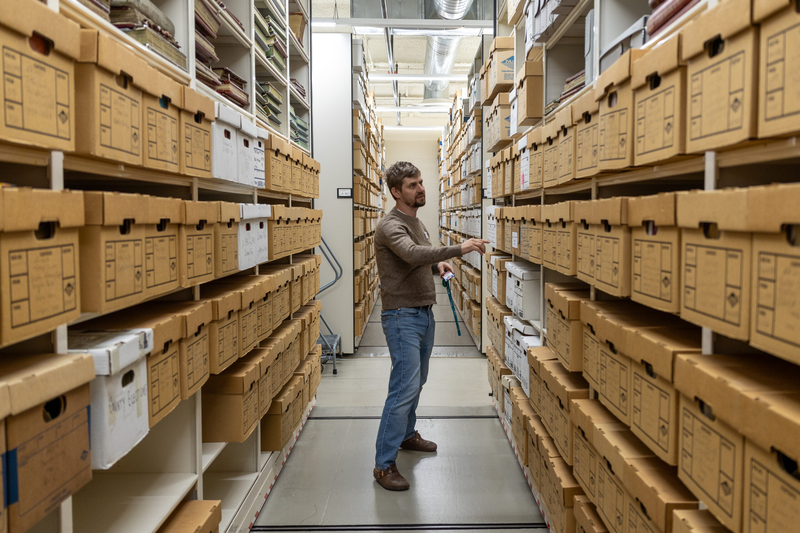
As Idahoans search for documents to prove that they or their loved ones lived in Idaho during the qualifying time periods, libraries are being swarmed with requests for help.
Before RECA expanded, usually a few people would show up to the Idaho State Historical Society’s office in Boise each week looking for archival records – like a person who wants an old picture of their house, or a history student working on their thesis, said Owen Prout, a reference archivist at the Idaho State Historical Society.
The demand for RECA records started slow.
“We learned about it because somebody came in asking what, asking for tax records and voting records. And they were like the third person that had asked,” specifically for this time period, Prout said. “But we didn’t know why.”
Then it turned into a downpour.
By January, the state agency that houses reams of archival documents started tracking its RECA requests. The historical society has answered more than 700 requests since then, and around 300 before, Prout said.
That timeline was similar for University of Idaho’s Library’s Special Collections and Archives.
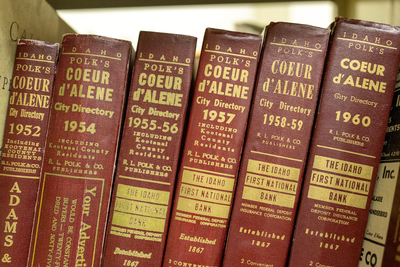
Kersting-Lark, the head of the library unit, isn’t sure why her predecessors decided to hold onto more than 1,000 phone books and directories. But they’re being tapped a lot lately. Each week this year, between 50 and 100 people request help from the library, largely to track down records of their family in old phone books, she said.
The people turning to the library already know they are eligible for RECA, she said, but they need evidence to prove it.
“They know they lived there, but having proof you lived some place 70 years ago is pretty challenging,” she said.
Prout wishes the Idaho State Historical Society would’ve had more time to prepare.
“If we had known … we would have spent six months just digitizing phone books and directories, so that we wouldn’t have to access them 100 times a day,” he said.
How some applied to RECA
Poxleitner isn’t sure she believed her cancer was caused by radiation exposure. At first, when her sister mentioned RECA, Poxleitner didn’t believe it.
“A lot of times when you tell people about it, they have the same reaction that I did. ‘Oh you’re full of baloney. That can’t be right!’” she said. “… We’re trying to decide on how on Earth to get people’s attention.”
Then in October, she got started on her application. To prove her residency, she asked her grade school to provide records that proved she attended first and second grade there in the early ‘60s. Then she got hospital records proving she had thyroid cancer, and got copies of her birth certificate and marriage license.
The three weeks she spent on her application were mostly waiting, she said. She also wrote a cover letter to the Justice Department explaining why she sent each document.
It isn’t always that seamless. Some schools might not have records going back that far, Henderson said. That’s partly why many people turn to libraries to access phone books, Polk’s Directories and other records.
Poxleitner said she’s helped several people in her area apply to RECA. She still talks to Henderson weekly, like to recently get help for a Grangeville woman applying for RECA for her husband.
“My big mouth is about the only thing that people have,” Poxleitner said. “Because people don’t read the newspapers.”
On top of taking calls from many downwinders for help, and traveling the state to meet with more, Henderson is working on expanding the terms of RECA to include more places and more cancers.
She said some parts got stripped out in Congress, and she even had to work to get Idaho back in.
“It’s pretty exasperating to see it come out to be voted on. And what we wanted, what we had conceded to — that we didn’t like what we had to go with,” Henderson said.
Poxleitner doesn’t recommend hiring an attorney to help submit your application. The attorney can only submit documents that you spend time gathering, she said.
“An attorney is a waste of money, and a ripoff. And not only that, there’s all kinds of sort resources,” like Henderson, Poxleitner said.
Henderson said internet searches often direct people toward private companies that charge up to $9,000 for submitting RECA applications. The charge, she said, is “for essentially postage.”
“I (would) just as soon see those people that have lost body parts, lost loved ones” receive the full compensation, she said. “I would hope that they’re the ones that get the money, and not the ones that are lawyers.”
How do you prove eligibility?
Find out if you meet eligibility requirements online at the U.S. Justice Department’s website.
To prove eligibility, several documents are required to prove that you lived long enough in an affected area, that you were diagnosed with a qualifying disease, and to prove your identity. Find a guide to what documents qualify online on an application form by the Justice Department.
Idaho Downwinders, run by longtime advocate Tona Henderson, has a Facebook group with advice on how to apply, like a how-to-guide on filling out the federal form.
The group also hosts workshops across the state, and its next planned workshops are June 22 and 23 in Pocatello, and June 26 and 27 in Salmon. In July, the group is planning to host workshops in North Idaho. Follow Idaho Downwinders’ Facebook page for information on the latest workshops.
To prove residency, Idaho State Historical Society Reference Archivist Owen Prout says the Justice Department has asked for people to send two pieces of documentation, at least one year apart, and no more than three years apart.
Some libraries have online forms to fill out to request records without needing to visit the library in person, like at University of Idaho and the Idaho State Historical Society.
Some local libraries have local records, like the libraries in Emmett, Nampa, Boise, Lewiston, Twin Falls and Pocatello, according to Henderson.
It may take a while to get your funds once you apply. The Justice Department says it has approved more than 2,000 applications from downwinders, and more than 12,000 are pending.
Boise, ID