Some Kentucky drinking water utilities have ‘punitive’ disconnection policies, report finds
May 29, 2026 | 12:14 pm ET
Description
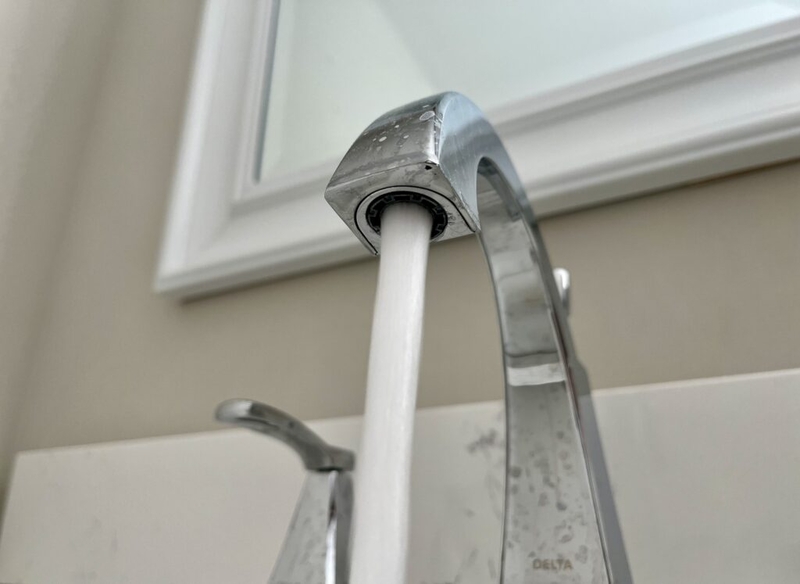
Staff with the Appalachian Citizens' Law Center say drinking water bills impact among the lowest-income Kentuckians. (Kentucky Lantern photo by Sarah Ladd)
Dozens of drinking water utilities in Kentucky disconnected ratepayers who owed less than $50 among other “unreasonably punitive” practices and policies by utilities, a new report analyzing drinking water utility disconnections found.
Staff at the Letcher County-based Appalachian Citizens’ Law Center who authored the 16-page report wrote that 114 drinking water utilities — from small, rural water districts to the large for-profit utility Kentucky American Water — made approximately 57,000 disconnections total across a 12-month period in fiscal year 2024.
The report also criticized late fees charged by drinking water utilities and high fees to reconnect ratepayers who’ve been disconnected, which exacerbates the financial situation facing Kentuckians struggling to pay their utility bills. Reconnection fees can be as low as $4 charged by Montgomery County Water District #1 or as high as $125 charged by the Monroe County Water District, according to the report.
Utility disconnections are “a consequence of an affordability problem as well as something that exacerbates the affordability problem,” said Rebecca Shelton, the director of policy at the law center and one of the report authors, told the Lantern.
“For water, it really comes at a cost of time — how are you going to wash your dishes? How are you going to prepare food? You may have to go out and buy food,” Shelton said. “That exacerbates the kind of money you’re spending to cope.”
Scott Young, the executive director of the Kentucky Rural Water Association, an advocacy organization representing drinking water utilities across the state, did not immediately provide a response to the report’s findings on Friday.
The law center also issued a report this year analyzing disconnection data and policies for electric utilities across the state. That report found the number of drinking water disconnections peaked in the spring and fall, similar to electricity disconnections, a trend mirroring “the unaffordability of energy bills during these times.”
Shelton said the law center’s report on electricity found people with a median income for a community were more likely to face a high financial burden to pay electricity bills. But the financial burden to pay drinking water bills, she said, impacts the lowest-income households especially.
The report’s recommendations include re-establishing a federal program similar to the Low-Income Home Energy Assistance Program, which provides financial assistance for energy costs, along with establishing a state fund of $20 million to prevent disconnections. The report authors estimate it would take at least $7 million a year to pay the cumulative debt of drinking bills and prevent disconnections.
The report also recommends the Kentucky Public Service Commission investigate the wide range of reconnection fees charged by utilities; prohibit after-hours disconnections and improve the amount, quality and accessibility of disconnection data reported by utilities.
The report does not include an analysis of data and policies of all drinking water utilities in the state, notably excluding nearly 200 municipal drinking water utilities. Such city-owned drinking water utilities are not regulated by the Kentucky Public Service Commission, the agency where the report authors collected their data from.
Mary Cromer, the deputy director of the law center and a report author, said the lack of municipal utility data is “a pretty significant issue.”
“We know of a lot of small struggling cities here in Eastern Kentucky that seem to be having a lot of trouble with their water systems and having very high rates,” Cromer said. “We would like for some analysis to be done also on city data, but the data is just not available.”
Frankfort