Norton, Mansour trade attacks over risk and partisanship in treasurer debate
Sep 23, 2026 | 9:33 pm ET
Description
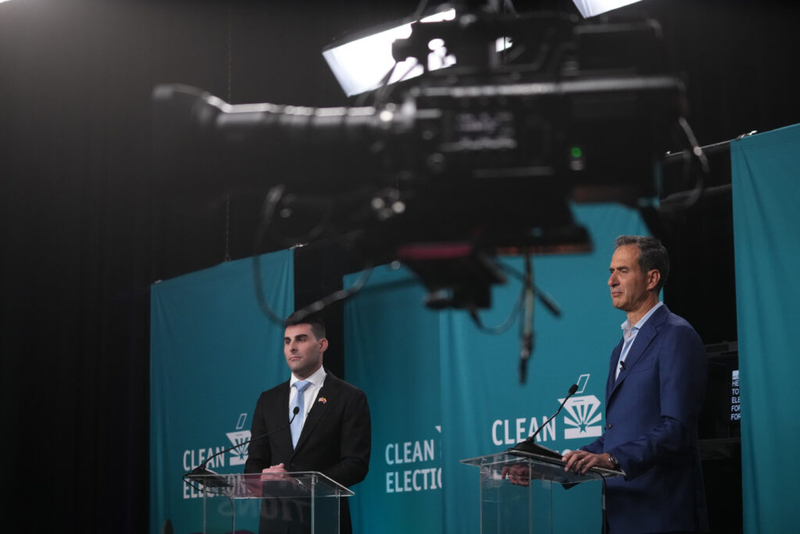
Republican Elijah Norton (left) and Democrat Nick Mansour (right) at the Clean Elections debate for Arizona treasurer on Sept. 23, 2026. (Photo by Joe Rondone/The Arizona Republic/pool)
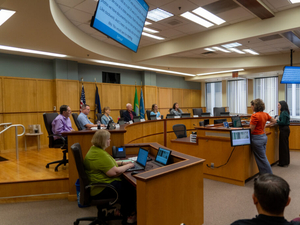
The Republican and Democratic nominees for Arizona Treasurer attempted to woo voters Wednesday evening during a debate in which both men tried to paint the other as untrustworthy of being responsible for overseeing how the state’s money is invested.
Republican Elijah Norton and Democrat Nick Mansour each claimed that they intend to keep “partisan politics” out of the office and touted their own plans to secure the state’s economic future.
Norton, who won a contentious primary in July, is a former treasurer for the Arizona Republican Party and currently is the president of Veritas Global Protection Services, a vehicle insurance company he founded.
In recent years, the wealthy businessman has largely bankrolled the state GOP — he’s contributed more than $1 million to the party since 2023, including nearly $200,000 in the first half of 2026 — and he has poured $1.1 million into his treasurer campaign.
He has also been the single most prolific funder of other Republican candidates in Arizona in the 2026 election cycle: State campaign finance records show he has given more than $3 million to GOP campaign efforts, including his own campaign.
Mansour, the former CEO of the Arizona College of Nursing, ran unopposed in his primary, a fact that Norton used to attack him for a lack of experience in elections.
In their opening statements, both men leaned on their business experience to persuade voters that they are the one most fiscally responsible to handle the state’s checkbook.
In his opening statement, Mansour cited endorsements that include former Republican lawmakers.
“We want to keep partisan politics out of this office as much as possible,” Mansour said.
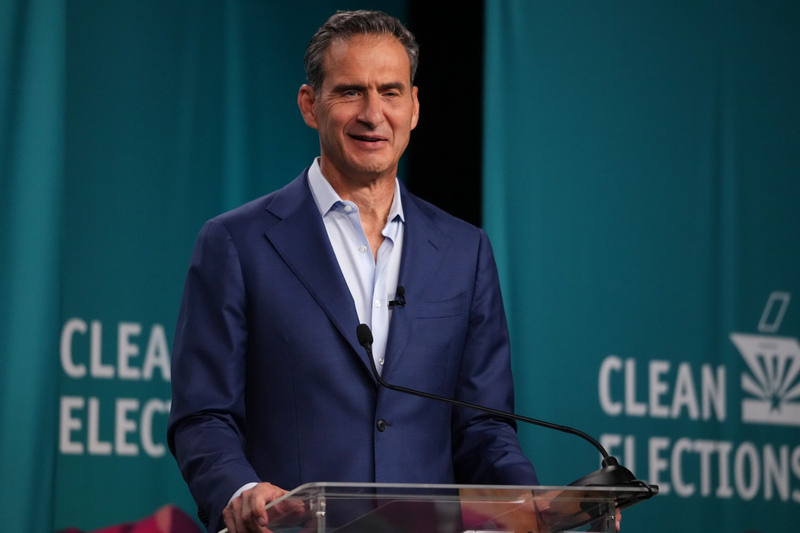
A major point of contention during the debate was Mansour’s plan to change how the state maintains nearly 9 million acres of trust land in a $10 billion endowment fund.
Sales of that land are set to go to 13 beneficiaries, the majority of which are public schools. The land was granted by the federal government to multiple states; Arizona has the most left, and critics have argued that the state should be doing more with it.
That fund, the Permanent Land Endowment Trust Fund, has long held 60% of its holdings in the stock market and 40% in fixed income assets. Norton claimed that Mansour’s plan to shift that to 80% in stocks and 20% in bonds would endanger the state’s funds.
“We cannot take big bets or risky decisions with our state’s money,” Norton said, calling Mansour’s proposal “just crazy” and stating that a letter from multiple county treasurers opposing the plan and endorsing Norton was being released during the debate.
“We want to be both safe and fiscally responsible. We’re currently not fiscally responsible with the permanent land endowment fund,” Mansour said in response, adding that other states do not follow Arizona’s model. “We invest among the lowest of states, and this is a way for us to invest in the long term for our kids and keep our taxes low.”
Mansour accused Norton of “mischaracterizing” his plan, while Norton claimed it could cost the state money if the stock market fluctuates too wildly.
Both men also claimed that the other would bring partisan politics into the office.
“Elijah isn’t even trusted by his own party. Kimberly Yee doesn’t trust him,” Mansour said, saying that Yee, the current state treasurer who is running for superintendent of public instruction, has not endorsed him. Mansour also cited a letter released by 36 Republicans voicing concerns about Norton’s business practices and how it could impact the state.
Those concerns around his business practices also showed up in the 2022 election, when Norton challenged Republican U.S. Rep. David Schwiekert.
Norton called the allegations “ridiculous” and cited high-profile Republican endorsements like Barry Goldwater Jr. and county treasurers.

While Norton said he intends to keep politics out of the office, he conceded that Republican culture-war politics would guide his investment strategy. For instance, he said that he would not allow Arizona to invest in companies that engage in “racial hiring quotas” and referred to an anti-DEI case against Starbucks. Opposing corporate efforts for diversity, equity and inclusion has been a major component of the GOP’s culture war.
He has also made similar comments online, including that he’d divest in companies that employ DEI strategies.
Norton claimed Mansour has campaigned on taking money invested in oil in the state and shifting it to green energy as proof that he will bring “partisan politics” into the office.
On Empowerment Scholarship Accounts, the state’s private school voucher system, Mansour said he would audit those expenses and communicate with the office of the superintendent to make sure no waste or fraud gets approved.
The $1 billion program has come under fire for a lack of oversight that has allowed families to spend money meant to pay for schooling on things like lingerie and trips.
While Norton acknowledged the treasurer’s role in the program’s implementation, he focused instead on telling voters about his plan to make sure the request for proposal process for the state’s ESA administration software is done publicly and in a bipartisan fashion.
“I don’t want to unilaterally make that decision,” Norton said, adding he has already met with the main vendors of the technology.
In their closing statements, each of the candidates attacked the other for legal battles they’ve faced in their professional careers. Norton mentioned allegations against the Arizona College of Nursing that it defrauded students, while Mansour mentioned the lawsuits and complaints lodged against Norton’s business.
Early voting begins on October 7 and you can check the status of your voter registration at my.arizona.vote.
Phoenix, AZ