Unionized hospital doctors reach deal with Allina Health after historic 4-day strike
Sep 23, 2026 | 9:41 pm ET
Description
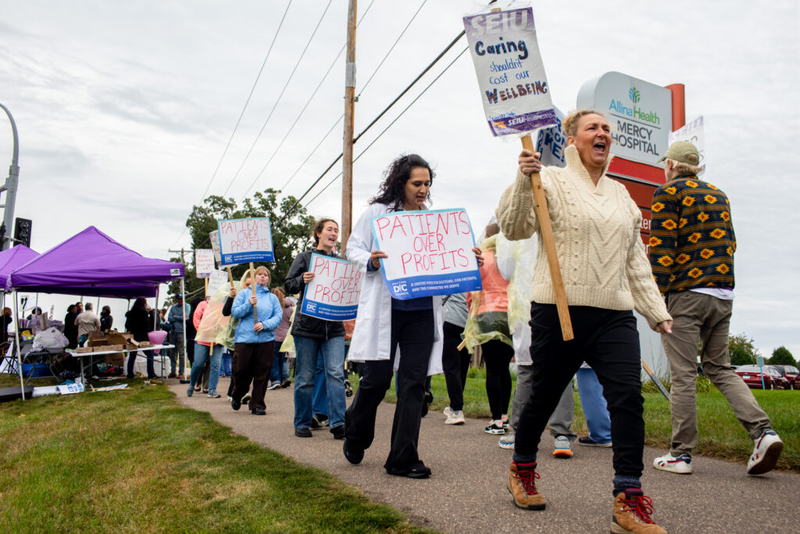
Doctors Council-SEIU members at Allina picket during a historic four-day Unfair Labor Practice strike at Allina Mercy Hospital in Coon Rapids, Minnesota on Monday, Sept. 14, 2026. (Photo by Nicole Neri/Minnesota Reformer)
The union representing about 150 Allina hospital doctors announced on Wednesday a tentative agreement on a first labor contract covering wages and benefits.
The agreement follows a four-day strike last week, believed to be the first by private-sector hospital doctors in U.S. history. It came after three years and more than 66 contentious negotiation sessions over sick leave, pay and the use of artificial intelligence.
“This hard-won first contract gives us the written protections we needed so we can keep providing the care our patients deserve, instead of watching burnout drive good doctors out,” said Dr. Saul Singh, an Allina physician and union leader, in a statement.
A spokesperson for Allina Health shared a statement saying it was pleased to reach a tentative agreement, which must still be ratified by union members. Allina previously downplayed the effect of the strike, saying it would continue normal operations and asserting that about three dozen doctors crossed the picket line.
The union touted the agreement’s grievance process, language on greater professional autonomy, full release from noncompete clauses in the case of layoffs, and transparency on compensation models.
But the union relented on one of its key demands for paid sick days, having alleged that doctors are not receiving the time off that all workers are entitled to under state law. Allina contends doctors already have paid time off and that it is in compliance with state law.
Dr. Alia Sharif, a hospitalist and bargaining team member, said she was extremely disappointed that Allina wouldn’t budge. She said the need for sick days was made painfully clear to her this past weekend, when her stepson was struck by a car that ran a red light and required multiple surgeries. Unless she picks up extra shifts, she’ll lose pay for being with him in the intensive care unit.
“A person working for a $6 billion dollar company should not have to worry about being in the ICU with family and making a living,” she said.
Doctors at Allina Health’s Mercy Hospital in Coon Rapids and Unity campus in Fridley voted to unionize with Doctors Council SEIU in 2023 by a 2-to-1 margin, but weren’t certified for nearly a year as the health system fought to overturn the election.
Allina Health, one of Minnesota’s largest health systems, with 12 hospitals and over 60 primary care clinics, has seen significant labor unrest in recent years.
Last November, hundreds of Allina doctors, physician assistants and nurse practitioners across its primary and urgent care clinics went on strike for a day in what was believed to be the first by doctors in state history and the largest in U.S. history. The advanced care providers then voted to strike indefinitely this spring before reaching an agreement on a three-year contract.
Allina workers are closely watching a proposed merger between their employer and the far larger California-based Sutter Health to create a combined $26 billion system with 39 hospitals serving more than 5 million patients in California, Minnesota and Wisconsin.
The merger, which is fiercely opposed by labor unions, is under review by the Minnesota Attorney General’s Office.
Unions and healthcare advocates warn that increasing consolidation in healthcare is driving up costs for patients, hurting care and suppressing wage growth for workers.

Saint Paul, MN