Cameron the Capitol Cat statue effort revised after commission skepticism of ‘whimsical’ idea
Sep 23, 2026 | 7:48 pm ET
Description
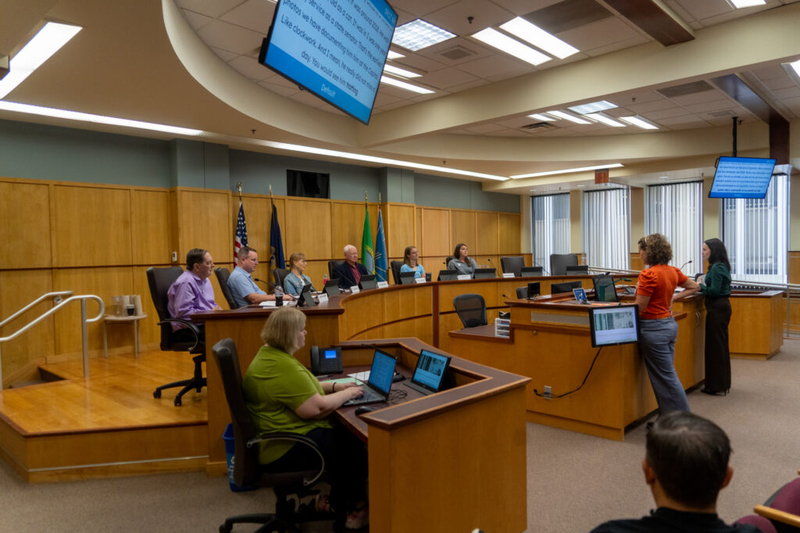
State Sen. Jana Hughes of Seward, at the podium, to the left, and former state Sen. Anna Wishart, at the podium, to the right, testify before the Nebraska Capitol Environs Commission on Aug. 28, 2026, in Lincoln. (Photo by Zach Wendling/Nebraska Examiner)
LINCOLN — An effort to create a permanent sculpture honoring the Nebraska State Capitol’s longtime unofficial feline mascot has been scaled back after a commission expressed skepticism last month over the “whimsical” idea.
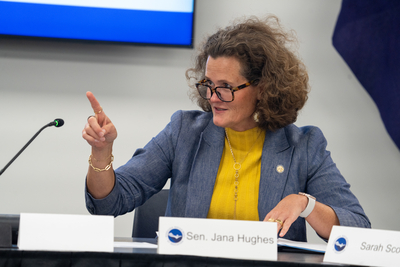
State Sen. Jana Hughes of Seward and former state Sen. Anna Wishart of Lincoln will again present the idea to honor Cameron the “Capitol Cat” to the Nebraska Capitol Environs Commission this Friday. The commission is not yet voting on whether to greenlight the statue.
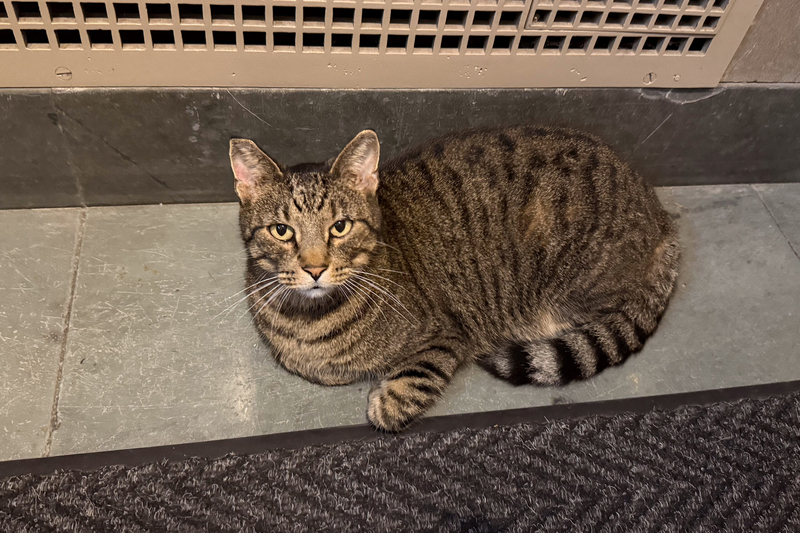
Until this spring, 11-year-old Cameron had made a home away from home at the Capitol near his former downtown Lincoln residence with his owner, Dianna McGinnis, for nearly a decade. In May, Cameron and McGinnis moved into assisted living.
“We have incorporated the feedback provided to us by the committee as well as community members (many who are part of Cameron’s growing fan club) and are excited about the updated proposal we are coming to Friday’s meeting with,” Wishart said in a Wednesday text.
A ‘whimsical’ proposal
The idea has been revised slightly from an original proposal, which called for a life-size, 18- to 20-inch-tall bronze statue of Cameron on a limestone pedestal about 28-32 inches in height.
The sculpture is now proposed to move slightly east, closer to the state parking lot at the same intersection of H Street and Goodhue Boulevard as before, Hughes confirmed. Cameron’s statue would sit atop a limestone slab that could also serve as a bench.
“There would also be room around that area that some of the school field trips could spread out and eat their sack lunches in that area, which I think would be cool,” Hughes said.
Wishart told commissioners that honoring animals has been a tradition throughout history, such as the case of Fala, the Scottish terrier of President Franklin Delano Roosevelt. Both are now honored in bronze at Roosevelt’s presidential memorial in Washington, D.C.
“These animals become a part of the human story of our institutions, and we think Cameron should be a part of Nebraska’s Capitol,” Wishart said last month.
Moving Cameron’s statue a little east would transfer maintenance responsibilities from the City of Lincoln to the State of Nebraska. Hughes and Wishart are fundraising to pay for the statue and any ongoing costs. No public dollars would go toward the effort.
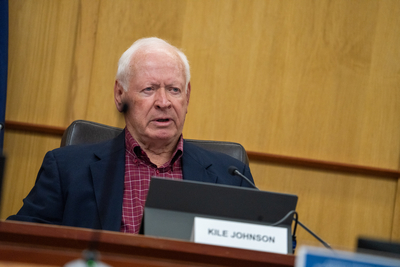
Commissioner Kile Johnson, chair of the commission, had summed up last month’s skepticism as whether the commission should allow something so “whimsical.” He appeared the most open to the idea, while some commissioners asked about what precedent the sculpture would set.
“This is whimsical, but on the other hand, it looks like it’s done in a very, very high-quality manner,” Johnson said.
Historical significance?
Former state Sen. David Landis, who served 28 years in the Legislature, from 1979 to 2007, and now serves on the Environs Commission, said in August that just as on the floor of the Legislature, sometimes policymakers disagree.
“And this is a place where I don’t agree,” Landis said.
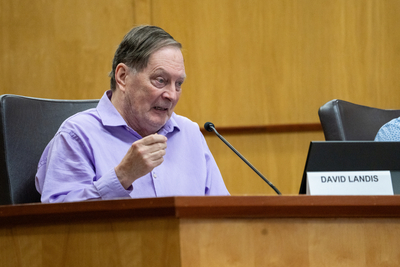
Landis described figures in the Capitol Environs District, such as statues honoring Ponca Chief Standing Bear and Dr. Susan La Flesche Picotte on Lincoln Mall to the north of the Capitol, as meant to honor people whom history has perhaps forgotten but who deserve to be remembered.
He said Cameron didn’t rise to that.
“This is a well-loved cat, but when that time runs out that those of you who love this cat have passed by, what is the historical significance of Cameron?” Landis asked. “I think it pales, other than whatever we carry around in our hearts for the cat.”
Defining ‘public art’
Benjamin Victor of Boise, Idaho, the artist who sculpted the Standing Bear and Picotte statues, has agreed to sculpt Cameron’s statue, too. Victor has also sculpted four statues currently in Statuary Hall in the U.S. Capitol, including another Chief Standing Bear statue for Nebraska.

Collin Christopher, a staff planner for the Lincoln-Lancaster County Planning Department, who assists the committee, had advised the commission that he thought it was “very unfair” to compare a Cameron sculpture to Standing Bear or Picotte. Under commission regulations, the revised Cameron statue would be closer to public art than a memorial or monument.
Commissioners include a mix of Lincoln mayoral and Nebraska governor appointees, plus four nonvoting members. Christopher is one of those nonvoting members on behalf of Lincoln.
“From staff’s perspective, there should be room within the environs for a fun, engaging piece like this, and Goodhue Boulevard and the space identified near the state parking lot seems like a logical place for it to be located,” Friday meeting materials state.
Cameron’s ‘gravitas’
Speaking against the statue effort in August was Bob Ripley, who served as the State Capitol administrator from 1975 until 2023. Ripley said he and his wife, who have been married for 52 years, have always had at least one cat. He said he, too, loved seeing the “enchanting critter” Cameron come out of the building.
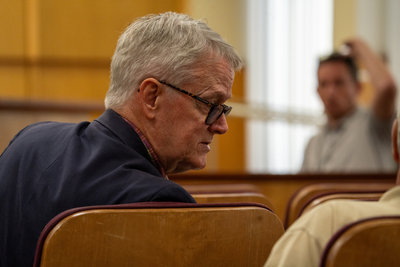
But Ripley questioned the “gravitas” of Cameron compared to Nebraska Hall of Fame members, including Standing Bear and, as of this summer, Husker legend Tom Osborne. He said putting those inductees in one place is purposeful.
Instead of the public statue near the Capitol, Ripley suggested placing a Cameron statue in the garden of the Nebraska Governor’s Mansion, which is regulated separately. Access to the mansion also fluctuates from one governor to the next.
“I hate to beat up on a cat that I thoroughly enjoy to this very day, but I think it’s more appropriate scale-wise in a smaller garden space,” Ripley said.
‘Small but meaningful symbol’
Courtney Wittstruck of Lincoln, a registered lobbyist at the Capitol, testified in favor of Cameron’s sculpture in her individual capacity. Wittstruck said the commission needs to separate Cameron the physical cat from what he represents and symbolizes.
“It’s not just remembering this cute cat,” Wittstruck told the commission. “It’s remembering and reminding people of what this cat represented to those who were in the state Capitol.”
‘So freaking cute’: Supporters pitch Cameron the Capitol Cat statue outside Nebraska State Capitol
Wittstruck said Cameron is a reminder that Nebraskans have more in common than their differences and offered a reprieve in hard legislative times. She said Cameron became a “dedicated public servant, and perhaps the most universally beloved figure around the Capitol.”
“In carrying out his unofficial duties comforting and consoling his constituents, Cameron became more than just a Capitol mascot,” Wittstruck continued. “He became a small but meaningful symbol of the best of Nebraska — kindness, friendliness, compassion and willingness to find common ground, which I think in this day and age is especially necessary.”
Commissioner Andrea Gebhart, while similarly voicing hesitation to the original idea, had said she might be able to support a smaller, more whimsical, even temporary statue. Gebhart had suggested that Hughes and Wishart lean away from the “pop icon” that is Cameron now to how the sculpture and an accompanying plaque represent his values, as Wittstruck outlined.
“I think if the plaque speaks to the kindness, the loyalty of the community, that changes the conversation quite a bit,” Gebhart said.
‘He’ll land on his feet’
Speaking with reporters after last month’s meeting, Wishart and Hughes agreed that placing the sculpture near the Governor’s Mansion, to the southwest of the Capitol, wouldn’t work — Hughes described it as a “cage” and “Fort Knox” — but the duo said they wouldn’t give up.
Wishart encouraged supporters of the “Cameron Fan Club” to show up, voice support or donate if possible.
“I think we do need a little whimsy in our lives, and it is quite unique for a cat to be that attached to a large population of people, in particular children,” Wishart said.
“He’ll land on his feet,” Hughes said with a laugh. “We just got to figure out where that is.”
The commission meets at 8:30 a.m. Friday in the Lincoln City Council chambers.
Lincoln, NE