Independents, Democrats out-fundraise Republican incumbents in most Alaska House races
Sep 23, 2026 | 8:00 pm ET

Description
A campaign sign for Cliff Groh, candidate for Alaska House District 18 is seen in the Muldoon neighborhood of northeast Anchorage on Sep. 23, 2026. (Photo by Yereth Rosen/Alaska Beacon)
A Fairbanks fire captain’s campaign raised over $72,000. A retired Kodiak school teacher and union leader’s campaign raised nearly $71,000. A Clam Gulch fisherman’s campaign raised over $45,000. All three candidates are independents running for Republican-held seats in the Alaska State House.
Democratic and independent candidates for the Alaska State House are largely out-fundraising Republican opponents in races for Republican-held seats. Of 17 seats held by Republicans that have a Democratic or independent challenger, that challenger is outraising the Republican in 11 races.
According to campaign disclosure reports filed with the Alaska Public Offices Commission ahead of the August primary election, Democratic and independent candidates outpaced Republicans in fundraising for races in Fairbanks, Anchorage, the Kenai Peninsula and Kodiak and Prince William Sound. Some are political newcomers and some have run for the Legislature before.
Jenny-Marie Stryker, executive director of the Alaska Democratic Party, said she’s not surprised.
”When donors are giving overarchingly to one side of the movement, it’s because they’re looking for something different. And they’re clearly taking a look at the other side and seeing that they have a better return on their investment when they’re investing in coalition-minded leaders, who really want to put Alaska first,” she said.
There are some notable exceptions. Six Republican incumbents — mostly in the Matanuska-Susitna Borough — have out-fundraised Democrat and independent opponents.
All forty members of the Alaska State House are up for re-election. In the 34th Alaska State Legislature, there was a tight margin between the 21-member multipartisan House Majority caucus and the 19 members of the all-Republican House Minority caucus leading to close votes on major legislation. If one or more Republican held seats flip, it could boost the majority caucus — made up of a mix of Republicans, Democrats and independents — and its priorities.
Alaska House Representatives serve two-year terms, representing roughly 18,335 Alaskans in each district.
Campaign donations are just one way to gauge support for candidates. Financial disclosures include donations from individuals, industry and political interest groups, and political action committees.
In several races, Democratic and independent candidates gathered donations from a variety of individual Alaskans. Some are backed by unions, political interest groups or the Alaska Democratic Party. In some competitive races, some candidates — Republicans, Democrats and independents — gave large donations or personal loans to their own campaigns.
The majority of Alaska’s approximately 603,000 voters are unaffiliated with a political party. A September report by the Alaska Division of Elections shows that 63% were registered as nonpartisan or undeclared in the August primary.
An estimated 23.5% of voters are registered Republican and 11.6% registered Democrat. The remaining roughly 3% of voters are registered with a variety of other small political parties.
Candidates of all political affiliations are making their bids for those independent voters. The ranked choice general election is just six weeks away.
An independent is leading in donations and primary votes in Fairbanks
In Fairbanks, independent Joy Beth Cottle has a significant financial advantage over Republican Harmony Tomaszewski. The two are running for a seat vacated by Tomaszewski’s husband, former Republican Rep. Frank Tomaszewski, who is running for the Alaska Senate. House District 34 extends across Steele Creek, Two Rivers, Eielson Air Force Base and Salcha.
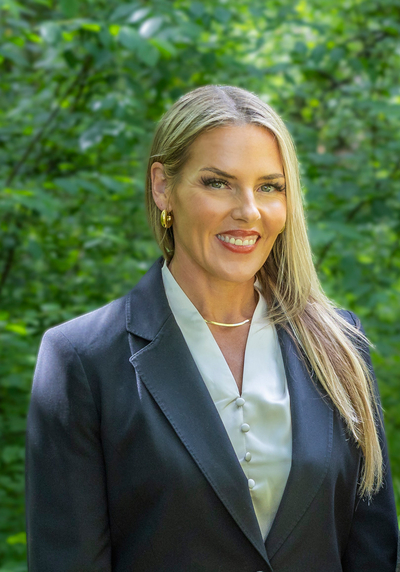

Cottle, a fire captain and paramedic based in Delta Junction, has raised more than $72,000 as of the week before the election. Dozens of small, individual donors have contributed to Cottle, as well as larger donations from unions representing laborers, plumbers and pipefitters, and public employees. Political action committees for Fairbanks Firefighters, the local Teamsters union and NEA-Alaska, the public teachers union, donated to Cottle’s campaign.
Republican Harmony Tomaszewski, a small business owner in Fairbanks, raised nearly $34,000 as of a week before the election. She raised a variety of large and small donations from individual donors and the Republican Women of Fairbanks. She also gave a $5,000 personal loan to the campaign.
Former Republican Sen. Rob Myers of Fairbanks — who is vacating the seat that Rep. Frank Tomaszewski is running for — donated $2,000 to Harmony Tomaszewski’s campaign.
In the primary election, Cottle won by just 280 votes, or 53% of the vote, compared to Tomaszewski who won 47% of votes cast in the district.
Cottle said her district has been particularly impacted by the increases in cost of fuel driven by the Trump administration’s U.S. war on Iran. “A lot of people are hurting specifically because of this war,” she said.
“Some of the platforms and initiatives from the GOP aren’t as popular these days because people are trying to fill their fuel tanks. I know up here in Fairbanks, just about every door that I knock, people are waiting for their PFD, but they also know that’s not going to be enough to get their fuel tanks filled. And we’re looking at really high energy costs going into the winter as well,” she said.
Nearby in Fairbanks’ House District 33 race, independent Pepper McFarland and Republican Barbara Haney are challenging Republican incumbent Mike Prax, who has held the seat representing the North Pole and Badger areas since 2019.
McFarland, a teacher based in North Pole, has out-fundraised both Republican opponents, though she trailed them in votes in the primary election.
A week before the primary, she reported collecting nearly $23,000 from dozens of donors as well as unions like the Alaska State Employees Association and NEA-Alaska teachers union.
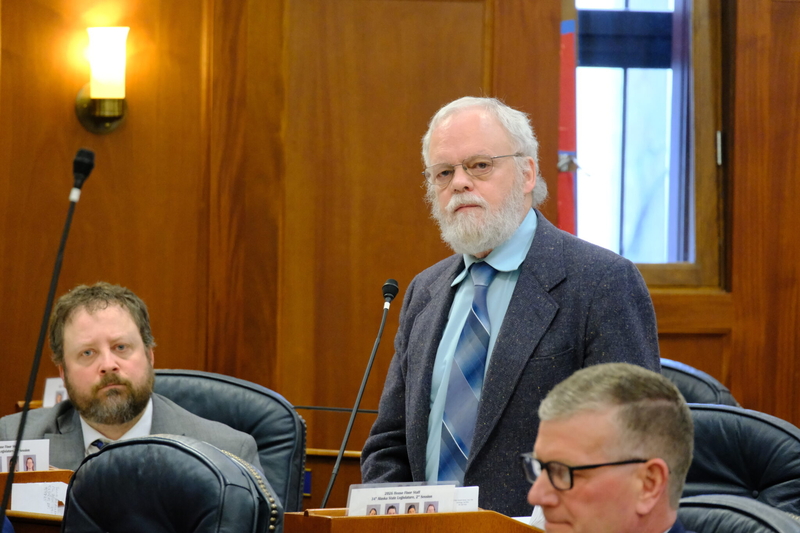
Comparatively, incumbent Republican Mike Prax reported bringing in $13,500 as of a week before the primary election, but $10,000 of that Prax donated to his own campaign.
Republican challenger Barbara Haney, a retired economist and former assembly member with the Fairbanks North Star Borough Assembly, reported roughly $7,400 in contributions as of a week before the primary.
In the primary election, Prax led by just 105 votes, or 37%. Haney had 34%, followed by McFarland with 28.8% of votes cast in the district.
Prax said this is his first election with political challengers — in prior elections he was the only candidate running. He said he thinks that was driven by differences in education funding policy, particularly with McFarland, which he said is one of the top issues he’s hearing about from voters in his district.
An independent leads in campaign donations and primary support in Kodiak
In House District 5, which includes coastal communities of Kodiak Island and Prince William Sound, independent Kathy Simpler has an edge on Republican Sheldon Prout. The Kodiak residents are running for the seat vacated by former Republican Rep. Louise Stutes who is running for the Alaska Senate.
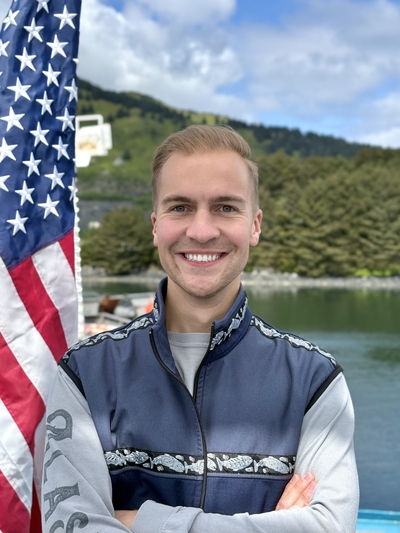

Simpler, a former Kodiak elementary school teacher and union leader, raised over $70,700 as of a week prior to the election. The donations came from a variety of small and large donors, as well as unions: the Alaska Public Employees Association, NEA-Alaska teachers union — where she’s served as director since 2022 — the local Teamsters and the Anchorage Firefighters Union’s political action committee.
Prout, a Republican and commercial fisherman, raised over $21,400 in large and small donations one week before the primary, including $2,500 in donated snow crab for a reception at the fisheries tradeshow Comfish.
Simpler won the primary by 781 votes with 61% of the vote, while Prout had 38.5% of the vote and 1,319 votes.
Independent seeks to unseat Republican incumbent in Homer
In the southern Kenai Peninsula, independent Brent Johnson is running once again to unseat Republican incumbent Sarah Vance, who has represented the district since 2019. He has a very slight financial edge, as of the most recent financial reporting, and took a greater share of the vote in the primary election.
Johnson is a commercial fisherman and former Kenai Peninsula Borough Assemblymember from Clam Gulch, and unsuccessfully ran against Vance, of Homer, in 2024.

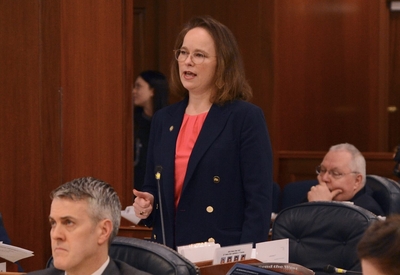
Johnson raised more than $45,000 as of a week before the primary, from large and small donors and the Alaska Public Employees Association union. He also made a personal donation of $20,000 to his own campaign.
Vance raised nearly $45,000 as of a week before the primary, from large and small donors, including $1,000 from current Republican Sen. Rob Yundt of Wasilla.
In the primary election, Johnson won by 890 votes with 56.8%, while Vance landed 43% of votes.
Democrats lead in fundraising in races for Republican-held seats in Anchorage
Democrat Cliff Groh and Republican Dan Sager are running for a seat vacated by Republican Rep. David Nelson who is not seeking re-election. Anchorage’s House District 18 includes Government Hill, Joint Base Elmendorf-Richardson and a small section of Muldoon.
Groh, a former prosecutor, has far outraised Sager — and any other state House candidate — and won the primary election. Groh raised nearly $152,000, with donations from dozens of Alaskans, as well as from the Alaska House Democratic Campaign Committee, public employee, construction and firefighters unions. He also wrote a $3,000 check to his own campaign.


Groh held the seat in 2023 and 2024 but lost a bid for re-election to Nelson in 2024 by just 22 votes.
Sager, a sales manager for a manufacturing company and a political newcomer, has raised over $12,600 as of a week before the election, from a variety of donors including from Anchorage Republican groups. He also donated $3,000 to his own campaign.
In the primary election, Groh won by 327 votes with 67% of the vote, while Sager won nearly 33%.
Groh said he’s raised so much money in part because he has worked hard at his campaign, which he began last year, making calls and walking door-to-door speaking with residents. He noted that campaigns are expensive in his district: with more than half of residents living on Joint Base Elmendorf-Richardson, it’s more difficult to reach voters. “So I have to send the mailers, you know, mail pieces to them to reach them. So my campaign has a program for that, and that, of course, costs money,” he said.
He said he’s had support from the Alaska Democratic Party and political consultants, but hopes his experience and vision garners support from voters.
In South Anchorage’s House District 15, long-time Republican incumbent Mia Costello is running for re-election against Democratic challenger Denny Wells, who raised more money than her and led in primary votes.


The district includes Campbell Lake, Sand Lake, Bayshore and Dimond High School. Wells, a business owner, ran against Costello for the seat in 2022 and 2024. Costello has held the seat since 2011.
In the primary, Wells won by 244 votes — winning nearly 53% of the vote; Costello won 47.2% of votes cast in the district.
Wells had raised nearly $23,000 as of a week before the primary, plus another $3,500 in donations a day before the election, totalling more than $26,000 by the primary election. He saw small and large donations from individual donors, as well as funds from the Alaska Democratic Party, the Alaska House Democratic Campaign Committee, and NEA-Alaska, the public teachers union. He also gave $4,000 in non-monetary contributions to his own campaign in printed materials, signs and associated hardware.
Costello raised more than $23,700 by the week before the election. Individual donors as well as the Anchorage Republican Women’s Club, and the Alaska Cabaret, Hotel, Restaurant and Retailers Association political action committee.
Other notable races
On the Kenai Peninsula, in the House District 7 and House District 8 races, Republican incumbents landed first place in the primary elections, even though Democratic and independent challengers raised more in campaign donations so far this year.
In the race for House District 7, which includes Kenai and Soldotna, Democratic challenger Kate Veh is running against Republican incumbent Justin Ruffridge who was first elected to the seat in 2022.
Veh raised over $6,700, which was bolstered by a $3,000 donation from the Alaska Democratic Party. Ruffridge raised over $3,800 in donations this year, with roughly $6,200 held over from last year. This year Ruffridge had just a handful of donations, including $1,000 from the Laborers Local 341 construction union and $1,000 from the Pacific Seafood Processors political action committee.
In the August primary, Ruffridge won nearly 74% of the vote, while Veh won 26% of votes cast in the district.
Ruffridge said he’s not surprised at the Democratic and independent fundraising efforts.
“I feel like in my four years of being in elected office, that has generally seemed to be the case. I think there’s a bit of a more national fundraising effort in this state on behalf of folks in that particular party alignment, and you don’t see that necessarily from folks on the Republican side, I think ours is a little more grassroots, typically,” he said.
He said his campaign has not had support from the Alaska Republican Party.
The Alaska Republican Party did grant an interview to the Alaska Beacon for this story.
Ruffridge said he doesn’t see the fundraising numbers as evidence of a pushback against Republican policies or the Trump administration, but said support for the party in power usually lapses during midterm elections.
In House District 8, which encompasses the northern Kenai Peninsula from Hope in the north to Seward in the southeast, independents Nissa Savage and Frank Quinn are challenging incumbent Republican Bill Elam, who was elected in 2025.
Elam had a strong lead in the primary, despite raising only $50 since February. Quinn raised $139 before the primary elections. Savage, a certified public accountant based in Soldotna, raised more than $9,700, including a $3,000 donation from the Alaska Democratic Party.
In the primary, Elam won by 72.5% of the vote, while Savage landed 17.1%, and Quinn won 10.3% of votes.
In Southeast Alaska’s House District 1, which encompasses communities from Metlakatla and Ketchikan to Wrangell, Republican incumbent Jeremy Bynum is running for re-election against independent challenger Grant Echohawk. He led the primary vote and has outraised Echohawk, in part because of a $10,000 donation to his own campaign.
Bynum said in an interview he sees running for re-election as first doing the job of a legislator. He said he provided his own funding as a backstop since he was involved in three special sessions this summer as a member of the House Finance Committee, and could not campaign according to state law. He said he’s not surprised to hear Democrats and independents are out-fundraising Republicans this year.
“There’s people that run as nonpartisan, but they’re strongly supported by the Democrat Party and the apparatus,” he said. “The Democratic Party in the state has made sure that they’re putting funding into those races not only this year but even last year if a candidate was filed, you know, so they’re very motivated. That’s for sure.”
All Alaska candidates are required to file new financial disclosure reports ahead of the November general election. The next disclosures are due October 3.
Juneau