Misinformation threatens measles elimination status, overall health. Can KY alter course?
May 26, 2026 | 5:00 am ET

Description
Louisville's mass vaccination site in Broadbent Arena administered around 100,000 COVID-19 vaccines at the Kentucky Exposition Center (Photo by Sarah Ladd).
Louisville’s Maricia Richardson grew up hearing that she didn’t need to get vaccinated.
She didn’t consider herself “anti vax” — more like vaccine hesitant — and much of that resistance was rooted in fear that there was something in vaccines, particularly something aimed at hurting her community.
“(For) my family, it was because we’re Black and we’re not supposed to take those shots,” Richardson, 54, explained. “They’re not meant for us. And no way, no, we shouldn’t do it.”
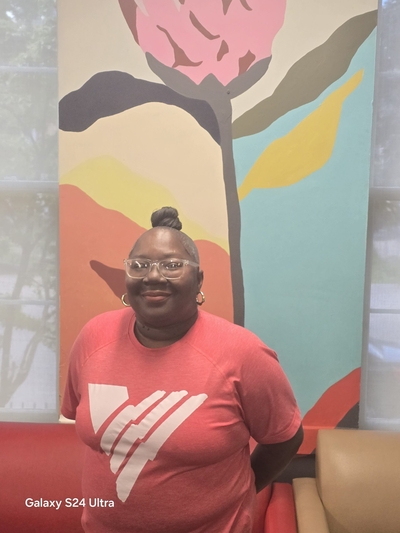
She finally got the COVID-19 vaccine in 2021 because her employer, Volunteers of America, required it and because her aunt, who she loved like a mother, died from COVID. She also feared contracting the virus because diabetes and high blood pressure put her at risk of worse outcomes.
“I didn’t want to lose my job either — I love VOA — but also, I didn’t want to lose my life,” she recalled.
Still, the fear of getting the shot “had me paralyzed,” she said. Once she realized she was OK — “I haven’t had any extra arms and legs grow,” she realized — she felt “gratitude.”
She later contracted COVID but had mild cases, which she attributed to her vaccines: “If it wasn’t for the vaccine, when I did get COVID those three times, I might not have made it.”
Despite her change of heart with the COVID-19 shot, Richardson still has anxiety about the flu vaccine and has yet to get an annual influenza shot.
The fear Richarson faced isn’t unique to her: Experts say it’s driving larger vaccination trends in Kentucky and beyond.
The United States is seeing a resurgence of measles, a highly contagious disease eliminated in the country nearly three decades ago, even as Kentuckians die from preventable illnesses like influenza.
Experts blame an ecosystem of technology like artificial intelligence, social media algorithms that put people in information silos and a polarizing political environment.
Reversing course on medical misinformation will not happen quickly or easily, Kentucky experts say. It will take systemic investments of time for the medical community to build trust lost with the public during and as a result of the COVID-19 pandemic.
Meanwhile, as mistrust increases, routine vaccination declines, putting more Kentuckians at risk of bad outcomes from contagious and preventable illnesses.
Fewer kindergarten children in Kentucky got routine vaccinations after the COVID-19 pandemic than before.
Before the pandemic, in the 2018-2019 school year, nearly 94% of kindergarten children in Kentucky got their polio vaccination. By the 2024-2025 school year, that dropped to 87%. Measles, mumps and rubella vaccination also declined from 93% in 2018-2019 to 87% in 2024-2025. (To prevent outbreaks, experts push for measles vaccination rates of 94% and higher).
In their severest forms, these preventable diseases can cause muscle paralysis, neurological damage, infertility, disability and death.
Right before the COVID-19 pandemic, about 84% of students were up to date on all their vaccinations. In 2024-2025, that had dropped to 82%. (Just 2% of roughly 51,000 children had religious exemptions).
The medical community has blamed President Donald Trump’s administration for spreading misinformation about medicine and science and its handling of medical advice.
Last year, the American Academy of Pediatrics filed a lawsuit against Health and Human Services Secretary Robert F. Kennedy Jr. after he dismissed all 17 members of the Advisory Committee on Immunization Practices and replaced them. In March, a federal Massachusetts judge halted enforcement of Kennedy’s vaccine policies.
Dr. David H. Aizuss, the board chair of the American Medical Association, called the ruling “an important step toward protecting the health of Americans, particularly children.”
“Vaccines are one of the safest and most effective tools in medicine,” he said, “and strong, science-based immunization policies save lives.”
Dr. Steven Stack, the secretary of Kentucky’s Cabinet for Health and Family Services, said misinformation at the federal level is “really problematic” because it can sanction mistrust.
“It causes people to have legitimate reason to be doubtful in the truthfulness and accuracy of the information being put out by their governments,” he told the Lantern.
BC and AC — Before COVID, After COVID
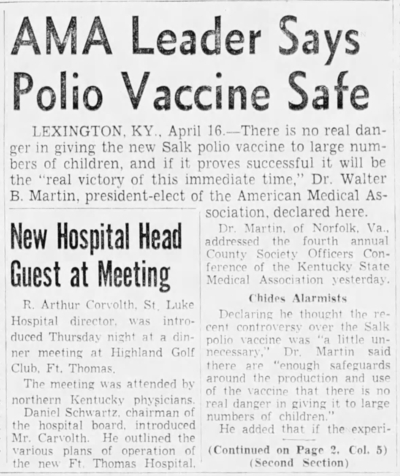
Medical misinformation is far from new; even the polio vaccine, which is one of the most effective and trusted, was met with suspicion when arriving on the market in the mid 20th century.
In 1954, Dr. Walter B. Martin, the then-president of the American Medical Association, told a gathering in Lexington that the relatively-new Salk polio vaccine presented “no real danger” while speaking in response to misinformation about it.
The vaccine, he said, according to an article in The Kentucky Post from the time, could be a “real victory of this immediate time.”
He was right: Polio cases dropped from 58,000 in 1955 to 5,600 in 1957 and 161 cases in 1961, according to the World Health Organization.
By 1994, polio was eliminated in North and South America.
Nearly 30 years later in 2022 — two years after the COVID-19 pandemic hit the country — it was back.
Experts who spoke with the Lantern said the COVID-19 pandemic shifted general trust in the medical system and worsened the spread of mis- and dis-information that has caused vaccination rates to decline across the board.
About 41% of Kentuckians got a flu vaccine in the 2024-2025 flu season, according to KFF, which was a decline from 45% the previous session. In the 2018-2019 flu season, right before the pandemic, about half the population in Kentucky got the shot.
Dr. Bethany F. Hodge, the vice chair in UK’s Department of Pediatrics, Coaches for the Kids Distinguished Professor of Population Health Strategy, said the data around childhood vaccination has a key caveat: It reflects children attending public schools, meaning it’s likely “the best case scenario.”
“Those are kids who are going to participate in places like public school, and probably is the best case scenario representation of our vaccination levels in the community, since children who can’t or don’t go to regular mainstream school — they’re home schooled, or in communities that don’t participate in schools that have this reporting necessity — we actually say that they’re also like less likely to be vaccinated,” Hodge said.
Ruth Carrico, a Louisville infectious disease expert who designed a mass flu vaccination site in 1994 that paved the way for the COVID-19 mass vaccination site in Louisville during the pandemic, said her patient population became more engaged in the reasoning behind her recommendations for their care after the pandemic.
“I’ve divided time into two time periods. One is BC, before COVID; the other is AC, after COVID,” said Carrico, who has a doctor of nursing practice degree. “Before COVID, if I saw 10 patients and I told them, ‘this is what I think we need to do,’ nine and a half out of 10 would do it — very little questions asked. Now, probably five out of 10 would.”
She’s not alone — general trust in doctors and hospitals “decreased substantially” during the pandemic, according to 2024 research in the National Library of Medicine.
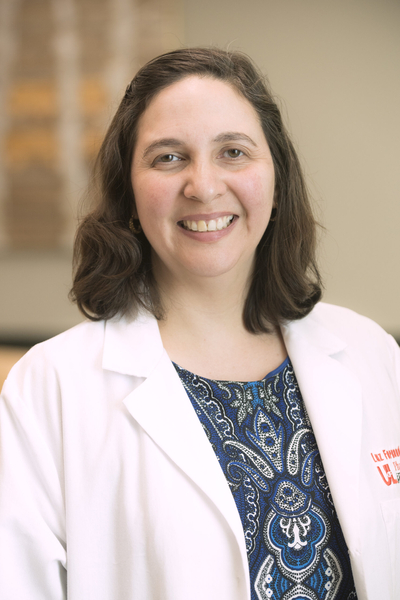
Dr. Luz Fernandez, a primary care family medicine physician at UofL Health and a professor of family medicine, said the general public had not had a chance, prior to COVID, to see science play out in real time.
“I think that, in terms of vaccine development and public health information, we really hadn’t lived it in our specific generation as closely as we did with COVID,” she told the Lantern.
This was also a time of mass shutdowns and closures, which restricted people’s access to their primary care providers. Many turned to social media, rife with misinformation, for advice.
“During that time, you may not have been able, or may not have felt safe, to go and meet with your primary care physician and discuss vaccines,” Fernandez said. “Perhaps that contributed to some of the misinformation.”
This time led people to question not just COVID-19 vaccines, but long-routine shots as well, like the shots for influenza and measles, mumps and rubella. (Routine vaccines like the flu shot are still far more trusted than COVID-19 vaccination).
In December, an unvaccinated Kentucky child died from the flu. And the United States is on the brink of losing its measles elimination status.
Kentucky has confirmed four measles cases in 2026 so far, all in unvaccinated people. In 2025, there were 13 cases in total. Before that, as far back as 2019, there were no more than zero to two cases in a year. Johns Hopkins reports nearly 2,000 total cases in the United States this year so far.
“If we continue on this path — and there’s no reason to believe that this path will alter in the short term — it’s inconceivable to me if we don’t lose our measles elimination status,” said Stack, who was Kentucky’s public health commissioner during the COVID-19 pandemic. “Because if we have sustained transmission over a sufficiently long period of time, it’s not eliminated. It’s spreading freely in society.”
The misinformation virus
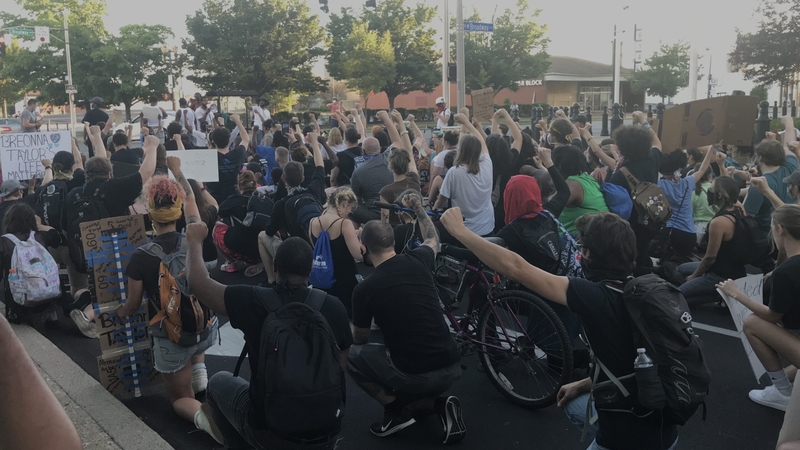
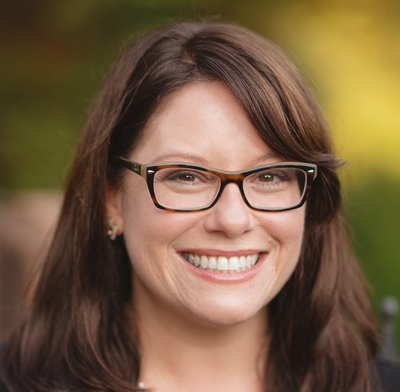
Heidi Y. Lawrence, the director of the Writing and Rhetoric Program and an associate professor at George Mason University in Virginia who has extensively studied medical rhetoric, said the social justice movements of 2020 also set the stage for a mistrust of established systems and institutions.
It was this year that Louisville police killed Breonna Taylor, an unarmed Black woman, in her home, which led to months of protests in the streets of Derby City and beyond.
“There are a lot of scientific and social problems that happened in 2020 that made our present moment one of just intense distrust that makes us really ripe to believe and look to alternate forms of information, often being swayed by misinformation in ways that we, perhaps, haven’t been in previous epochs,” said Lawrence.
During this pandemic, the general population also had widespread access to more technology than ever before. (During the 1918 flu pandemic, the computer had not yet been invented, and social media was still decades away).
“Yes, there’s always been a lot of alternative and varying forms of information and lots of concerns about vaccines, but we now have sets of social media platforms. We have algorithms,” Lawrence explained. “We have actors from across our ideological world, our political world, our actual physical globe, really, that have a vested interest in selling discord and in promoting ideas that are really problematic in American society.”
There is usually a conflict around new information and how it is spread, she said. The “novel component” today is social media algorithms, she said, which put people firmly into information flows that reinforce what they are already inclined to believe.
But, she said, “no vaccine has ever been just willingly adopted by everybody with open arms.”
“Vaccination and immunization acceptance almost necessitates that we have a concern about others and that we are willing to accept vaccination for the good of others, just as much as the good of ourselves,” said Carrico.
‘Americans … don’t like being told what to do’
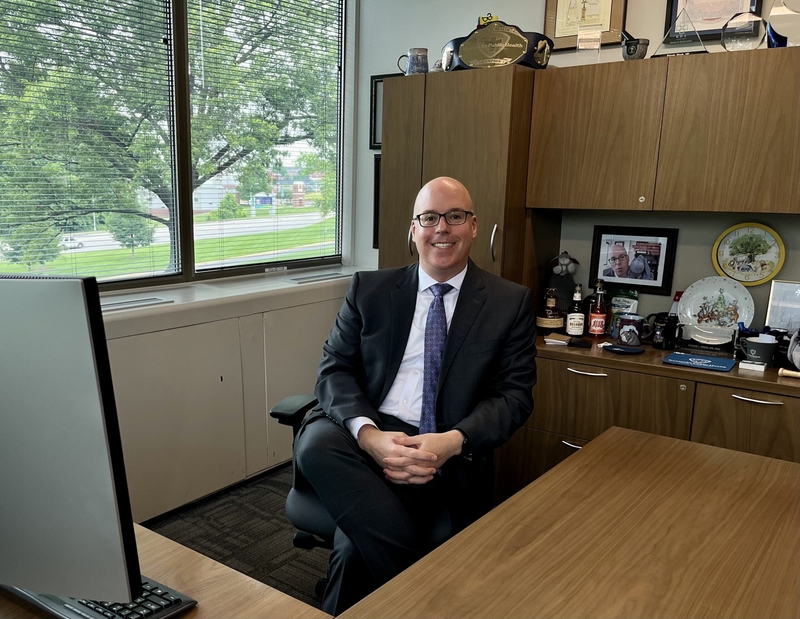
Vaccine requirements have long been a way to prioritize public health and safety over personal freedoms, Stack explained. For example, as early as 1855, the smallpox vaccine was a requirement for children in Massachusetts to attend school, according to the Mayo Clinic. By 1980, all states had some law on the books about vaccine requirements for school attendance.
“Most people — and Americans, certainly — don’t like being told what to do. They like to have the freedom and flexibility to make their own choices, and in most parts of our lives, we have lots of choice to be made,” Stack said. “But there are times when we say you don’t get to make your own choice.”
An example of this, Stack said, is that restaurants must cook meat to certain temperatures to safely serve food: “You can’t cook chicken at a restaurant only to 78 degrees and serve it, right? People get sick. So, it may be your freedom to want to eat it that way at home, but you can’t cook it that way and sell it in a restaurant. It’s not legal.”
These public health mandates, Stack said, eliminated health threats like a bacteria called haemophilus influenza and measles.
“Most doctors practicing in the United States have never seen a case of measles other than in a textbook or in a slide deck at a lecture,” Stack said. “These vaccines really work. They’re very, very safe, and they’ve given us a lot of protection against things that previously caused a lot of harm.”
Still, he said, “there’s always some percentage … who just don’t want to do it, ‘because you told me to.’”
But fear is also a powerful component here, especially when it comes to parents choosing whether or not to vaccinate their children.
“Whenever the health of children is at stake, fear is not far away from what we’re really talking about,” said Lawrence, the medical rhetoric researcher.
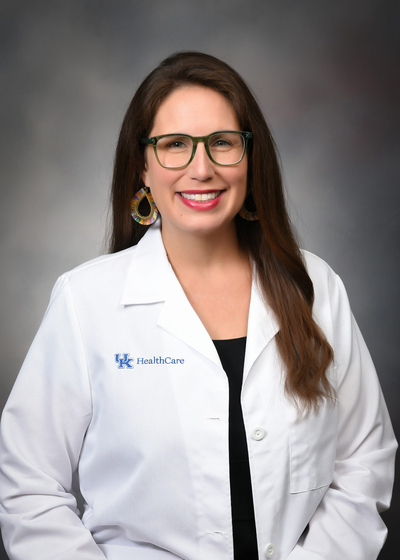
Hodge, the pediatrician, takes care of children once they end up sick in the hospital.
“Hospitalization itself is scary, time consuming, expensive, all those kinds of things — but difficult to quantify,” she said.
Kids hospitalized with RSV, for example, need a lot of breathing support. Their airways full of snot and dehydrated, they’re treated with high-flow nasal cannula, which “gives them a ton of heated, humidified air and airway support and oxygen,” she said.
“I tell parents it’s sort of the equivalent of sticking your head out the car window. It’s a lot of air flow, and that’s to get past some of those narrow passageways in the nose and lungs and help them to breathe more comfortably and exchange air,” she said. “There is no specific medication or antiviral for RSV, and you just kind of (have) to sit with them knowing they’re going to get worse before they get better, and see how much support they need.”
She’s treated hundreds of children in the hospital for vaccine-preventable illnesses and could remember only one instance where a negative reaction to a vaccine was a factor.
Breaking down rare vaccine reactions and rare worst-case scenarios stemming from illnesses like measles is to compare “apples to oranges,” she said.
“Vaccination doesn’t stop all of the bad things from happening,,” she said, “but seems to mitigate it in a lot of instances.”
But human brains just “don’t deal well with uncertainty,” Lawrence, the rhetoric expert, said. And “science is uncertain.”
The harsh reality, Stack said, is that “there are very few guarantees in life.”
“We are all guaranteed one birth if we’re alive because we’ve already had it, and we’re guaranteed one death at the end of the journey, because we’re all going to get that too,” he said. “In between, there’s probabilities, there’s not certainties. Nothing is risk-free. So while it is accurate to say that there can be some risks with vaccines — and there are — it is also accurate to say there are far larger risks from the diseases that the vaccines prevent or mitigate.”
“That’s gotten lost in this tragically politicized and weaponized environment where people are using this as an opportunity to create confusion and have people arguing with each other over things that shouldn’t be topics of argumentation,” he added.
The National Foundation for Infectious Diseases, meanwhile, reports low vaccination rates have widespread implications, including resistance to antibiotics used to treat preventable illnesses.
Given the implications, vaccine skepticism is itself a kind of luxury, said Fernandez.
“I think sometimes we’re kind of spoiled here, because … we have such great access to vaccines that we don’t necessarily see how, in other countries that perhaps don’t have the same kind of access, (there are) detrimental effects of not vaccinating most of the population,” Fernandez said.
What about religious exemptions?
Many people have long held true, sometimes religious, beliefs that stand opposite certain medical interventions, Stack said. Many Jehovah’s Witnesses, for example, will not accept blood products because they adhere to Biblical passages that say not to consume blood. According to the Pew Research Center, less than 1% of Kentucky’s population is Jehovah’s Witnesses. Most — 72% — are Christians.
“It’s very possible for someone to make a decision that seems irrational to others but makes very rational sense to them,” said Stack, a former emergency room physician. “That’s well established, and there are people who legitimately have those beliefs and have not just fabricated those beliefs for the convenience of the moment.”
There are also Kentuckians, he said, who have long held religious beliefs that make it difficult — or impossible — to get vaccines.
“From a public health standpoint, that’s not desirable, because when you don’t have 100% immunization, you have the risk that people do get disease and suffer harms,” Stack said. “But from an overall societal standpoint, you accept those things, because we respect that people can look at the world and see it differently.”
Religious belief, Stack said, “is not what we are dealing with right now.”
“What we are dealing with right now,” he said, “is a group of individuals who have an agenda and who have beliefs that are not deeply held religious beliefs, who have decided, for whatever reason or reasons, that these immunizations are things that they do not want promoted, they do not want supported, they do not want advanced.”
A far from perfect history
There are also well-documented histories of medical systems actively deceiving and harming communities of color, such as the oft-cited syphilis study in Tuskegee, Alabama. From 1932 to 1972 medical researchers withheld treatment from nearly 400 Black men who had syphilis so they could study the course of the disease.
The study participants were led to believe they were being treated for “bad blood” but were only receiving minor pain treatments like aspirin, vitamins and tonic, according to the International Journal of Radiation Oncology – Biology – Physics.
There are ongoing racial disparities as well. Black Americans are three times more likely to die from pregnancy than their white counterparts. White women are more likely to have access to good prenatal care than Native, Black, Pacific Islander, Asian and Hispanic women.
A 2020 study by the Proceedings of the National Academy of Sciences found that when Black babies are cared for by Black medical professionals, they’re much more likely to survive.
And women are underrepresented in medical studies, leading to a gap in how much scientists know about male versus female bodies.
From oral histories carried down from grandparents to being dismissed in a doctor’s office, personal experiences — and those of relatives and friends — carry weight and add up to a broader trust or distrust of the system, Lawrence said.
“The ways that we try to respond to that (are) often: ‘Oh, don’t be worried about that. Trust us. We’re better now,’” Lawrence said. “Okay, that’s not as powerful as memes I’m seeing on the internet. I mean, it’s just not. Trust is something that you feel and build and grow over time. That’s the best way to combat this. But that takes time, energy, money, resources, understanding, good communication. It takes a lot of things. It’s not as easy as … the meme on the internet, which is just…confirming the thing that I’m already scared of.”
Because of these and other historical factors, stepping away from traditional medicine, for some, “becomes very empowering,” Lawrence said.
“It’s a way of taking control back,” she said. “‘Make America Healthy Again is…the sort of ultimate statement of that … If you’re feeling a lot of fear about a certain decision, and then you can take the opposite road of that, which is empowerment toward your own health and your own control and your own kind of destiny, then that’s very advantageous. All of a sudden, it seems to make a ton of sense to take things back into your own hands.”
There’s a solution. It’s not trendy.
Richardson, the Louisville woman who’s dealt with vaccine mistrust throughout her life, said there are access issues in addition to misinformation. She’s been homeless and living in active addiction (she’s 22 years sober now), she said, adding that addiction can make routine care a low priority.
“When you’re on drugs, all you want is to do more drugs. You’re not worrying about you. Literally, your arm or leg would have to be cut off in order for you to really go to the doctors. I definitely wouldn’t have got (any) vaccine while I was in active addiction.”
Even with access, she sees people in her immediate circles who can’t trust vaccines because of race and other factors. She said the medical community needs to engage in more conversations with people about vaccines and avoid scare tactics — and it would help if they looked like the communities they’re talking to.
“Maybe do some discussions on platforms …. Even Tiktok and Facebook, all of it,” she said. “Maybe doctors need to get on there.”
Experts agree with her assessment: Conversations are key to rebuild lost trust and will take a tremendous amount of time. The way to reverse course on misinformation and disinformation is to invest into serious conversations with people about their concerns and build trust over time, they said, which can take the form of community listening sessions and more time in the doctor’s office.
A 2025 Gallup poll found that overall trust in medical doctors fell 14 percentage points since 2021. Trust was at an all-time recorded high in 2020 of 77% but was, at the time of polling, at 53%, which Gallup reported was the lowest since the 1990s. Nurses continue to be among the most-trusted professionals, earning 76% trust in the Gallup poll.
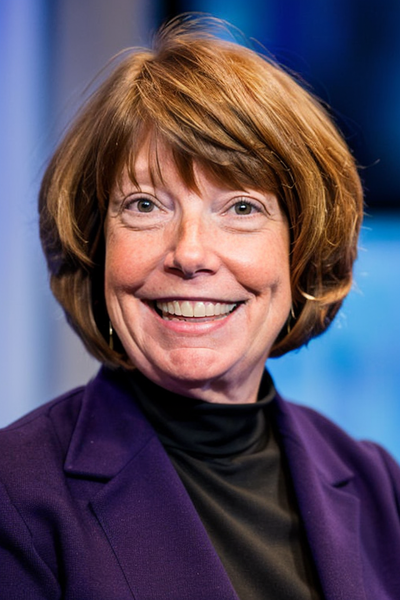
Carrico said medical providers need more flexibility to spend as much time as needed with their patients. Patients who have those established relationships with their medical providers are more likely to take their word seriously, she said.
Medical professionals also shouldn’t be offended by questions or challenges to their science, Carrico said.
“It isn’t wrong to have the conversation. It isn’t wrong to ask a question, and that’s why I tell people I’m not concerned if anybody ever wants to restudy any issue if someone is concerned about the way the study was performed, or the results, or whatever, that science should be reproducible,” she said. “If science is not reproducible, then we’ve got a problem.”
The medical community should not shy away from hard conversations about mis and distrust, nor should they dismiss peoples’ concerns as trivial, experts said.
“They’re not dumb,” Lawrence said. “If they think that you think they’re stupid, then they’re not going to tell you the real thing that they think.” As a result, she said, their core beliefs or fears cannot be properly addressed.
Meanwhile, the spread of misinformation and subsequent illnesses are part of a cycle that has happened before — and likely will again, Stack said.
“I think there is a certain inevitability about some of these cycles, which is sad. It seems like we’re able to learn from past experience, but that the lessons learned are only short enduring, and so we have to relearn them again periodically,” he said. “I have no idea how long it would take, or how many people would have to get hurt, before it would shift the tide.”
Meanwhile, he said, Kentucky leaders should engage in the conversation with grace and patience despite the “curated false rage” around the topic.
“What we don’t need to do is call each other names and accuse each other of being horrible human beings because people are making some of these different decisions,” he said. “Seldom has it ever worked when someone is upset and enraged, if you just tell them, ‘you need to calm down.’”
Even with measured calm, Stack said, “I think that unfortunately, there is the real risk that this gets worse before it gets better.”
“It’s going to take a new generation of leaders who can come in and be measured and not succumb to the intensities of argument and passion and division, and come in and try to be measured and calm,” he said.
Carrico is resolute in her belief that sincere conversations with trusted experts conducted in a respectful way can dispel distrust.
“It is a very difficult process,” she said. “But … it always starts with communication.”
Meanwhile, Hodge, the pediatrician, said she wants parents to know the doctors treating their children want the same thing as they do.
“Your pediatrician or the person that’s taking care of your kiddo wants them to be as healthy as possible — and to the best of our knowledge, this is how you do it,” she said. “We are thinking about them, not just the baby that they are now, but the kid that they are when they’re bigger, the high schooler, the adult, all those sorts of things. And we’re trying to mitigate risks where we can, because there are risks that we can’t.”
Frankfort