Despite rural challenges, Hoosier communities say READI critical to housing, quality-of-life goals
May 26, 2026 | 5:00 am ET
Description
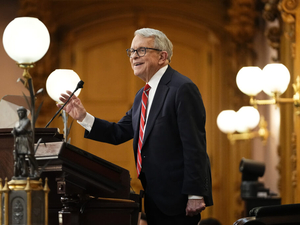
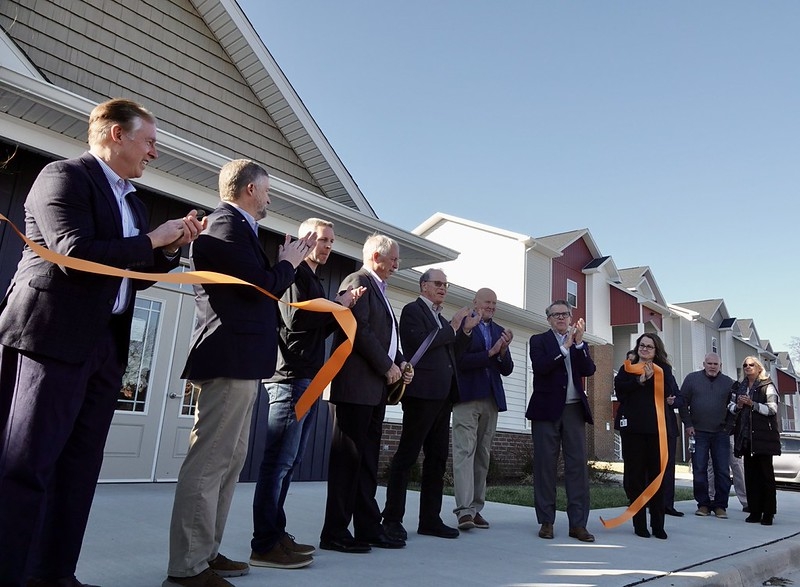
Indiana Gov. Mike Braun (fifth from left) and stakeholders celebrate the ribbon cutting of The District Phase II, a workforce housing development in Princeton, Indiana, on Jan. 12, 2026. The READI 2.0-funded expansion adds 114 new housing units. (Photo from Braun's official Flickr)
Blackford County, Indiana, has opportunities and ideas — but what it doesn’t have is money.
Five years ago, when the state launched the first round of a $500 million regional economic development grant program, Blackford County Economic Development head Warren Brown knew the county had to apply for the chance to expand high-speed internet access to all residents.
The county reported having great access in a state broadband survey — inaccurately, Brown said. Blackford inhabitants conducted their own broadband tests in partnership with Purdue Extension, the economic development commission, as well county and municipal governments.
Through those tests, Brown said, “The state was actually able to see that we were in many places unserved totally, and in almost every place underserved.”
The program, called the Regional Economic Acceleration and Development Initiative, provided Blackford officials with $700,000 of the approximately $3 million required to install internet fiber throughout the entire county.
“Having the ability to possibly get some funding created the energy to do all this testing,” Brown said. “So even though READI was not the salvation of the broadband problem we had, it was a good part of it. We appreciate that quite a bit.”
Then-Gov. Eric Holcomb proposed the initiative in 2021, with the Legislature allocating $500 million in federal pandemic-relief money going toward 17 regions encompassing all 92 counties. READI 1.0 emphasized “strategic investments” to make the state “a magnet for talent and economic growth,” according to the Indiana Economic Development Corp.
The money was also backed by $12.2 billion in local government, private, and nonprofit funds, state officials say.
Holcomb in 2023 gained approval for a second round, dubbed READI 2.0.
Indiana committed $500 million in state funding to the 92 counties, split across 15 regions, with the goal of boosting quality of life, place, and opportunity. The Lilly Endowment also awarded an additional $250 million for arts, culture and blight remediation.
And top Indiana leaders are showing support for another potential round of regional grants in the future.
An investigation by the Arnolt Center for Investigative Journalism and the Indiana Capital Chronicle found the IEDC has distributed — or will soon pay out — about 85% of the money allotted for the first round of READI and about 11% of the second.
The quasi-public agency said that it has distributed about $423 million from READI 1.0 as of this month, with $5 million in payments pending. More than $44 million from READI 2.0 has gone out — with almost $10 million in payments being processed — of the roughly $391 million approved.
“Most locals haven’t spent money yet, so haven’t requested reimbursement,” agency spokesman Charlie Tinkle said.
After contacting 132 communities across Indiana, reporters found READI has provided many regions with the necessary funding to complete affordable housing, downtown revitalization, workforce development and other projects.
“READI has been a complete game-changer for rural regions like ours,” said Julie Halbig, vice president of economic and community development for Regional Opportunity Initiatives, a nonprofit advancing economic development in the Indiana Uplands region.
“I think several project owners, economic development leaders and business leaders would tell you, if we hadn’t had READI, these projects would just sit on the shelf or the incubator for many years and just not (happen),” Halbig said.
But some rural communities say READI disproportionately benefits urban areas.
“I think the rural areas have been put on the back burner, and most of (the READI fund) are going to the larger communities that have more funding,” said Bill Walters, president of the Daleville Town Council and redevelopment commission.
IEDC is also overseeing the Lilly funding. It has awarded nearly $139 million for blight remediation, but has disbursed little, and is in the process of awarding $65 million for arts and culture projects, according to Tinkle.
Rural communities report challenges
In LaGrange County, READI has allowed for opportunities that otherwise wouldn’t have been possible. A rural county of about 40,000 people, LaGrange’s median home value is $199,000 but the median household income is $62,400.
The community tapped both rounds of READI to combat those issues.
READI 1.0 money is going toward a housing development that will eventually consist of 150 homes in the town of Topeka, providing housing options for those who work at the manufacturing plants nearby, as well as local school district students or employees.
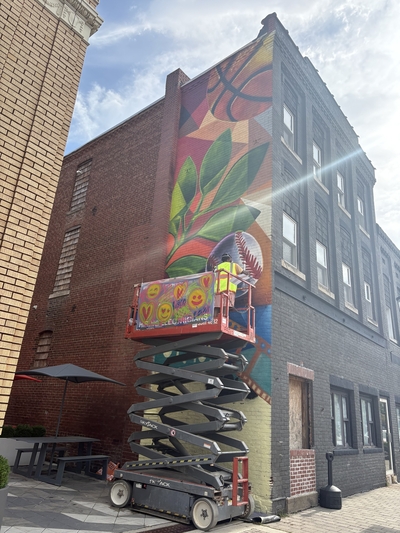
The county used READI 2.0 funds into another project, the LaGrange County Innovation Center. The multipurpose building is set to open in October, and will incorporate a 72-seat childcare center, a co-working suite, a community room and the LaGrange County Economic Development Corp. offices.
“The projects would not have happened without that money and the possibility that we could do this for our community. It gave a lot of rural counties an opportunity to get some funding that we’ve never had the chance to go after,” said Sherri Johnston, president and CEO of the county’s economic development organization.
Daleville’s original project proposals were not chosen by the IEDC, meaning the town received leftover funding divided between four rural communities.
Daleville, a Delaware County community of about 1,700 people, received $250,000 from READI 1.0. It wasn’t enough to cover the original proposal, but did fund water and sanitary line installation.
“It just seems that IEDC is concentrated on home runs, and there’s a lot of singles and doubles that we could do in these rural areas that would make a difference,” Walters said.
Small rural communities like Henry County say a recent local government finance law has made it harder to find the funding required to match the state’s investment 1-to-1.
Last year’s sprawling Senate Enrolled Act 1 is expected to save homeowners a collective $1.2 billion in property taxes over three calendar years, from 2026 through 2028, according to a state fiscal analysis. Local units of government, meanwhile, are projected to lose out on a projected $1.5 billion in anticipated tax revenue over that time period.
Indiana Senate sends finalized local property, income tax plan to governor
Lawmakers also altered local income taxes. Municipalities can now impose rates up to 1.2% within the lower county cap of 2.9% — down from 3.75%. Previously, cities and towns had to get county officials on board to enact a local income tax.
Henry County has two sources of local public match: tax increment financing and a food-and-beverage tax. Not every county has those, but making the match is still a challenge, said Corey Murphy, president and CEO of the New Castle/Henry County Economic Development Corp.
“So, potentially match requirements could be adjusted based on community size or community demographics instead of a one-size-fits-all,” Murphy said.
Daleville’s Walters suggested two separate READI programs: one for communities above 50,000 people and one for those under 50,000. He said that would allow communities with similar funding, population, infrastructure and resources to compete at a similar level.
Rural economic development committees typically have fewer staff members than larger regions, for instance. Communities said it’s difficult to keep up with READI’s requirements.
I think the rural areas have been put on the back burner.
Brown, of Blackford County, has a staff of just two in the economic development office.
“We still have the same timelines, and we still have to produce the same volume of work as the counties and the cities with larger staffs,” he said.
Brown sees rural investment as essential to improving the entire state.
“We still have great projects. I’m a big believer that if you can develop a stronger community, the county strengthens, the region strengthens,” he said. “The stronger each region is, the better Indiana is. So, to prepare the whole state to take advantage of people wanting to come here, I think we need to invest in rural (areas) every bit.”
Awardees focus on housing, quality of place
For many communities, READI’s emphasis on attracting and retaining talent has meant adding affordable housing, improving their downtowns and updating outdoor amenities.
The Indiana Uplands region, which now encompasses 10 counties in the southwestern area of the state, has focused much of its attention on creating affordable housing. Many of those living in the area fall under the median income, so affordability is essential to retaining workers.
A variety of housing options have been made available using READI funds, including single-family homes, apartment buildings and multifamily complexes. The region is also interested in growing its duplexes, triplexes and fourplexes.
“(We’re) really trying to offer more affordable options than just big single-family homes, making it more feasible for us to attract and retain people across the different income categories in our communities,” said Tina Peterson, the president and CEO of Regional Opportunity Initiatives and the Community Foundation of Bloomington and Monroe County.
Dubois County, another community within the Uplands region, has also used READI funds to build affordable housing, with the goal of expanding its labor market and growing existing businesses.
“You need houses for people to come,” said Colten Pippenger, executive director of Dubois Strong Economic Development Corp. “Utilizing READI dollars in that capacity has moved the needle in terms of what’s even an option on the table at any given moment.”
The city of South Bend is also using significant funding to build a new neighborhood in place of what was formerly contaminated industrial property. Through READI grants and an additional award from the IEDC through the READI program, a new neighborhood with roughly 110 mixed-income housing units is set for construction.
“That’s another strategic priority for the city, is, we don’t want to concentrate affordable housing, for example. We want to have mixed-income neighborhoods,” said Erik Glavich, director of growth and opportunity for South Bend’s Department of Community Investment.
South Bend’s largest READI project, Riverfront West, was allotted $5.64 million to reestablish a street network and utilities in place of a large, empty parking lot. The first phase includes two new buildings and 250 apartments.
“We’re creating opportunities for people to live downtown that don’t exist currently … you’re going to come here 50 years from now and you’re going to see an active and vibrant neighborhood,” Glavich said.
READI has been a complete game-changer for rural regions like ours.
Wayne County received a $2.5 million grant from READI 1.0 that allowed it to accelerate a new downtown apartment complex that will supply 150 market-rate units to the area. Valerie Shaffer, president of the county’s economic development commission, said the project helped diversify their housing and recruit new talent to the area.
Because Wayne County’s population has been declining since the 1970s, attracting new housing developers has been difficult. The READI money has provided the subsidy that the area needed to attract a population that wants newer, more modern housing.
f“READI funds are helping to accelerate the progress of the plans that we’ve created because we’re limited by the financial resources that we have within our communities,” Shaffer said.
With the help of READI funds, Orange County has been able to create more affordable three-bedroom, two-bath starter homes.
“The cost of infrastructure in these rural communities can be daunting,” said Skylar Whiteman, executive director of the Orange County Economic Development Partnership. “And, so, to have something come along where you get those private and public partners together can help boost a project and bring it to life.”
Affordable housing wasn’t the only key to retaining employment, however, Dubois County’s Pippenger said. Revitalizations downtown have also brought real change.
The town square in Jasper has been updated to create areas where residents can gather around fire pits or on swings. The work has also supported the numerous small businesses located in the area.
“What people want to do, where people want to be after their job, is huge and very important,” Pippenger said.
Williamsport officials hope a 44-unit affordable apartment complex will help the 2,000-person Warren County community to compete with larger cities nearby.
“We’re hoping to attract some local people to stay and utilize that housing and work locally and bring people from outside the community, who, if there were affordable housing, would stay here,” Williamsport Town Council member Paul Coffman said.
The community has also used READI funds to improve local park infrastructure and revitalize popular walking trails. In the center of Williamsport is Indiana’s tallest waterfall, and now the surrounding foot trails include a pedestrian bridge and rock formations. Since updating these trails, Coffman says the trails have seen a large increase in visitors.
“For such a small community, having three projects is a pretty big deal,” Coffman said. “There’s no way we could afford these projects without the READI funds.”
Williamsport’s trail is part of a 90-mile, five-county greenway that extends over the greater Lafayette area. The $1.2 million project created a regional destination point for the area, attracting tourists and bringing in new residents.
“Those quality-of-life projects also help stimulate the population growth in the area and attract new business investment, which in turn, will also attract the talent needed in the area,” said Amy Sundell, director of member engagement for Greater Lafayette Commerce.
The future of READI
READI’s initial round is expected to generate more than 5,500 jobs and upwards of $350 million in labor income — directly and indirectly — along with $25 million in state tax revenue and nearly $10 million for local governments on a one-time basis, according to researchers with Purdue University and Indiana University.
That’s a projected economic output of $860 million for READI 1.0. Early estimates for the second round are unavailable.
As they begin to see the impact, communities across the state are interested in another round of funding.
Wayne County leaders say additional rounds of READI would contribute to the plans for downtown investment funded in part by READI 1.0.
“In about five years, we will have a completely different landscape in downtown Richmond with properties that were once sat vacant and boarded up … so READI 1. 0 was the start of us being able to work on a transformative downtown planning process,” Shaffer said.
There’s buy-in from the state’s chief, too.
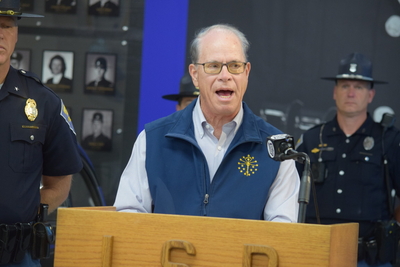
“My administration, we’re going to probably do more of it, because that’s skin in the game,” Gov. Mike Braun told reporters Friday.
“I’m going to try to enable communities and businesses, if they’re doing more than just asking for money and (are) willing to put money into it,” he said. “I’m going to make sure the state is run well, so we’re going to have a bigger dividend (that) I hope to invest in enterprising.”
He emphasized support for homegrown “Main Street” businesses, adding, “I’m going to want the best ideas to be promoted and the state doing what it can to make it happen.”
But concerns over raising the required local matching funds still linger.
“I understand why the state requires a match. I’m not opposed to a match, it’s just we’re still recovering from the significant investment that we made to secure READI 1.0 and READI 2.0 funding,” Henry County’s Murphy said.
Lawmakers say they’ve heard some suggestions but aren’t yet proposing changes.
“A lot of good projects have been funded. Are there better ways to do that? You know, I’ve heard some suggestions, but I would say nothing that’s been overwhelming,” said Sen. Brian Buchanan, R-Lebanon. He often authors economic development legislation.
“But, you know, that’s something we’ll always keep on the table for discussion,” he said.
Communities across Indiana say READI has made vital contributions to improving workforce retention, creating affordable housing, and improving quality of life more broadly.
“I can’t imagine that we’re going to look back at this period in time and think that it was not pivotal for the future of this organization, this region, and its growth,” Peterson said.
This story was written by journalists at the Arnolt Center for Investigative Journalism at Indiana University in partnership with the Indiana Capital Chronicle. Brookelyn Lambright, Megan Garnai, Madelyn Hanes, Avery Lowry, Edie Schwarb, Lauren Stickelmaier and Alayna Wilkening are students with the Arnolt Center.
Indianapolis, IN