Minneapolis Schools withheld money from employee health plan account for 10 months
Apr 14, 2026 | 5:45 pm ET

Description
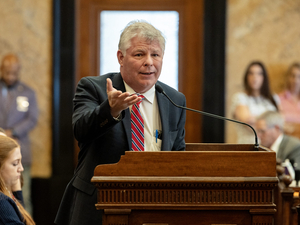
Minneapolis Public Schools withheld nearly $3 million owed to an employee health care trust account beginning in 2024. (Photo by Will Jacott/Minnesota Reformer)
Minneapolis Public Schools withheld nearly $3 million owed to an employee health care trust account beginning in 2024, according to a heavily redacted report prepared by the law firm Greene Espel late last year and obtained by the Reformer as part of a public records request.
The school district’s financial maneuver, which has not previously been reported, risked creating a shortfall in the health care account, known as voluntary employee benefits association, or VEBA, under the IRS tax code.
The withheld funds included both employees’ and employer’s contributions to health insurance premiums. Because the district self-insures, money from that account is used to pay health care claims, which is why the fund is supposed to be walled off to prevent raiding for other uses. It’s unclear whether the withholding violated any laws or collective bargaining agreements with district unions.
The money was restored, according to the Greene Espel report, but the situation led to a high-profile termination and resignation and forced the district to spend heavily on an outside consultant to manage its finances.
The investigators can’t say whether or not the withheld funds were moved outside of district accounts, despite hiring a forensic accountant to assist with the investigation. The forensic accountant could only conclude that the withheld funds were not moved out of district accounts via wire transfer, though that leaves open the possibility the money was moved by other means.
The investigators were also unable to determine why the district started withholding 5% of the monthly funds from the health care trust account. On Nov. 24, 2024, finance department employees, whose names are redacted, calculated the monthly amount to transfer to the health care trust, as usual, but then subtracted 5%, labeled as “5% defer,” in an email exchange between the employees. There is no explanation for the change.
District employees outside of the finance department became aware of the 5% reduction in June 2025. Superintendent Lisa Sayles-Adams was first made aware of what was happening with withheld contributions at the end of August 2025, according to a district spokeswoman. The school board was notified on Sept. 29, 2025.
The district has suffered a collapse in enrollment in the past quarter century — and, thus, state and local funding tied to student population — and is plagued by half-empty schools buildings, rising labor costs and a student population with unique challenges. These factors have created a deteriorating fiscal environment.
Sayles-Adams provided a statement to the Reformer with the report, saying that the school district is “committed to ensuring our students receive the high-quality education they deserve by managing our resources responsibly and maintaining the highest operational standards.”
A district spokeswoman said Sayles-Adams would not be available for an interview.
Collin Beachy, school board chair, said in a statement that “the district’s swift and appropriate response reflects the high standards we expect and demonstrates Minneapolis Public Schools delivering on its commitment to accountability, student well-being, and strong financial stewardship.”
The Reformer’s first public records request for the report was sent Jan. 18, but the district did not release it until Apr. 13.
Senior finance department staff placed on leave
Investigators concluded that the district’s lack of internal controls in its accounting department allowed the shift of health care money. Andy Grice, who works for the district’s external auditor BerganKDV, told the investigators that without changes someone could restart the withholding at any time.
The district’s external auditors have warned superintendents, board members and the public since at least 2015 about the potential for accounting irregularities, given the current structure of the district’s accounting and finance staff. In recent years, the district has continued to reduce the finance department’s head count as part of budget cuts. A lack of sufficient staff is one of the reasons accounting duties have not been adequately separated, according to the auditors.
Segregation of duties is important to prevent fraud and errors in record keeping. Typically, separate people are responsible for authorizing payments; making payments from district accounts; and recording transactions in district accounts. By separating the three functions, multiple people are reviewing transactions, which prevents errors as well as improper use of district money. The district’s shorthanded finance staff have been improperly blending these duties, according to the external audits.
Under the guidance of the Center for Effective School Operations, a consulting firm known as CESO, the district has changed its internal controls, according to the district spokeswoman. There is now a four-step procedure for any wire transfer, with each step requiring a separate individual. The district has not hired additional staff to implement these procedures.
Since the health care trust incident, the finance staff has faced more upheaval.
On Jan. 2, shortly after receiving the report, Minneapolis Public Schools suspended Senior Finance Officer Ibrahima Diop, Executive Director of Finance Tariro Chapinduka, and Director of Finance-Controller Aaron Gilbert. Only Chapinduka’s name is unredacted in the report.
Diop had previously resigned in December; Milwaukee Public Schools announced he would join the district as deputy superintendent, but then announced that he would not join the district after the Reformer first reported on Jan. 6 that Diop had been placed on leave from his job in Minneapolis.
Chapinduka was employed by Minneapolis Public Schools at the time the district began self-insuring in 2017 and created the account. He left the district in 2019 and went to work for Hopkins Public Schools. He returned to Minneapolis in July 2025. Chapinduka was fired “due to findings in the Dec. 31, 2025, Investigation Report” which was attached to a termination letter, obtained by the Reformer as part of the public records request.
According to the district, Gilbert remains employed by the district but is out of the office until further notice.
Messages to Diop and Gilbert were not immediately returned. Chapinduka did not answer his phone and his voicemail was full.
Outside contractor overseeing finance department
Since January, the district has been paying CESO to oversee its finance department, including serving as senior finance officer. According to the district’s contract with CESO, the district is paying $68,865 per month for these services, which will continue through June 30.
Starting July 1, CESO will undertake a 16-week assessment of the district’s finance department.
Based on the monthly cost of the contract, the district will end up paying over $500,000 over at least 8 months to CESO.
Greene Espel charged the district $120,000 to conduct the investigation of the health care contributions. In total, the district is on track to spend nearly $700,000 on outside investigators and temporary consultants to deal with the issues in its finance department.
Problems with finance leaders preceded health plan impropriety
Sayles-Adams became aware of Diop’s deficiencies well before the health care trust withholding became known.
He was given a formal reprimand on May 12, 2025 because of an incident several months earlier in which he shared private personnel data about an employee. The investigation also revealed that Diop had not completed required compliance training.
Sayles-Adams directed Diop to complete the compliance training, and to develop a training presentation on the Minnesota Data Practices Act. After she reviewed the presentation, he was supposed to deliver the training to the finance department.
Later, Diop was placed on a performance improvement plan.
Diop received a final warning from Sayles-Adams on Aug. 28, 2025, which noted he had failed to complete the compliance training by the deadline, nor had he developed the training presentation.
In addition, the letter offered a scathing review of his performance, critiquing his “inability to provide accurate budget and costing information, failure to oversee high-liability areas, lack of preparedness, and repeated missed deadlines continue to place the district in a precarious position with reverberating impacts across the organization. These delays and inconsistencies disrupt the workflows of your colleagues and the Board, hinder effective job execution, and erode critical relationships with our union partners and the public,” Sayles-Adams wrote.
On May 16, 2025, the district paid Sepler and Associates nearly $29,000 to conduct a review of the finance department climate and culture. Their report, dated Aug. 13, 2025, found pervasive issues with department leadership, lack of clarity about roles and responsibilities, and fear of retaliation among employees.
Sayles-Adams called the findings “staggering.”

Saint Paul, MN