State Board of Education warns proposed NC teacher pay plan leaves veterans behind
Jun 05, 2026 | 4:28 pm ET
Description
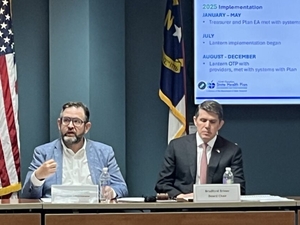
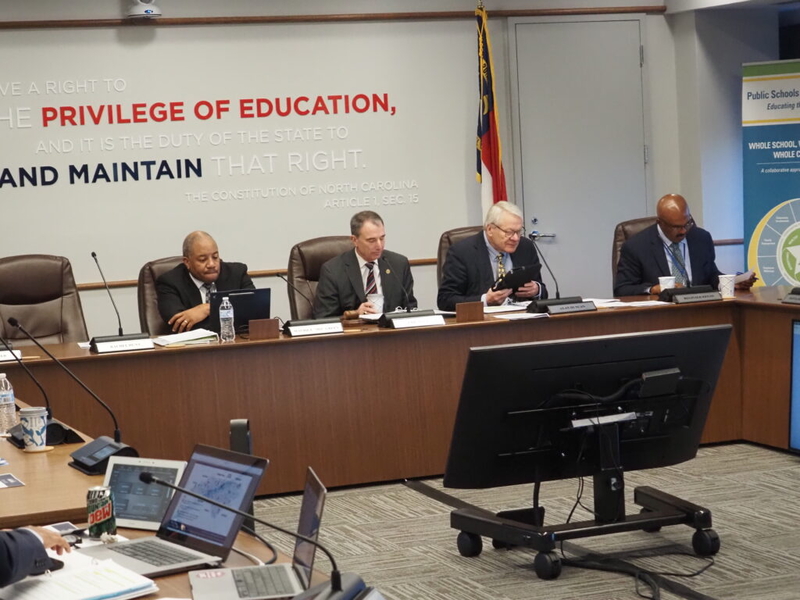
N.C. Board of Education meeting, Nov. 6. 2025 (Photo: Ahmed Jallow/NC Newsline)
Members of the State Board of Education this week raised concerns that North Carolina’s proposed plan to raise teacher pay leaves veteran teachers behind.
Last month, Republican lawmakers announced plans for an average 8% raise in teacher pay over two years, with the largest percentage gains heavily front-loaded toward early-career teachers.
The plan would raise starting teacher pay to $48,000, a figure House Speaker Destin Hall said would make North Carolina the top state in the Southeast for beginning teacher pay.
“As best we can tell, (this is) the largest average teacher pay increase at least since 2006 and one of the largest that we’ve seen in probably the last 30 years or so,” Hall said during a press conference last month announcing the plan.
Under the plan, raises for beginning teachers will range from about 10% to 17%, but teachers with 15 to 24 years of experience would receive only a 5.5% increase.
Catty Moore, a member of the board, said that while the plan gives everyone a bump from current pay, it leaves in place the current structure that provides no annual step increases for teachers with 15 to 24 years of experience.
“If there is any differentiation beyond 15 years, that happens based on how the local supplement might be applied in a district,” Moore said, noting that counties can choose to target their local tax dollars toward veteran educators.
But even that is under threat by a new Republican-proposed constitutional amendment to limit the amount by which local governments can increase property taxes, Moore said.
NC voters set to weigh in on limiting state income tax and property taxes in November
Vice Chair Alan Duncan said the proposed raises should be viewed in the context of inflation and rising costs over time, which he said have reduced the purchasing power of teacher pay.
“It’s a nice figure to put out there,” Duncan said of the average 8% raise. “But when you put it into this full context, teachers are not ahead at the end of the day.”
Duncan also pointed out that teachers have worked the current school year without any state salary increase while lawmakers remained deadlocked over the budget.
Board member Jill Camnitz noted that recent State Health Plan policy changes could affect how much teachers ultimately take home. Under current policy, premium increases are tied to salary increases, though it’s not clear how future premiums will be calculated.
Camnitz also said the structure of the proposal sends a message to experienced educators about how their work is valued.
“To say to a professional that nothing about your success, your achievement, your work in a school, your professional growth changes in a decade is disrespectful, irrespective of the increase in my pay,” Camnitz said. “To claim that about my profession is disrespectful.”
The plan is estimated to cost the state about $528 million.
Raleigh, NC