University of Wisconsin regents elect new president and approve tuition increase
Jun 05, 2026 | 3:25 pm ET
Description
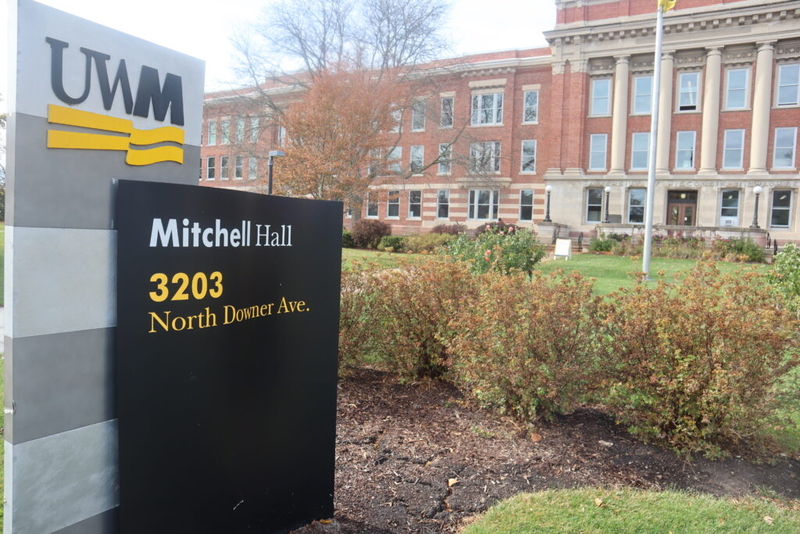
UW-Milwaukee. (Photo | Isiah Holmes)
The University of Wisconsin Board of Regents approved a 2% tuition increase for the 2026-27 academic year and elected Regent Kyle Weatherly to serve as its president this week.
Weatherly to serve as UW Regent president
Weatherly, whose day job is serving as the president of Alta Medical, has been on the Board since May 2020. He is a graduate of UW-Madison. He succeeds Regent Amy Bogost, who served two terms as president starting in June 2024.
“I owe so much of what I have achieved to my family and to the Universities of Wisconsin,” Weatherly said. “As Regent President, my priority will be to help ensure that students in every corner of our state have access to the opportunity, excellence, and upward mobility that public higher education can provide.”
The Board president is responsible for deciding Board committee membership, signing diplomas and contracts issued by the Board as well as speaking on behalf of the Board to the governor and lawmakers. Bogost, alongside Regent Tim Nixon, was recently questioned by Wisconsin Senators over the firing of Jay Rothman, who had served as the system president since 2022, in April.
The Board also elected Regent Ashok Rai to serve as vice president, taking over the role from Weatherly. Rai has served as a regent since May 2021.
Tuition increase
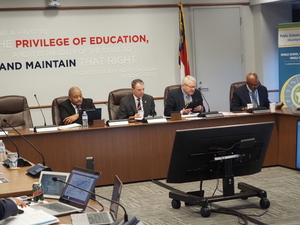
The board announced the proposed increase earlier this week and approved it on a 15-1 vote, with Nixon the only opponent.
The increase will support university operations, including utilities and facility maintenance, employee salaries and benefits and student services. It’s the fourth consecutive year of increases since a 10-year tuition freeze that was lifted in 2023.
Bogost called the increase “a balanced and measured approach to addressing the rising costs” in the UW system.
“It helps preserve affordability for students while ensuring the UWs have the resources needed to maintain the high-quality education they provide,” she said in a statement.
The board had characterized the increase as “modest,” less than the current 3.8% inflation rate and less than last year’s tuition increase of 5%.
“Our universities are facing inflationary increases, an obligation to help fund state-mandated pay increases for our hard-working employees, and other cost pressures,” Weatherly said in a statement. “Our universities have done a great job in recent years managing expenses, but the financial environment remains challenging. We have a fiduciary duty as regents to ensure quality and the long-term success of our universities.”
Before the vote, Nixon said he wouldn’t support the increase due to the “lack of open and honest communication” by Rothman’s administration and the burden that it could mean for students and their families. He noted that state senators knew about the increase before regents were informed.
At an April confirmation meeting when lawmakers questioned Bogost and Nixon about Rothman’s firing, Sen. Rachael Cabral-Guevara (R-Appleton) asked the regents about the proposed tuition increase. Bogost, at the time, said the increase was not set in stone.
“That was disturbing to me,” Nixon said Thursday.
Regents in the past were “expected to rubber stamp proposals without necessary information to public discussions,” he said.
“We’ve increased tuition four years in a row. I personally have not been provided with sufficient information to believe it is again necessary. No matter how reasonable the increase, the burden on students, parents and the public is real,” Nixon said. “It should not be undertaken without a clearly demonstrated need.”
Nixon also said the tuition increase could “cost” the system in the next budget cycle “no matter who is in control.”
Republican lawmakers have criticized the increase, arguing that recent tuition increases and increases in state funding should have been enough to avoid an increase this year. The about $250 million that the system received in the 2025-27 state budget fell well below the amount that Rothman at the time said was necessary to avoid tuition increases.
In a statement after the proposal was announced, Sen. Patrick Testin (R-Stevens Point), who sits on the powerful committee responsible for writing the state budget every two years, said that he and his colleagues “certainly will not forget this betrayal when the regents and UW officials come begging to us for more money during next year’s state budget deliberations. This is simply unacceptable.”
The increase will add $210 to the annual tuition cost for in-state students at UW-Madison, $184 at UW-Milwaukee, and between $147 and $175 at other campuses, according to Board meeting documents.
Students from out of state will see an increase of 4.0% — about $1,700 a year.
The regents also approved a 3.5% increase — about $56 annually — in segregated fees, which help cover student services, activities, programs and facilities. The combined increase in tuition, segregated fees and cost of room and board for in-state students would average 2.5%, or $477 annually. UW-Stout has the highest yearly increase, $666, and UW-Oshkosh the lowest, $296.
“It is easy to say we are only taking a few hundred dollars,” Nixon said. “That is, however, a lot of money for many people when they do not have it, especially with skyrocketing costs of almost everything. We should lean a little in the direction of the students. We inherited these problems. We need to look at creative fixes.”
The combined annual tuition and segregated fees for in-state students at each campus are:
- UW-Eau Claire: $10,268
- UW-Green Bay: $9,133
- UW-La Crosse: $10,563
- UW-Madison: $12,416
- UW-Milwaukee: $11,153
- UW-Oshkosh: $9,180
- UW-Parkside: $8,851
- UW-Platteville: $9,007
- UW-River Falls: $9,448
- UW-Stevens Point: $9,692
- UW-Stout: $10,289
- UW-Superior: $9,477
- UW-Whitewater: $8,984
Madison, WI