Educators inspired by Kansas high school students hoping to become teachers
Jun 05, 2026 | 2:30 pm ET
Description
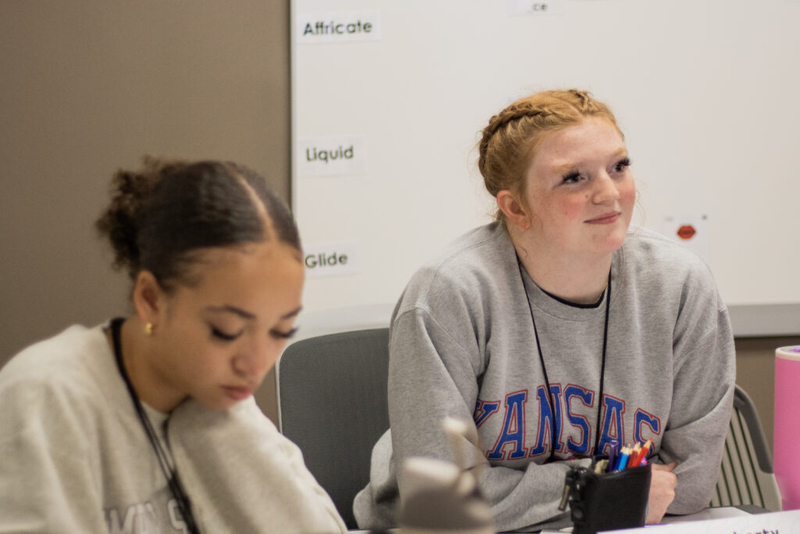
Addy Daugherty, right, a junior at Circle High School in Towanda, takes a class during the Kansas Future Teachers Academy program in Emporia on June 3, 2026. (Photo by Baya Burgess/Kansas Reflector)
EMPORIA — Teacher Sheila Peterson says this era of education is a renaissance.
Peterson, an acclaimed North Dakota teacher, flew to Kansas for the Kansas Future Teachers Academy at Emporia State University and to work with Kansas high schoolers who want to become teachers. She left feeling hopeful.
“It was a partnership, you know, in those classrooms,” she said in an interview before leaving ESU on Wednesday. “It was so good for my soul, and I’m so inspired.”
Since 1989, aspiring teachers have attended the academy to learn from education professionals. From June 1 to 5, 90 high school juniors from 60 Kansas schools join the weeklong camp to learn about teaching. It will host a similar program for about 120 students in July.
Peterson said aspiring teachers are brave.
“You have kids that are going, ‘I want to be a teacher’ and then somebody going, ‘Oof, are you sure?’And they’re doing it anyway,” she said.
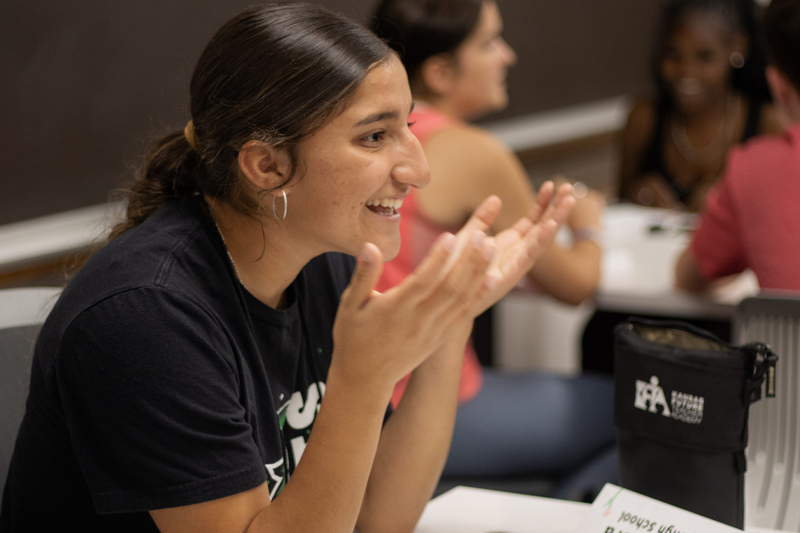
Peterson said future teachers face growing classroom sizes, teacher shortages and rising costs of living.
“The impact that that has on families, homes, kids, that is stressful,” she said. “But, you have hope because these kids want to make a difference.”
Many students at the academy went to make a difference.
Maddie Zluticky, a student at Eisenhower High School in Goddard, wants to be the kind of teacher she didn’t have.
“I didn’t really get good grades before high school because I didn’t have anyone that was really there for me. No one really saw my potential,” she said. “I want to be that person that sees potential in someone.”
Seeing others for who they are was the theme from one of Peterson’s classes.
On Wednesday, the third day of the camp, students chose and attended sessions taught by experienced educators. Peterson taught about inclusivity in the classroom. She covered ways to include students with disabilities or challenges at home through activities, group discussion and telling stories about her experience.
Peterson told a story about her friend Liz, who has Down syndrome. Liz spoke to Peterson’s students in North Dakota about her condition. Liz also told them she was a varsity cheerleader in high school, lives independently in an apartment, has an associate degree and likes the Minnesota Vikings.
“Do they look at Liz as a person with Down syndrome any longer?” she said. “No, no, they see Liz.”
Peterson was illustrating how to move past perceptions of somebody else. She told the group they can meet students’ needs better once they understand children as individuals.
Near the end of the class, Peterson showed a short film and asked students what they took away from it. Allyson Akers from Campus High School in Wichita raised her hand.
“If you’re the disabled kid, it shouldn’t mean that you adjust for society,” she said. “It should be society that adjusts for you.”
Miles Lockridge, a history teacher at Piper High School in Kansas City, Kansas, led a session about culturally relevant teaching. He said having compassion for students is a fundamental part of education.
“Not just the curriculum, not just going off of a textbook, but understanding that students are individuals and they have individual needs,” he said.
Many of the classes Kansas Future Teachers Academy students take and projects they make focus on inclusivity, diversity, social learning and emotional learning.
Lockridge said such education prepares students for their lives.
“I think when we look at education as a checklist of test scores and curriculum points, I think we lose the heart of pouring into the next generation,” he said.
Bra’Nae Carr from Wyandotte High School in Kansas City, Kansas, hopes to teach early childhood or first grade students. She said she wants to be the kind of teacher who invests in her students’ lives.
“Kids really just need somebody to be there,” she said. “Their parents aren’t always that person, so teachers can be that.”
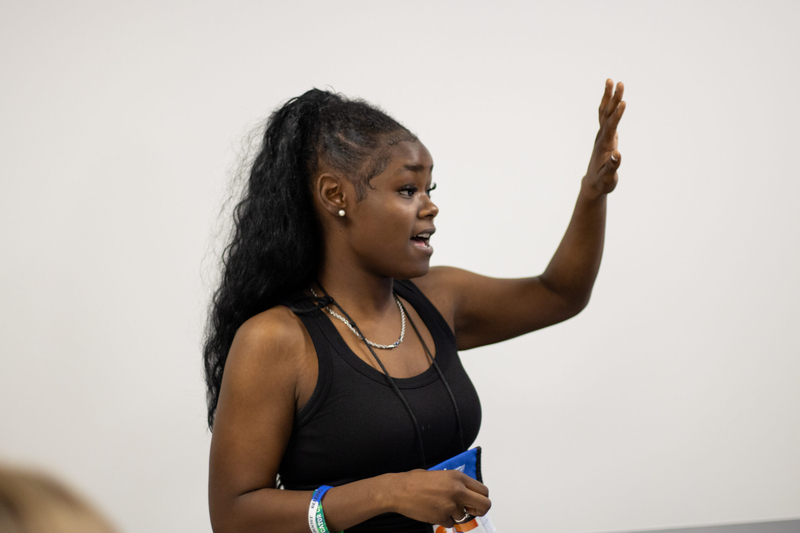
Lockridge said he is impressed with the group of high school students at the academy.
“I see a lot of compassion,” he said. “I see a fiery passion to just give back to others, and just to serve.”
Peterson said she felt proud of the “kids these days.”
“People go ‘kids these days.’ Here’s my experience with kids these days,” she said. “What I see in these kids today that makes me feel hopeful is the thirst for knowledge, and to understand their curiosity to not only hear what you’re saying, but to even question it a little bit, and want to know more.”
Peterson said she noticed something earlier Wednesday also made her feel hopeful. While she was talking to the students, a sensitive subject came up, and a student left the room.
“I saw that student get up, but I also saw another student immediately go out and go check on that kid right away before anybody else could,” she said. “That kid saw it. Felt it.”

Topeka, KS