Indiana legislators hear complaints over unequal standards for child advocates in court cases
Sep 17, 2026 | 4:30 am ET
Description
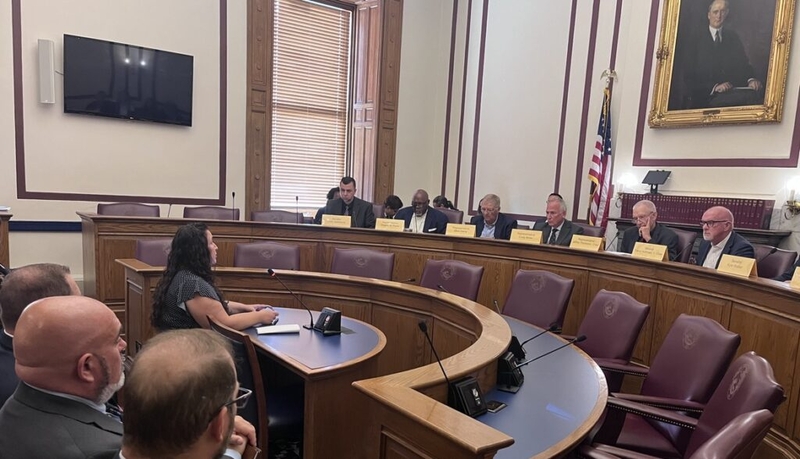
Members of Indiana's Interim Study Committee on Fiscal Policy listen to testimony on Wednesday, Sept. 16, 2026. (Photo by Tom Davies/Indiana Capital Chronicle)
Several mothers vented anger over court-ordered interventions regarding their children, with some on Wednesday urging Indiana lawmakers to establish additional oversight.
An Indiana University law professor also told the legislative study committee that the state lacks uniform standards for county-run child advocate programs and cautioned they are often not independent of the judges making decisions.
The Legislature’s Interim Study Committee on Fiscal Policy heard testimony regarding the roles of guardian ad litems and court appointed special advocates — who are designated by a court to represent the best interests of a child in family law cases.
Some who testified Wednesday described what they believed were abuses of the legal system and misrepresentations by those court-appointed advocates that resulted in judges ordering the removal of children from their homes or imposing restrictions on the parents.
“No independent body to intervene”
Prominent objections included the lack of an independent review process for complaints about those advocates and whether they are too compliant with recommendations from the Department of Child Services.
Eden Mast of Nappanee alleged misconduct by the guardian ad litem involved in decisions about the medical care for her children in a case stemming from her divorce from their father.
“When I raised concerns regarding ex parte communications, provincial boundaries, and retaliation, my complaints were returned to the exact court relying on that GAL,” Mast told the lawmakers. “There was no independent body to intervene.”
Rachel Vilensky, director of the Family Law Clinic at IU’s Maurer School of Law in Bloomington, testified that she’s encountered a wide variety of involvement and expertise by child advocates in the roughly 20 counties where she’s done legal work.
“In my experience, overall, the guardian ad litem or CASA often goes along with what DCS recommends, and even if they have concerns with that recommendation, they just simply don’t have the legal knowledge, legal skills or the power to go against DCS,” Vilensky said.
Vilensky argued that statewide standards should be established for the advocates and that they should not be working under county judges.
“We have to make sure that the programs in all 92 counties are independent, so that they can have the strength behind their recommendations, and not be afraid that if a CASA says something the judge doesn’t like, the CASA is going to get fired,” she said.
Funding flat for advocacy programs

Rep. Victoria Garcia Wilburn, D-Fishers, had asked General Assembly leaders to have the study committee consider possible actions during the 2027 legislative session regarding funding and management of those child advocate programs.
She presented policy suggestions to the committee that included creating uniform training standards across the state and explore having smaller counties share child-advocate attorneys.
State funding for such programs has not increased since 2018, when the appropriation went from $5 million a year to $6.3 million, said Leslie Dunn, director of the Children and Families Division within the Indiana Office of Court Services.
Study committee Chair Jeff Thompson, who is also the Republican chair of the budget-writing House Ways and Means Committee, said other legislative panels should work on proposals for improving the advocacy system, while indicating he could support increased funding.
Rep. Greg Porter, the top Democrat on the Ways and Means Committee, said the state should have funding options with the state cash reserves growing to a projected $5 billion.
“I just think that as we go through here and talk about this, that money should not be an issue in regards to addressing these concerns,” Porter said. “I think those individuals who are on the front line, who experience it every day, who live it longer than most of us have done with it, should be able to help us come up with a way to address this.”
Indianapolis, IN