As shortfall looms, Pillen installs allies on board meant to keep politics out of budget forecast
Sep 16, 2026 | 9:38 pm ET
Description
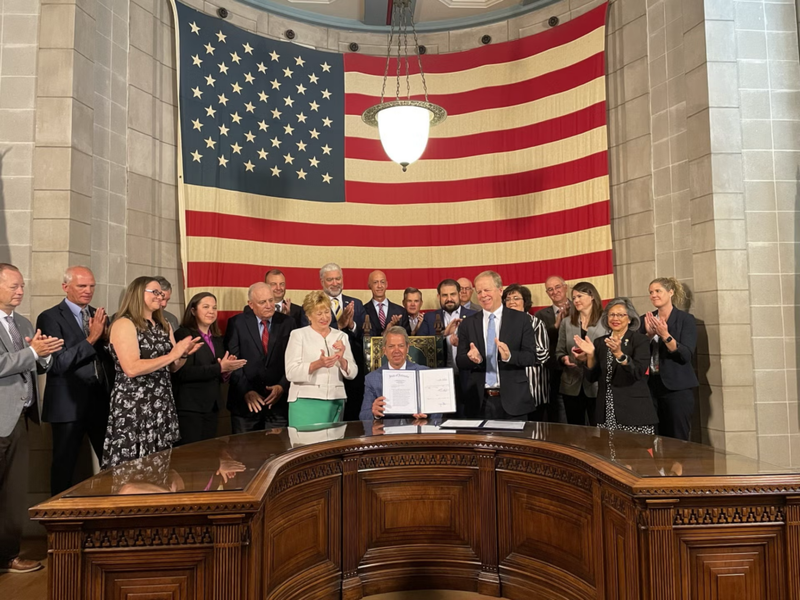
Then-state Sens. Lou Ann Linehan, who represented a west Omaha area legislative district, and Tom Briese of Albion flank Nebraska Gov. Jim Pillen as he signs into law the 2023 tax cut bills they each sponsored. (Photo courtesy of the Governor's Office)
In an unprecedented move, Gov. Jim Pillen has reshaped the state board that predicts Nebraska’s tax revenues for budget writers, replacing three members with appointees that include two former Republican allies in the Legislature.
Pillen appointed former state Sens. Lou Ann Linehan and Tom Briese to the nine-person Nebraska Economic Forecasting Advisory Board. He also appointed Tim Wilson, an Omaha accountant. The board’s chairman was notified of the shakeup in an email last week obtained by the Flatwater Free Press.
The board plays a role that may sound dull: predicting tax receipts. But it’s crucial, said Michael Calvert, who led the Legislative Fiscal Office the year the board was created and for decades after.
“I firmly believe it is so absolutely critical to good government, if you will,” he said. “If you do it properly and understand what you’re doing, it’s gold. It’s gold.”
The new appointments mark the first time in the board’s 40-year history that a governor has replaced a third of the board at once, state records show. The Legislature appoints five of the board’s nine members; Pillen appoints the other four. Among those ousted by the move include the board’s longest-serving member.
The appointments of Linehan and Briese drew backlash from a state lawmaker and a former governor who worried that the move is designed to ensure the board delivers a rosy outlook in its October revenue forecast. If re-elected, Pillen will use the October projections to craft the budget proposal he will hand to lawmakers in January.
As influential lawmakers earlier this decade, Linehan and Briese championed tax cuts that will slash Nebraska’s tax rate for top earners and corporations to 3.99% by next year. In 2022, the state income tax rate was 6.84% for top earners and 7.5% for corporations.
The tax cuts have contributed to budget shortfalls in the hundreds of millions that lawmakers have rectified in each of the past two years by making cuts and pulling money from state cash funds and the cash reserve. Proposals to pause or reverse the income tax cuts have proven a nonstarter among conservatives, including Pillen.
State income tax revenues were $703 million lower last year than they were in 2022. Nebraska is now projected to face a $208 million deficit in 2027, which would mark the third straight year state lawmakers have faced a budget hole of at least $200 million. Lawmakers are required by the Nebraska Constitution to balance the budget.
“We are already in a situation where things are looking bad,” said Sen. George Dungan, a Democrat from Lincoln who sits on the Legislature’s Revenue Committee. “And if you have partisan actors on the forecasting board who are encouraging the adoption of a forecast that makes it easier to keep certain policies in place, I think that that’s really problematic.”
In interviews, Linehan and Briese both said that they would operate objectively on the board, independent of policy biases and uninfluenced by the governor.
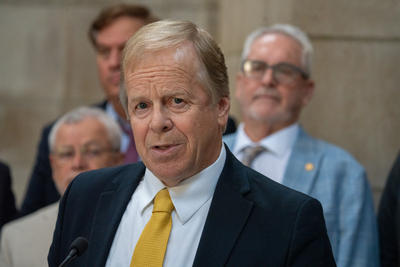
Briese, a farmer from Albion who served on the Revenue Committee until Pillen appointed him state treasurer in 2023, said he could “be true to the facts and to the data, regardless of what it might implicate or what it might call into question.”
Linehan was chief of staff for U.S. Sen. Chuck Hagel and worked for the State Department before she served two terms in the Legislature, including six years heading the Revenue Committee. She said she is “not beholden to the governor.” Linehan was the chief architect of the state’s income tax cuts.
Wilson was a CPA in Lincoln and Omaha for more than three decades, he said, and currently serves on the board for Farm Credit Services of America.
In a statement, a spokeswoman for Pillen said the governor expressed his appreciation for the departing board members and extolled the qualifications of their replacements.
“These appointees bring direct knowledge and experience that are vital to Nebraska’s consensus financial forecasting process,” said Laura Strimple, the spokeswoman. “Their combined backgrounds provide a broad range of perspectives that will strengthen the Board’s ability to evaluate economic conditions, revenue trends, and other factors affecting Nebraska’s fiscal outlook.”
Strimple said none of the three outgoing board members reapplied. But John Kuehn, a former state lawmaker who was among those replaced, said he was “surprised” by his replacement and had received no indication from Pillen’s office he would not be reappointed, nor any indication he needed to reapply. He said he wasn’t aware his term ended in September, and he intended to clarify his status at October’s meeting.
Linehan and Briese both said Pillen’s office had called them and asked them to apply for the board.
Lawmakers created the board in 1984, replacing a system that charged the Department of Revenue with offering forecasts and a board full of elected state leaders — including the governor — with setting Nebraska’s sales and income tax rates.
The forecasts had been “doubted as politically influenced” since the department was under the governor’s control, the Omaha World-Herald reported then. At one point, the board full of state officials didn’t like a forecast that would have prompted them to raise rates, according to Tom Bergquist, who worked in the Legislative Fiscal Office at the time.
“They were told to shred it and come up with a different report,” he said, so they inflated the forecast and created a “big fiscal mess.”
The recent appointments worry state officials who served in 1984. In interviews, they warned of consequences to the state budget if the board becomes more politicized.
“The whole thing was kind of created to take the politics out of it.” Bergquist said. “And, unfortunately, I don’t know if it’s starting to seep back in.”
Former Gov. Bob Kerrey, a Democrat who worked with lawmakers to create the board as part of a reform effort, said the burden is on Pillen “to prove that this isn’t a political move, to get the number that he wants.”
“You don’t like the number they produce, so you get rid of the board, put a board in there that’s going to give you the number you want,” Kerrey said. “That’s politics.”
The board has repeatedly borne bad news for Pillen and lawmakers in recent years, offering gloomy assessments last October and again in February, each of which projected the state to bring in millions less than previously thought, worsening the state’s budget deficit.
Pillen has, at least once, pinned blame for the state’s budget shortfalls on the board. On his monthly radio call-in show in July, the governor told listeners that Nebraska’s revenue had increased and expenses had decreased over the previous year.
“That’s good, but then we have this thing called the forecasting board because we have to balance a budget,” he said. “I’m not criticizing it. It just makes it very difficult if you’re not in that business to understand. So the forecasting board makes predictions, and that changes the perception of what’s going on. The hardcore reality is that the forecasting board undershot how much (income tax) refunds Nebraskans are getting by over $300 million.”
The state did not increase its revenues nor cut spending last fiscal year. Nebraska’s total revenues dropped nearly 14% last year while spending has increased every year for at least a decade, according to state records.
And the board does not forecast refunds, said John Kuehn, a former Republican lawmaker who was among those whom Pillen replaced on the board this month. He called the governor’s July comments “objectively inaccurate” and Pillen’s targeting of the board “a departure from prior governors and prior interactions between the executive and the forecasting board.”
Kuehn was replaced along with Thomas Henning, a Kearney businessman who also served on the board for the Federal Reserve Bank of Kansas City’s Omaha branch. He had served on the forecasting board since 2014. Bennington banker Leslie Andersen, who had been on the board since 2002, was also replaced. Neither responded to interview requests for this story.
The only qualifications required by state law for the unpaid board members are “demonstrated expertise in the field of tax policy, economics or economic forecasting.”
Historically, board members were mostly people with business backgrounds. Kuehn diverged from the standard appointee as a former state senator and veterinarian who was appointed in 2019 by former Gov. Pete Ricketts to fill a vacancy. Miltenberger, Ricketts’ former campaign manager and chief of staff, marked a further departure from the norm when he was appointed to replace board chair Jerry Deichert, who served on the board from its inception until 2023.
Kuehn said he had “no doubt” observers saw his appointment seven years ago as political, and he said he had taken “extra effort” to demonstrate his independence on the board.
“What I would hope is that the new appointees would approach their service on the board with a similar level of conscientiousness and integrity so that the objectivity of the forecast remains intact,” he said.
Linehan and Briese both pledged they would.
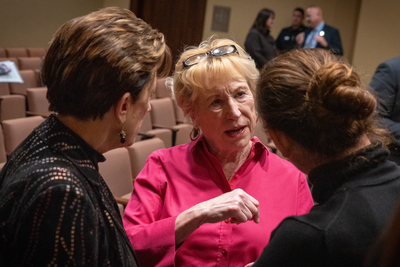
But at least in Linehan, Pillen has reshaped the board with a fellow skeptic of its work. In eight years as a lawmaker, she said, forecasters accurately predicted state revenues only once. Two years later, they underestimated revenues by more than $1 billion.
As she joins the board that next month will predict how bad Nebraska’s projected budget shortfall will be next year, Linehan is not convinced there is one, she said.
“I don’t think we have a problem,” she said. “I will believe we have a problem if the forecast comes true. I don’t waste any time worrying about something that’s a guess.”
The Flatwater Free Press is Nebraska’s first independent, nonprofit newsroom focused on investigations and feature stories that matter.
Lincoln, NE