As concerns mount over Canadian trade war, Maine officials look to maintain neighborly ties
Sep 17, 2026 | 4:16 am ET
Description
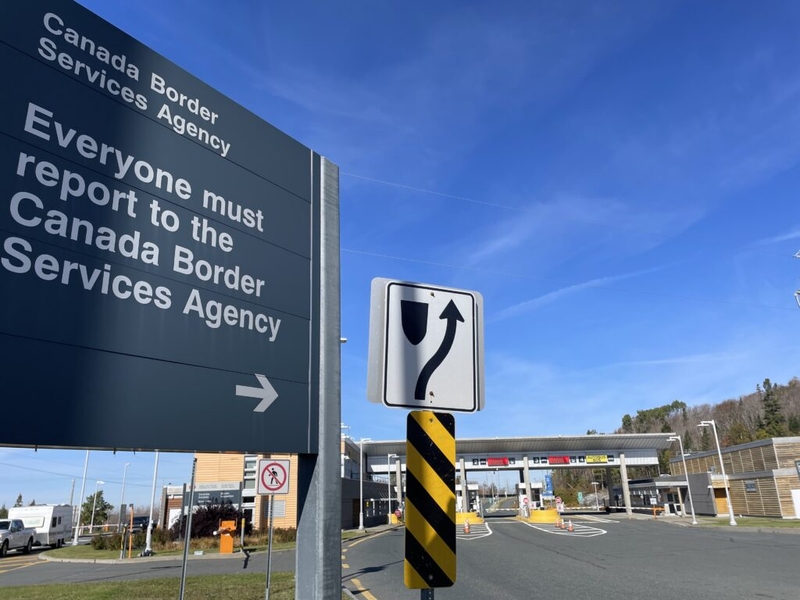
A United States-Canada border crossing between Jackman, Maine and Saint-Théophile, Quebec. (Photo by Lauren McCauley/ Maine Morning Star)
As Maine industries face an uncertain future amid the Trump administration’s trade war with Canada, state officials aim to coordinate with their Canadian counterparts to de-escalate the situation.
Members of the Maine-Canadian Legislative Advisory Commission met Wednesday to discuss the latest developments in the trade war, and what they can do to support Maine businesses.
“This is a point where it’s uncharted territory for U.S.-Canada relations,” Patrick Woodcock, president of the Maine State Chamber of Commerce, told the commission. “There is a classic trade war occurring, where there is an effort to maximize economic pain on the two countries to establish leverage.”
Woodcock said that provincial officials in Canada are in a similar position to Maine, and could be key allies in de-escalating the standoff.
“One thing to recognize is the premiers of the Maritimes, in Quebec, have largely — not entirely, but largely — been stabilizing voices on the Canadian side,” he said. “And I think it’s important if this commission thinks of actions to try to stabilize and maintain a positive economic relationship.”
Commission members agreed to reach out to Canadian officials, and also plan to write a letter to U.S. Trade Representative Jamieson Greer.
Woodcock said that, so far, Maine has avoided “macroeconomic impacts from the trade dispute.”
But that could change under the latest developments, said Wade Merritt, president of the Maine International Trade Center in written testimony for the commission, referring to the retaliatory tariffs that took effect earlier this month.
“For Maine, the potential impact of import and export tariffs is significant,” he said. “Canada is by far our state’s largest international trading partner, and it’s best characterized as a relationship where we make things together, rather than simply selling each other finished goods.”
And that relationship means some products cross the Canadian border several times — and could now be subject to tariffs when shipped into Canada, and again when returning to the United States.
“When trade barriers increase in either direction, the result is often higher costs, disrupted supply chains, delayed purchasing decisions and reduced competitiveness within the market for businesses on both sides of the border,” Merritt said.
Industries already pinched by tariffs
The Canadian tariffs that went into effect Sept. 8, are expected to impact $170 million of Maine exports, with 70% of that coming from the forest products industry.
Dana Duran, executive director of the Professional Logging Contractors of the Northeast, said the industry has already been experiencing fallout from earlier tariffs on steel and aluminum.
“The biggest impact that our members are seeing right now, in addition to the friction situation and kind of the uncertainty, is really on the equipment, parts, heavy-duty trucks that come from Canada,” Duran said. “That equipment is vital to our industry.”
And there isn’t anywhere else for companies to buy that equipment, he said.
Collins warns Canadian tariffs will hit $170M in Maine goods, urges return to negotiations
“Our folks are price takers, not price setters,” Duran said. “And with respect to equipment and parts, they have nowhere to pass along those cost increases they’re seeing right now.”
The industry is also taking a hit with the rising cost of oil.
“I heard pricing this morning: $6.80 in South Paris, Maine,” Duran said. “I know at Houlton the latest price is $6.79, Fort Kent is similar, so I wouldn’t be surprised if we saw $7 a gallon diesel either by the end of this week or sometime early next week.”
Duran also agreed with Woodcock and Merritt, who said that while there may be some trade imbalances with Canada, these tariffs are not the way to address the issue.
“There are specific products that we would actually like to see trade investigations,” Duran said, but added that the tariffs “are just creating even further chaos in the market on both sides of the border.”
The Canadian tariffs also initially included import taxes on fisheries, including Maine lobster, which Woodcock said was a “nightmare scenario.”
Lobster caught in Maine is often processed in Canada, and with such small margins, an import tax when crossing the border would have serious impacts.
“Some of these industries are so integrated that it’s hard to harm the U.S. without harming Canada, and it behooves no one,” Woodcock said. Fisheries were later removed from the list of Canadian tariffs, a move celebrated by the industry.
Concerns about escalation, energy prices
But with little certainty about where the two countries go from here, Woodcock said the situation for other industries still feels tenuous.
“We’re at the point where I’m most concerned about where this escalates,” Woodcock said. “Does this start to include energy products, where we would see immediate repercussions for Maine businesses and Maine consumers?”
Energy products are also currently excluded from the U.S. and Canadian tariffs, but Woodcock said it’s an area where Maine would be acutely impacted.
“Whenever I see an announcement from the Trump administration, I immediately try to assess whether energy would be implicated,” Woodcock said. “Obviously, energy costs are elevated now, and any additional pressure really would be difficult for our economy to tolerate.”
Much of northern Maine is not connected with the rest of the state and New England grid, and the area gets most of its energy from New Brunswick, Canada. There aren’t other sources that could replace Canadian energy, Woodcock said, which would likely mean an immediate increase in wholesale energy prices.
It’s a similar situation for heating oil, Woodcock said, because Maine imports the vast majority of it from Canada. And there isn’t a domestic refinery or international market that would be able to replace that source.
“I think that would be passed on immediately to consumers, and we’re already facing $6 per gallon,” he said. “So you know it really would be a really challenging situation for Maine consumers.”
The silver lining, Woodcock said, is that any energy tariffs would have consequences for Canada as well, and hopefully will continue to keep the industry out of consideration.
Augusta, ME