Hunters ready to fight for corner crossing in Supreme Court
May 28, 2025 | 6:27 am ET
Description
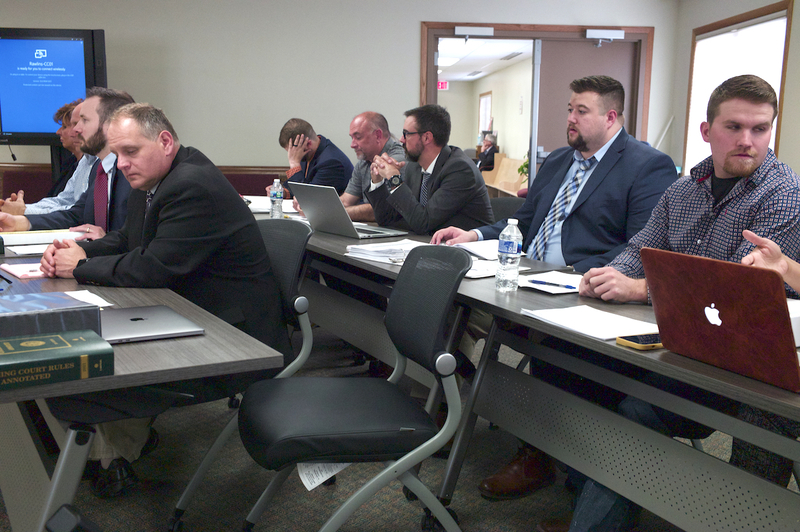
Photo courtesy of WyoFile
Supreme Court Justice Neil Gorsuch on Tuesday gave Elk Mountain Ranch owner Fred Eshelman until July 16 to petition the court to review a corner crossing case that has implications for public lands access and private property rights across millions of acres in the West.
Meanwhile, a hunters group that’s been advocating for public access in the case says it’s ready should the legal fight reach the nation’s highest court.
Gorsuch was responding to a request by Eshelman’s counsel, Robert Reeves Anderson, that the Supreme Court extend a deadline for the petition. The 10th Circuit Court of Appeals affirmed a federal Wyoming judge’s decision that Eshelman cannot block people from corner crossing to reach public property.
If the Supreme Court takes this case, we’ll be ready because access for all is worth fighting for, all the way to the highest court in the land.”
Patrick Berry
Without an extension, Eshelman had until June 16 to file a petition.
Corner crossing is the act of stepping from one piece of public land to another in the Western checkerboard landscape of public/private ownership. Corner crossers do not set foot on the kitty-corner pieces of private land, but they necessarily pass through the airspace above it.
Eshelman sued Missouri hunters Brad Cape, Zach Smith, John Slowensky and Phillip Yoemans, who corner crossed in 2021 (and without Smith in 2020), asking courts to declare that the men trespassed. They never set foot on Eshelman’s ranch.
Backcountry Hunters and Anglers, an advocacy group that has supported the hunters, is prepared. “If the Supreme Court takes this case,” Patrick Berry, president and CEO of BHA, said in a statement, “we’ll be ready because access for all is worth fighting for, all the way to the highest court in the land.”
Eshelman is likewise committed. “This case raises exceptionally important issues at the intersection of private property rights and public access,” his attorney wrote in the request for the deadline extension.
“The Tenth Circuit’s decision has vast reach, covering a huge portion of the roughly 300 million acres of checkerboard land and affecting landowners throughout the American West,” Anderson wrote. “This case seeks review of one of the broadest abrogations of private property rights in American history.”
Backcountry Hunters involved
Eshelman seeks to appeal a ruling by the 10th Circuit that affirmed Wyoming’s Chief U.S. Justice Scott Skavdahl’s conclusion that Eshelman could not block people from corner crossing. Skavdahl’s decision applied to the checkerboard area in Wyoming as long as corner crossers do not step on or damage private property.
By blocking corner crossing — either by erecting barriers or using threats, intimidation or lawsuits — a landowner can control public land enmeshed in private property.
Eshelman — a wealthy North Carolina pharmaceutical entrepreneur — is a hunter who enjoys elk and other hunting excursions on his wildlife-rich ranch. The Elk Mountain Ranch encompasses about 11,000 acres of public property only accessible by corner crossing, trespassing or with his permission.
The 1885 Unlawful Inclosures Act and subsequent case law prevent a landowner’s use of physical barriers, threats and even state trespass laws, to block access in the checkerboard, the 10th Circuit affirmed. The law, the ruling said, guarantees public access to public lands in the checkerboard — an ownership pattern that’s a relic of the 1800s railroad grant era, the appeals court said.
Congress passed the act to prevent settlers from erecting fences to incidentally appropriate public grazing land and water sources as their own. Subsequent court cases supported that broad notion.
The hunters “are ready to keep fighting for and defending public access to public lands,” their principal attorney, Ryan Semerad, said in a statement last week.
Anderson did not immediately respond to a request for comment on the extension. Meanwhile, BHA has underlined its longstanding commitment to the hunters’ and the public’s cause.
“Corner crossing has always been about the right of the public to access the lands they own,” Berry said in a statement. “The 10th Circuit made it clear: stepping from one corner of public land to another is not a crime.”
“BHA has stood with the hunters from the outset,” the group said. With the help of the Wyoming BHA chapter, it raised more than $220,000 to fund the legal defense, the group stated. BHA also filed legal papers supporting the hunters.
The advocacy group seeks “a commonsense solution that recognizes private property rights and ensures access to millions of acres of public lands across the West,” its statement reads.
Here come Leo’s sheep again
In its decision, the 10th Circuit rejected Anderson and Eshelman’s arguments that a case known as Leo Sheep should prevail. In that 1979 ruling, the Supreme Court decided that the federal government did not have an implied easement to build a road across a checkerboard corner to provide easier access to the Seminoe Reservoir, also in Carbon County.
The family owned Leo Sheep Company derived its name from the community of Leo near the reservoir. It won the case against the federal road construction.
But the corner crossing case does not involve an implied easement, a permanent occupation of or a taking of private land, as was the case in Leo Sheep, the 10th Circuit said. Instead, the UIA allows a nuisance — the blocking of public access — to be abated or removed.
The 10th Circuit stated the case thusly.
“If a checkerboard landowner cannot impede access to public lands, then there is impliedly an access right.” Or, put another way by the court, “Iron Bar’s argument ignores that the reciprocal of preventing the right to exclude is to permit access.”
The 10th Circuit said other UIA cases prevailed instead of Leo Sheep. But 10th Circuit Judge Timothy Tymkovich wrote in the decision that the high court could again look at the woolgrowers’ 1979 case.
On that, Eshelman and Anderson may hang their Stetsons.
“The [10th Circuit] panel relied on Circuit precedent to distinguish this [Supreme] Court’s holding in Leo Sheep … that the United States [and the public] had no implied rights of way across private land in the checkerboard,” Anderson wrote. “In so doing, however, [10th Circuit] Judge Tymkovich invited this Court to ‘reconsider the scope of Leo Sheep as it applies to this case.’”
This article was corrected to remove a reference to Leo Sheep as a consortium — Ed.
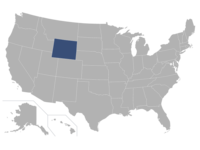
Cheyenne, WY