GOP budget plan in US House calls for cuts at Hanford nuclear cleanup site
May 21, 2026 | 7:00 am ET
Description
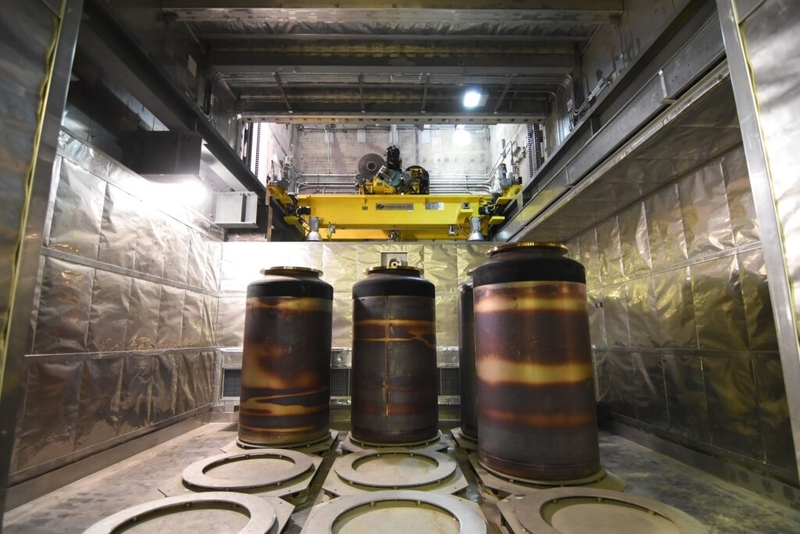
Stainless steel containers for waste in the low-activity waste facility at the Hanford site. (Photo courtesy of U.S. Department of Energy/Bechtel)
Cuts that Republicans in the U.S. House are seeking to the nuclear cleanup at Washington’s Hanford site would go deeper than steep reductions the Trump administration proposed.
Hanford’s fiscal 2026 budget is almost $3.3 billion. The Trump administration wants to chop that by roughly $400 billion. The GOP-controlled House wants to subtract another $55 million. The Republican-dominated Senate has yet to unveil its proposal.
The combined proposed cuts translate to a $2.77 billion Hanford budget for the 2027 federal fiscal year, which begins in October, according to the House Appropriations Committee’s proposed budget for the U.S. Department of Energy.
The proposed Hanford cuts appear to be driven by the Trump administration’s efforts to drastically increase the defense budget.
Casey Sixkiller, director of Washington’s ecology department, said in a statement that the proposed cuts would “delay critical progress at our nation’s most complex nuclear cleanup site, threatening the Columbia River and communities across the region.”
“The additional cuts proposed in the House budget are unjustified, falling even below the president’s request to Congress,” Sixkiller added. “We will continue working with Washington’s delegation to fully fund cleanup work at Hanford.”
Hanford produced plutonium for America’s atomic bombs during World War II and the Cold War in a huge cluster of nuclear reactors and chemical processing plants.
Those processes created massive amounts of radioactive and chemical waste, including 56 million gallons of radioactive fluids, sludges and spongy chunks stored in 177 leak-prone underground tanks, with the nearest tank 7 miles from the Columbia River.
The tanks are arguably considered the most radioactively contaminated spot in the Western Hemisphere.
Trump wants to increase the feds’ annual defense budget from $1 trillion to $1.5 trillion for fiscal 2027, with the war against Iran being a major factor in that push.
Roughly $228 million of the proposed $455 million in Hanford budget cuts would be trimmed from maintaining the tanks and converting the radioactive waste into glass inside huge stainless steel cylinders to be buried in a nearby specialized pit.
Other proposed cuts are scattered about the site’s projects.
A major cut is the cleanup of a radioactively contaminated lab building — the 324 Building — that sits on top of an underground plume of highly radioactive strontium and cesium that is less than 1,000 feet from the Columbia River, just north of Richland.
Hanford’s master plan for dealing with its tank waste is to build one or two plants to convert the less-radioactive waste — dubbed “low activity waste” — into glass.
Another option that’s being studied is mixing low-activity waste with a cement-like substance called grout. Roughly 5 million to 6 million gallons of the tank waste are highly radioactive, and a plant is supposed to start glassifying that material sometime in the 2030s.
The 2027 budget for designing the high-level waste glassification faces a cut from $611,000 to $330,000. The feds want to have 90% of that design work done by late 2027.
Hanford cranked up the first low-activity glassification plant last October, and it deposited its first cylinder of treated waste in the storage pit in April.
It is expected to take a year to gradually increase the volume of waste being glassified until the first plant reaches full operation. The entire glassification project’s original budget in 2002 was $4 billion. This has grown to roughly $30 billion. The first low-activity waste plant cost slightly more than $9 billion.
Hanford’s cleanup is governed by a frequently modified 35-year-old legal contract among the Department of Energy, the U.S. Environmental Protection Agency and state ecology department, plus some federal court decrees — meaning the cleanup schedules and standards are legally locked in.
While Hanford’s current legal target calls for glassifying all waste by 2052, the Department of Energy has internally moved those targets back to 2069, according to a 2021 report by the Government Accountability Office. After four years of closed-door negotiations, the Department of Energy, the EPA, and the state agreed to try encasing the contents of 22 tanks in grout.
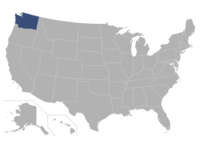
Olympia, WA