‘A Home for Every Child’ starts at home
May 18, 2026 | 5:55 am ET
Description
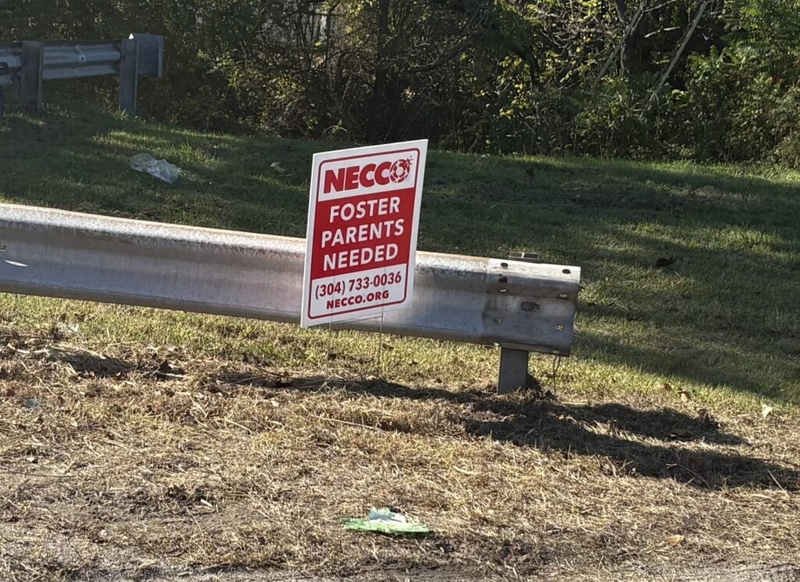
A sign Necco foster care in Milton, West Virginia. (Photo by Leann Ray/West Virginia Watch)
In the Wizard of Oz, Dorothy did not click her heels and wish for a safer placement. She wished to go home and be surrounded by her family, where dinner was on the stove, and Toto was asleep at her feet.
That’s what all of us want for our children. We want them to be surrounded by family. Mom and dad helping them with homework, giving them a hug and reading a bedtime story. That is the home every child deserves.
On May 7, Gov. Patrick Morrisey signed West Virginia onto the Trump Administration’s “A Home for Every Child” initiative, the 19th state to join. The goal is the right one: enough foster homes for every child who needs one. Right now, West Virginia has about 57 licensed foster homes for every 100 children in care.
Administration for Children and Families Assistant Secretary for Family Support Alex Adams, President Donald Trump’s appointee leading this effort, describes the goal of “A Home for Every Child” as improving the ratio of foster homes to children in care, which is accomplished in two ways:
- Responsibly increasing the number of foster homes through recruitment and retention; and
- Responsibly reducing entries into foster care and reducing the length of stay for those already in care.
On the second point, the Trump administration is clear. Adams wrote that “reducing the number of children entering foster care through effective prevention is how we improve outcomes for those who do.” Trump himself said: “The best foster care system is one that is not needed in the first place.” Morrisey has said, “We must prioritize the safety and welfare of our most innocent and vulnerable West Virginians. On this, there can be no debate.”
As readers of West Virginia Watch know, West Virginia has real work ahead. Our state leads the nation in children in foster care per capita, and Child Protective Services investigates families at more than double the national average. Our CPS systems are overwhelmed, sometimes with tragic consequences.
The good news is, across the state, community organizations are making a difference, doing the prevention work that is key to achieving the goals of “A Home for Every Child.”
In recent years, West Virginia has expanded Family Support Centers statewide, serving every county. These centers welcome any family that walks through the door, helping stabilize families before a crisis reaches a level requiring CPS intervention.
Use of federal funds for prevention was endorsed by the U.S. Senate and House Budget Appropriations Committees with bipartisan support. The 2026 federal budget agreement includes language citing research that shows Family Support Centers are linked to a 63% reduction in child abuse cases and yield a $4.93 return for every tax dollar invested. Those are real results.
Home visiting programs like Parents as Teachers, Maternal Infant Health Outreach Worker, and Healthy Families Mountain State are helping new parents build strong foundations. Circle of Parents groups are giving moms and dads a place to lean on each other. Partners in Prevention teams are knitting together community supports and implementing projects that build protective factors that are linked with reductions in child abuse.
I am glad West Virginia signed onto “A Home for Every Child.” But a signature is a promise, not a plan. Meeting the goals of “A Home for Every Child” means investing more in prevention and expanding effective community-level family support work that reduces the number of children who need a foster home in the first place.
During tight budget years, there may be a tendency to cut funding for programs, but pulling back on investments for family supports and prevention programs does not save money. Those types of cuts shift costs downstream to CPS caseloads, courtrooms, and foster care, which cost far more.
West Virginians show up for each other. Neighbors help neighbors. Our Family Support Centers and prevention partners embody that same spirit. These organizations have rich histories going back decades. They’re run by local people who know their communities, who have sat with parents during the hardest moments of their lives and helped them find a way through.
Success for “A Home for Every Child” will not be measured in signed agreements. It will be measured in children who wake up in their own beds, in their own homes, with the people who love them. Its success will be measured in parents who got support early enough that no one had to make a call to CPS.
As we consider the lessons of the “Wizard of Oz:” The Scarecrow needed a brain. The Tin Man needed a heart. The Lion needed courage. That’s good policy advice, too.
We need the brains to follow the research and fund what works. We need the heart to show up for families before they reach a breaking point. We need the courage to keep our commitments and make sure that joining a national initiative means something real.
There is no place like home. Every child in West Virginia deserves one.
Charleston, WV