The Dunes Sagebrush Lizard: a crisis fueled by big oil
May 21, 2026 | 12:01 pm ET
Description
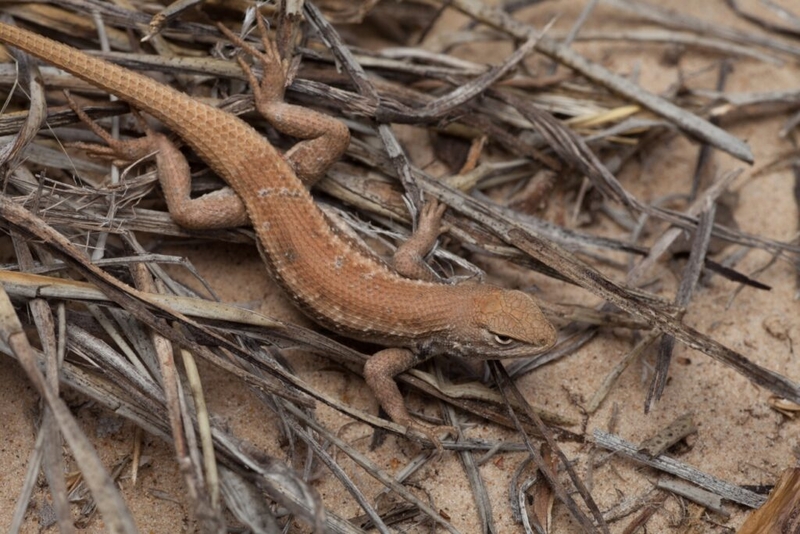
Dunes sagebrush Lizard (Ryan Hagerty, US Fish & Wildlife Service)
The dunes sagebrush lizard lives where few others can: in wind-sculpted dune blowouts tucked inside shinnery oak landscapes along the Permian Basin edge. Its survival hinges on landforms that are unique, irreplaceable and increasingly imperiled by oil and gas activity. Habitat loss and fragmentation from roads, well pads, pipelines and associated linear disturbance are reshaping the very stage on which this species performs, pushing its populations toward decline and, for some patches, local extinction.
A central problem is habitat fragmentation. The lizard occupies discrete blowouts within a mosaic of shinnery oak and open sand. When development carves roads and pads across the landscape, edge effects proliferate and blowouts shrink, become more isolated and lose their characteristic geometry. Across impacted regions, occupancy falls and metapopulation connectivity erodes, turning once usable habitat into a patchwork of isolated islands. This pattern — loss of landforms, reduced occupancy, and disrupted connectivity — strongly signals heightened extinction risk if current development continues.
Even more worrying is the link between landform disruption and demography. Blowouts are irreplaceable features whose shape, size and edge complexity influence vital rates such as survival and reproduction. As habitat configuration becomes more irregular and edge-dominated, demographic performance deteriorates, narrowing the conditions under which populations can persist. Elasticity analyses consistently show that the lizard’s demography tracks landform geometry, meaning continued degradation or fragmentation of blowouts directly undermines population viability and complicates recovery efforts.
Oil-and-gas activities impose both direct and indirect pressures. While direct toxic effects from drilling fluids may be limited in some surrogate systems, indirect effects — reduced prey availability, altered invertebrate communities and disturbance-driven habitat shifts — pose substantial challenges to a habitat specialist with a narrow ecological niche, like the Sagebrush lizard. The prey base and microhabitat structure upon which this lizard depends are especially vulnerable to landscape-scale disturbance, and fragmentation compounds these vulnerabilities by limiting gene flow and isolating populations, reducing resilience to further environmental change.
Policy and planning responses currently lag behind the pace of habitat disturbance. Strong avoidance measures embedded in conservation agreements correlate with measurable slowdowns in new well approvals within the lizard’s habitat, while weaker or voluntary schemes fail to shift development trajectories meaningfully. This point underlines a practical policy lever: enforceable habitat protections and proactive planning can materially influence development patterns and, by extension, the species’ persistence. When protections exist only as guidelines, habitat loss proceeds under the radar, eroding genetic and geographic representation across the lizard’s range.
The extinction risk is not purely theoretical. The species shows clear genetic differences across its range, meaning distinct genetic groups are found in different areas. Fragmentation and barriers in the landscape are reducing the movement of individuals and genes between populations, which threatens the ongoing exchange of individuals that a metapopulation would normally rely on to stay healthy and connected. In short, pockets of the species are becoming isolated from one another, which can reduce genetic diversity and the species’ overall ability to adapt and persist.
The dunes sagebrush lizard’s limited distribution, habitat specificity and sensitivity to landform disruption collectively elevate extinction risk if development trends persist. Past experiences with conservation translocations offer a cautionary note: Even when introductions establish temporarily, lasting persistence requires addressing underlying habitat pressures.
What must be done, and promptly?
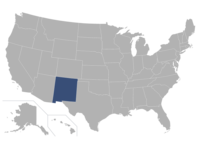
Strengthen avoidance-centric conservation in New Mexico and Texas by tightening restrictions on new oil-and-gas development in critical habitat; ensure that operations incorporate landform-preserving practices and minimize surface disturbance.
Expand and systematize habitat monitoring using remote sensing and field verification to quantify loss and degradation.
Invest in habitat restoration that respects the irreplaceable blowouts, rather than substituting one disturbance for another.
These steps reflect a pragmatic view of “sustainable resource use”: long-term extraction depends on a living landscape, and the dunes sagebrush lizard serves as a clear indicator of the health of that landscape.
The dunes sagebrush lizard is not doomed by some intrinsic flaw; it is imperiled by the choices we make about land use. We know what to do. Now we must act — guided by science, informed policy, and a commitment to coexistence in the Permian Basin.
Santa Fe, NM