Gov. Bill Lee once apologized for insensitive racial actions but actions speak louder than words
May 21, 2026 | 5:59 am ET
Description
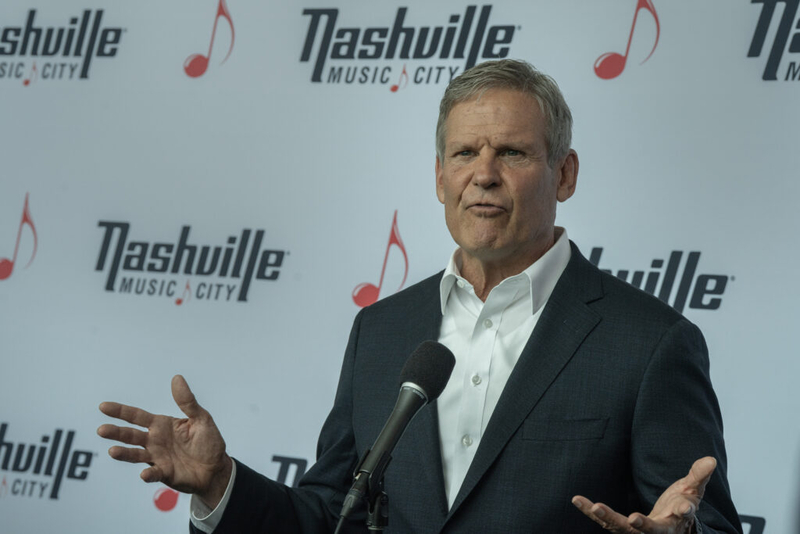
Banning the teaching of issues around critical race theory, diluting Black voting power in Memphis: Gov. Bill Lee's policies appear less than sensitive to racial realities. (Photo: John Partipilo/Tennessee Lookout)
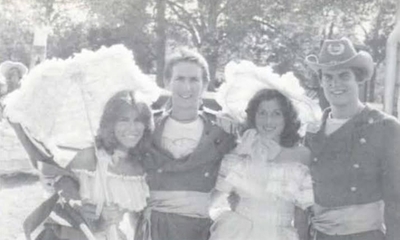
One of the first pictures I remember seeing of Gov. Bill Lee was a few weeks after his inauguration. The picture wasn’t taken the day he was sworn into office, but nearly four decades earlier at a Kappa Alpha Order “Old South” party at Auburn University.
In the now widely shared photo, Lee is cosplaying a Confederate soldier, wearing a Confederate uniform and a large, toothy smile, seemingly without a care in the world.
In response to the picture, Lee gave a conciliatory answer that highlighted his own ignorance of racial realities at the time the picture was taken:
“While I never intentionally acted in an insensitive way, with 40 years of hindsight, I have come to realize that was insensitive and have come to regret that,” he said.
If any piece of the quote could be labeled as foreshadowing, the dependent clause at the beginning would hit the bullseye.
Throughout Lee’s two terms as governor, he has conducted himself in a professional and respectful way — a far cry from the overall tenor of the Republican party during that same time frame.
But sometimes being nice isn’t enough. Sometimes, to really understand other people, you have to dig into your own uncomfortable thoughts and beliefs; you have to recognize your shortcomings and then do the work to fix them. Most importantly, you have to have a grasp of history and the connections of the damaging systems that have been carved into American society since its inception. Lee seems to have missed the boat there.
In 2020, white America faced a racial reckoning that we’re still processing. The tragedies of George Floyd and Breonna Taylor, both killed by police, forced us to collectively address our biases, which have often been beyond our purview. As prominent African-American scholar Ibrahim X Kendi so eloquently showed us in his book “How to be an Antiracist”, racism is not simply a person’s mindset but a systemic problem of policies enacted over time.
This reckoning isn’t something to be commended, but rather a necessary excavation that was long overdue — a dissection of thoughts, beliefs, and systems that privilege has so often delayed.
From the beginning of his first term, Lee sought to provide an escape hatch for public school students when he aggressively pushed for educational vouchers in urban districts like Memphis and Nashville.
He doubled down on the issue in 2024, sycophantically saying, “President Trump was right when he said school choice is the civil rights issue of our time.”
Oh, to be so blind.
By the time vouchers had strangled public education like Tennessee kudzu, the majority of the recipients of private school educations weren’t poor Black children like Lee had casually referenced in an earlier press conference. In fact, only 25% of vouchers went to families in the lowest income bracket, even as funding for public education across the state was being stripped.
Speaking of public education, Lee also wanted to make sure teachers weren’t giving students much-needed context around race that he was so desperately missing. He ensured that teachers weren’t going to talk about the systems still in place that continue to work against minorities when he signed a law banning the teaching of critical race theory in schools.
Lee wanted students to learn how exceptional America is despite our country enslaving African-Americans and denying them basic human rights for nearly 200 years, thereby creating systemic inequities that are still present today. If teachers discussed that issue, then it would fall under the umbrella of CRT — something Lee called “un-American.”
Finally, for his coup de grace, Lee called a special session (at the behest of President Donald Trump) to gerrymander the absolute hell out of Tennessee, specifically the majority black district of Memphis – the city the National Civil Rights Museum calls home.
Tennessee House speaker suspends all Dems from committees, citing decorum violation
On May 7, during the climax of a special session to redraw congressional maps, Rep. Justin Jones, a Black Democrat from Nashville, stood in the Tennessee State Capitol holding a paper copy of the Confederate flag as it burned to ash. Earlier that same day, Rep. Justin Pearson’s brother was escorted out of the House gallery by a white state trooper whom Pearson aggressively rebuked by cursing him – an expected response given the context of everything that was taking place in that moment.
As a result of these two instances, plus other disruptive behaviors by some Democrats, House Republicans stripped Democratic lawmakers from committees, thereby silencing any amount of discourse moving forward.
If there were ever a clearer symphony of the advantages and disadvantages woven into historic systems created largely by white men, the special session was it, and Lee was the conductor.
The day after the special session adjourned, Lee was about 20 miles up the road from me in Humboldt, Tennessee, a small town with a majority-minority district that has had to close three schools over the last two decades due to a loss of students.
Of course, Lee wouldn’t know that. His privilege has allowed him to stay in his lane, make the most of his opportunities, and sign bills into law that collectively hurt the very people he has claimed to want to help.
In a photo taken at Humboldt’s Strawberry Festival, Lee was smiling that same smile he had in the picture taken 40 years earlier. He wasn’t wearing a Confederate uniform this time, though. At the very least, he had learned from that mistake. Unfortunately, he didn’t do the rest of the work.

Nashville, TN