Fifty for 150: Rocky Mountain National Park established as 10th national park in 1915
Jul 14, 2026 | 6:00 am ET
Description
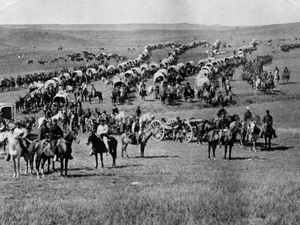
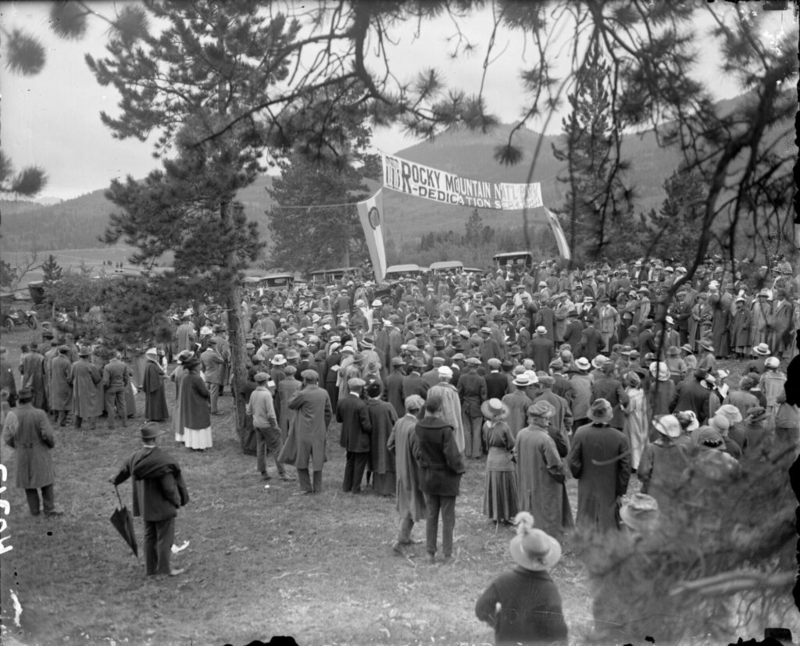
A crowd gathers at Horseshoe Park for the dedication ceremonies for Rocky Mountain National Park on Sept. 4, 1915. (Courtesy of Denver Public Library Special Collections, Rh-259)
Colorado became home to the country’s 10th national park when President Woodrow Wilson signed the Rocky Mountain National Park Act into law on Jan. 26, 1915.
Rocky Mountain National Park spans more than 265,000 acres with elevation ranging from from 7,600 feet to 14,259 feet at the top of Longs Peak. Hundreds of miles of trails in the park explore alpine tundras, forests, open meadows, lakes, rivers and over 100 named mountain peaks centered around Longs Peak, the highest point in the park.
Sandwiched between Grand Lake on the west side and Estes Park on the east, the park has long been a major draw of Colorado’s outdoor recreation industry, generating for the state more than $800 million in economic output with more than 4 million visitors annually in recent years. To manage the influx of visitors, the park implemented a timed entry system for the summer season in 2021 that remains in place.
Visitors gathered for the official opening and dedication of the park on Sept. 4, 1915, at Horseshoe Park, a meadow within the boundaries of Rocky Mountain National Park. Rocky Mountain News reported the day after the dedication that it was “a day that will mark a milestone in the history of Colorado.”
Attendees included Enos Mills, known as the “father of Rocky Mountain National Park;” Colorado Gov. George Carlson; U.S. Rep. Edward Taylor; U.S. Rep. Charles B. Timberlake; Stephen T. Mather, assistant to the Interior secretary and soon-to-be first director of the National Park Service; F.O. Stanley, who built the Stanley Hotel in Estes Park; and Mary Belle King Sherman, who worked to get support for the park as a member of the General Federation of Women’s Club.
“The women of America stood behind this great project because we know of the growing need and the growing demand for public recreation places out of doors,” Sherman said at the dedication. “And we think that if localities of natural scenic beauty are preserved and used for public recreation places, they will benefit the lives of millions of people physically, mentally and morally.”
Mills led efforts to establish the land around Longs Peak as a national park, traveling the country to give lectures and lobby Congress to protect the region. Mills summited Longs Peak nearly 300 times. He was 15 the first time he climbed the mountain.
“In years to come when I am asleep beneath the pines, thousands of families will find rest and hope in this park,” Mills said.
Infrastructure to support tourism in the park and surrounding areas blossomed since its establishment, including visitors centers, museums, trails, campgrounds and lodges. Business in Grand Lake and Estes Park center around the towns’ proximity to the national park.
Wildlife found in the park include bighorn sheep, elk, moose, marmots, pika and golden eagles, as well as 280 bird species and 142 butterfly species. Grizzly bears, gray wolves and bison that were native to the area are extinct locally, and lynx and wolverine are “extremely rare and may be locally extinct,” according to the National Park Service.
Climate change has threatened the fragile ecosystems in Rocky Mountain and other major national parks in the U.S., bringing on new challenges for park managers who maintain the land for public use.
Denver, CO