Fifty for 150: Kelley Dolphus Stroud makes epic journey to Olympic trials in 1928
Jul 10, 2026 | 6:00 am ET
Description
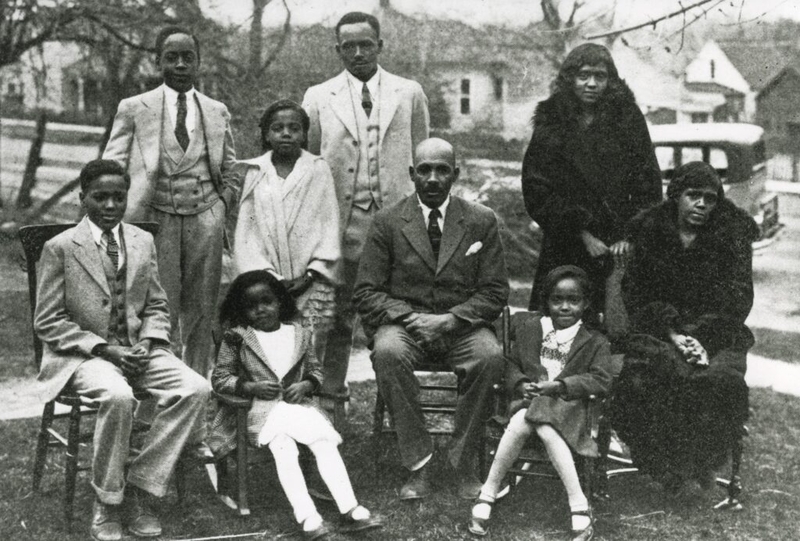
A photograph of the Stroud family taken circa 1925. Kelley Dolphus Stroud stands at center back, and his sister, Effie, stands at right. (Courtesy of Colorado Springs Pioneers Museum)
In June 1928, competitors in the 5,000-meter event in the Denver regional track and field trials were told the winner would receive a paid trip to the Olympic trials in Boston.
Earlier that year, a distinguished Colorado College student named Kelley Dolphus Stroud had broken a 25-year record for fastest roundtrip climb of Pikes Peak, and he had been a standout athlete at Colorado Springs High School. Stroud extended his record of athletic accomplishment by winning the regional trial. But organizers denied travel funds to Stroud, who was Black, for reasons his white coach believed were racist.
The Stroud family had come to Colorado hoping to flee racism. Stroud’s father, Rev. Kimbal Dolphus Stroud, who was born on a Texas slave plantation, was once a member of the Oklahoma Territorial Convention. But he and his wife, Lulu, moved the family to Colorado Springs after Oklahoma in 1910 passed a racist “grandfather clause” to suppress voting by Black citizens.
They thought they’d face less discrimination out West. Instead, the only work available to Kimbal Stroud, a college graduate and politician, was loading coal at the Pikeview Coal Mine.
Kimbal and Lulu Stroud raised 11 children in Colorado Springs, and the siblings racked up numerous notable accomplishments. Local historian John Stokes Holley calls them the “remarkable eleven.”
One of them, Tandy Stroud, in the 1930s published one of the region’s first Black-owned newspapers, The Voice of Colorado. The policy of the paper was “to bring about a better understanding between races thru an impartial presentation of Truth.”
Jack Stroud was an engineer who worked on the Apollo moon missions. He was responsible for the reentry equation that got astronauts back to Earth, according to a Stroud family history.
Kimbal Stroud Goffman was a political organizer whom Gov. Edwin Johnson consulted during his campaign for U.S. Senate. The Atlantic Monthly published her article “Black Pride” in February 1939.
Effie Stroud Frazier graduated top of her class at Colorado Springs High School but faced numerous obstacles stemming from racism. Her experience was the inspiration behind the establishment of the Sachs Foundation, which supports Black Coloradans who face economic and educational discrimination. She went on to graduate from Colorado College and Columbia University.
For all the Stroud family’s achievements, the one that has most captured the imagination of Colorado chroniclers concerns Kelley Dolphus Stroud’s response to being denied those travel funds. He walked, ran and hitchhiked the whole 1,765 miles to Harvard Stadium in Boston, where the Olympic trials were being held. He arrived with six hours to spare and started the race. But, overcome with exhaustion, he collapsed on the sixth lap.
Stroud’s effort to compete in the trials has become part of Colorado lore. It is the subject of an opera called “Race.”
Stroud’s daughter, Juanita Martin, wrote in a recollection, “My father did not complain about truncated opportunities due to racism, but he was acutely aware of ubiquitous injustice. The accomplishments of his later life, as manager of a baseball team, as a teacher, as a writer and poet, as a pianist and singer, as an entrepreneur, and as a father attest to his belief in himself and his commitment to availing himself of every opportunity to live the fullest life possible.”
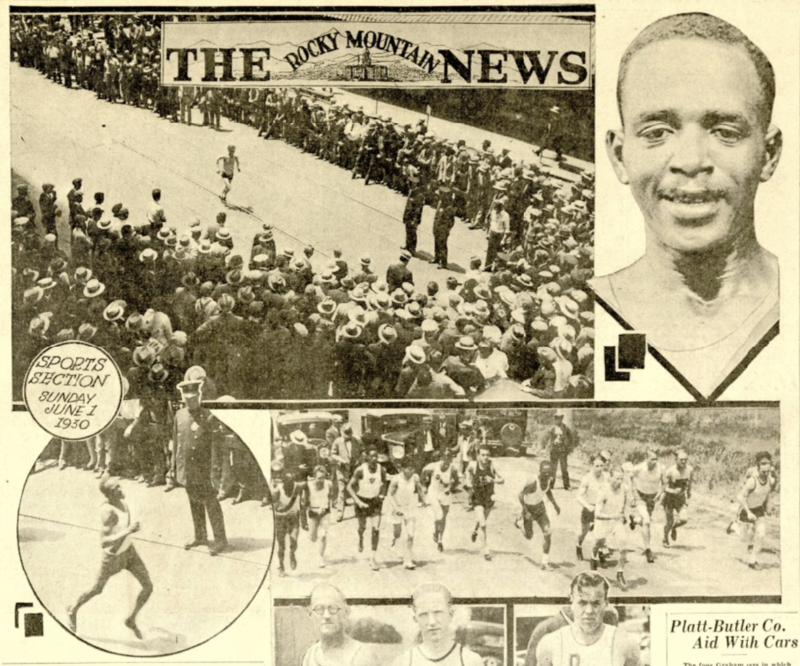
Two years after his journey to Boston, Stroud competed in the 18th annual Littleton-to-Denver marathon, sponsored by The Rocky Mountain News. He won.
“With stout heart, strong lungs and sturdy limbs, Stroud stepped into the lead soon after the start from Littleton,” the News reported the following day, adding that he lost the lead for a stretch to Tandy, his brother. “He finished strong with a brilliant spurt down Welton to the editorial offices of The News.”
His prize for winning the race was a Bulova watch.
Stroud graduated Colorado College in 1931 and was the school’s first Black member of Phi Beta Kappa. He was inducted into the school’s Athletic Hall of Fame in 2006.
Denver, CO